When I first cracked open my workstation in early 2026, the scent of fresh thermal paste reminded me why I love the hands‑on side of tech. The hardware landscape has shifted dramatically in just a few short years, moving from raw clock‑speed races to a nuanced dance of AI acceleration, power efficiency, and modular flexibility. Power users—developers, content creators, and data scientists—now demand machines that can juggle massive model inference, 8K video editing, and real‑time collaboration without breaking a sweat. That’s why I’m diving deep into the components that truly matter this year, from the silicon that powers our AI workloads to the storage solutions that keep data flowing at lightning speed. In this guide, I’ll walk you through my personal build philosophy, share troubleshooting shortcuts, and highlight why certain “old‑school” parts still deserve a place in a modern rig. By the end, you’ll have a clear roadmap for assembling a future‑proof powerhouse that can evolve with the next wave of software innovations.
AI‑Ready CPUs: The New Command Center
In 2026, the line between a traditional processor and an AI accelerator is virtually invisible. Intel’s 13th‑gen Core series introduced built‑in DL‑Boost cores, while AMD’s Ryzen 9 7950X3D leverages 3D V‑Cache to keep large model weights close to the execution units. For power users, the real win is the ability to run local inference on models that previously required cloud resources, dramatically cutting latency and cost. When selecting a CPU, I prioritize a high core count—at least 16 threads—for parallel workloads, but I also look for extended instruction sets like AVX‑512 and the newer AMX extensions that accelerate matrix math. Pairing these chips with a robust motherboard that supports PCIe 6.0 ensures that future accelerators, whether GPU or dedicated AI cards, can communicate without bottlenecks. If you’re still unsure about which silicon fits your workflow, check out my deeper dive on Unlocking AI Computing: Building a Future‑Proof Power‑User Machine for a side‑by‑side comparison.
Graphics Power: From Gaming to Compute
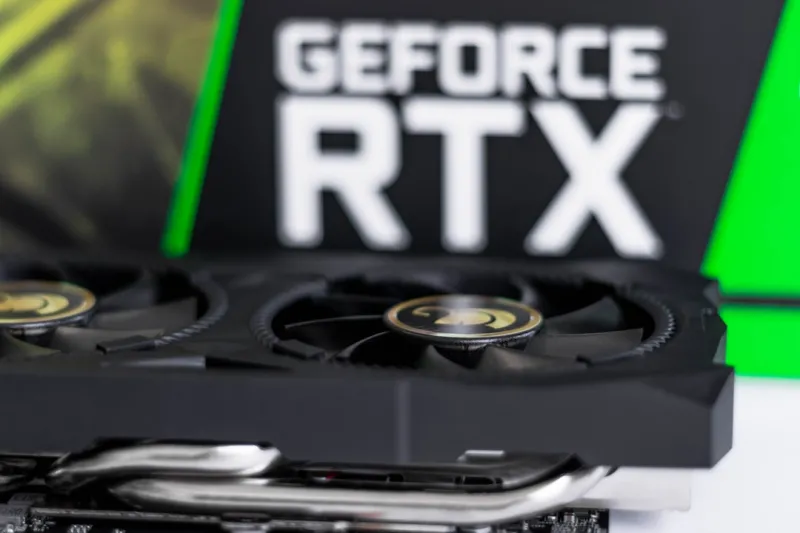
Graphics cards have transcended their gaming roots, becoming the workhorse for AI training, video rendering, and scientific simulation. The RTX 5000 Series, with its Ada Lovelace architecture, offers a massive jump in tensor core performance, making it a go‑to for anyone needing real‑time ray tracing and AI‑enhanced workflows. However, the raw power can be a double‑edged sword—thermal throttling and driver quirks still trip up many users. That’s why I always keep a troubleshooting checklist at the ready. If you notice artifacts, stuttering, or sudden crashes, the first step is to verify your drivers and examine the power delivery on your motherboard. My recent post, Mastering GPU Troubleshooting: A Practical Guide for 2026, walks you through diagnosing common issues and fixing them fast. For a quick sanity check, I also recommend reading Why Your GPU Might Be Misbehaving and How to Fix It Fast, which covers the most frequent culprits in under ten minutes.
Storage Evolution: SSDs, NVMe, and the Resilient Hard Drive
Speed is no longer a luxury; it’s a baseline expectation. PCIe 5.0 NVMe SSDs now deliver sequential read speeds beyond 14 GB/s, shaving minutes off large dataset loads and video render queues. Yet, despite the dazzling performance numbers, I still keep a 4 TB SATA hard drive in my build for archival purposes. Hard drives in 2026 remain unbeatable for cost‑per‑gigabyte and long‑term reliability, especially when paired with modern error‑correction algorithms and encryption layers. When architecting storage, I adopt a tiered approach: a lightning‑fast NVMe for OS and active projects, a secondary SSD for less latency‑sensitive applications, and a high‑capacity HDD for backups and raw footage. This hierarchy not only optimizes performance but also extends the lifespan of your premium SSDs by reducing write amplification. If you’re curious about the lingering relevance of magnetic storage, my analysis in Why Hard Drives Still Matter in 2026: Capacity, Cost, and Security breaks down the economics and security benefits in plain language.
Motherboard Magic: Power Delivery and Expansion
The motherboard you choose is the unsung hero that determines how gracefully your system can scale. In 2026, the industry has standardized on 24‑plus‑pin power connectors and robust VRM designs that can sustain 250 W or more on a single CPU rail. Look for boards that support PCIe 6.0, as this will future‑proof you for next‑generation GPUs and storage devices. I also pay close attention to the number of M.2 slots and their lane distribution; having at least two dedicated PCIe 5.0 slots for SSDs can prevent bandwidth contention when you’re running multiple high‑throughput workloads. On the I/O front, USB 4.0 and Thunderbolt 4 ports have become essential for fast peripheral connections, especially when dealing with external GPUs or high‑speed RAID arrays. A solid chipset, like the Z790 or X670E, paired with a high‑quality BIOS that offers granular fan curves and voltage controls, can make the difference between a stable workstation and a temperamental one that spends more time rebooting than rendering.
Thermal Management: Keeping the Beast Cool
Powerful components generate heat faster than ever, making effective cooling a non‑negotiable part of any build. While traditional air coolers have become more efficient, I’ve shifted to a hybrid approach that combines a high‑static‑pressure AIO liquid cooler with strategically placed case fans. The key is to maintain a positive pressure environment inside the chassis, which reduces dust buildup on heatsinks and prolongs the life of your fans. When selecting a cooler, I prioritize a radiator size of at least 360 mm for my 16‑core CPUs, ensuring that the coolant can dissipate heat before it reaches the pump. For GPUs, aftermarket water blocks can shave off 10‑15 °C under load, but they require careful installation and a separate loop. Don’t overlook the importance of thermal paste—modern nano‑ceramic compounds provide lower thermal resistance and longer durability compared to older silicone‑based greases. Finally, use software tools to monitor temperature spikes and set aggressive fan curves; this proactive approach catches potential throttling before it impacts performance.
Power Supplies: Efficiency Meets Sustainability
With power consumption soaring alongside component performance, the power supply unit (PSU) is more critical than ever. In 2026, 80 PLUS Gold and Platinum certifications have become baseline expectations for power‑hungry rigs, offering up to 95 % efficiency at typical loads. A high‑efficiency PSU not only reduces your electricity bill but also generates less heat, easing the burden on your cooling system. I recommend sizing your PSU at 30‑40 % above your estimated maximum draw; for a system with a 500 W GPU and a 250 W CPU, a 950 W unit provides ample headroom for future upgrades. Modular cables keep the interior tidy and improve airflow, while fully‑sealed, fan‑less designs are emerging for lower‑wattage models, delivering silent operation for office environments. When shopping, verify that the unit includes protections like OVP, UVP, OCP, and SCP; these safeguards prevent catastrophic failures that could damage your expensive components.
Strategic Upgrades: A Practical Roadmap
Even if you’re building from scratch, planning for incremental upgrades saves time and money. My go‑to resource for a step‑by‑step upgrade plan is How to Upgrade Your PC in 2026: A Practical Guide for Power Users. The guide outlines a phased approach: start with a solid CPU‑cooler and motherboard foundation, then add a high‑performance GPU once your workload justifies it. Next, expand storage with PCIe 5.0 NVMe drives as your datasets grow, and finally, revisit your PSU and cooling solution to accommodate the added power draw. This methodology lets you spread costs over several quarters while ensuring each new component integrates smoothly with the existing architecture. Additionally, keep an eye on firmware updates for BIOS and device drivers; they often unlock performance improvements and compatibility fixes that can extend the lifespan of your hardware without a physical upgrade.
Future Outlook: Staying Ahead of the Curve
The hardware ecosystem will continue to evolve at breakneck speed, but the principles that guide a robust, future‑proof build remain constant: prioritize scalability, invest in quality power delivery, and maintain a proactive cooling strategy. As AI workloads become more pervasive, expect CPUs and GPUs to converge further, offering dedicated accelerators that can be toggled on demand. Meanwhile, emerging storage technologies like storage‑class memory (SCM) will blur the line between RAM and persistent storage, promising near‑instant data access. By staying informed—through newsletters, forums, and internal resources like the articles linked throughout this post—you’ll be equipped to make informed decisions that keep your rig performing at the top of its class. So roll up your sleeves, double‑check those cable ties, and start building the power‑user machine that will serve you well not just today, but for years to come.