When I first started tearing apart a vintage tower back in the early 2020s, the thrill of seeing raw silicon breathe life into a chassis was pure magic. Fast‑forward to 2026, and that same excitement is amplified by a landscape that demands not just performance, but resilience, scalability, and a keen eye for emerging standards. As a power‑user who lives at the intersection of content creation, AI‑driven research, and competitive gaming, I’ve learned that every component must earn its place in the build—not merely for today’s benchmarks but for tomorrow’s workloads. In this guide, I’ll walk you through the decisions that separate a fleeting “wow” machine from a lasting workhorse, from GPU architecture choices to the subtle art of motherboard lane allocation, and even the often‑overlooked role of firmware hygiene. By the end, you’ll have a roadmap that lets you assemble a rig capable of devouring 8K video renders, training transformer models, and crushing high‑frame‑rate titles—all without a single bottleneck slowing you down.
GPU Evolution: From Raw Power to Intelligent Acceleration
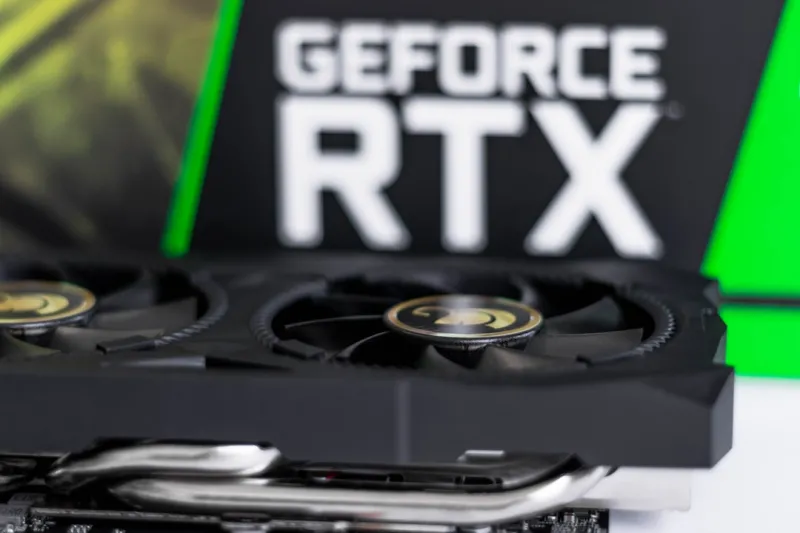
The graphics card market in 2026 has matured beyond raw rasterization, embracing dedicated AI tensor cores, ray‑tracing pipelines, and even on‑board video encode/decode blocks that offload workloads traditionally shouldered by the CPU. The latest RTX 6000 Series and AMD’s Radeon RX 9000 line both ship with up to 48 GB of GDDR7 memory, allowing seamless handling of massive texture atlases and multi‑GPU rendering farms. What’s more, manufacturers now bundle software stacks that expose hardware‑level APIs for machine‑learning inference, meaning you can accelerate model training directly on the GPU without third‑party frameworks. However, the real differentiator is power efficiency; the new 500 W TDP cards have shaved 15% off their energy draw thanks to advanced node scaling. When selecting a card, consider the balance between VRAM, tensor core count, and driver stability—especially if you plan to toggle between gaming and professional workloads daily. And don’t forget the importance of a solid troubleshooting foundation—if you ever run into artifacting, my Mastering Video Card Troubleshooting: A Power‑User’s Playbook has the step‑by‑step fixes you’ll need.
Motherboard Matters: The Backbone of Future‑Proofing
Choosing the right motherboard is akin to laying a solid foundation for a skyscraper; everything else rests upon it. In 2026, the PCIe 5.0 standard has become ubiquitous, but we’re already seeing early adopters experimenting with PCIe 6.0 lanes for ultra‑high‑bandwidth storage and networking. A Z‑790‑class board with robust VRM phases and support for DDR5‑7200 memory ensures you won’t be forced into an upgrade cycle before your next major project. Equally important are the number of M.2 slots—aim for at least three, with heatsinks, to accommodate both NVMe storage and dedicated AI accelerators. I’ve found that boards emphasizing BIOS flexibility, such as those with extensive overclocking profiles and secure boot options, give power users the confidence to push hardware without sacrificing stability. For a deeper dive into why the motherboard is the keystone of a future‑proof build, check out Why Choosing the Right Motherboard Is the Keystone of a Future‑Proof Power‑User Build.
Storage Strategy: Speed, Capacity, and Redundancy
Even with blazing‑fast PCIe 5.0 SSDs, I still allocate a substantial portion of my storage budget to traditional hard drives. The reason? Massive, reliable archives for raw footage, scientific datasets, and long‑term backups that simply don’t need the nanosecond latency of an NVMe drive. In 2026, 20 TB SMR drives offer a sweet spot between cost per gigabyte and endurance, while newer CMR models provide better write performance for continuous data streams. Pair a 4 TB PCIe 5.0 NVMe as your primary OS and application drive with a 10 TB SSD for active project files, then mirror critical assets onto a 12 TB HDD in a RAID‑1 configuration. This tiered approach maximizes performance for day‑to‑day tasks while safeguarding against catastrophic data loss. For a comprehensive look at why hard drives remain essential, read Hard Drives in 2026: Why Power Users Still Need Massive, Reliable Storage.
RAM Reliability: Taming the Memory Instability Monster
High‑frequency DDR5 kits have become the norm, with many enthusiasts pushing 7200 MHz modules for that extra edge in latency‑sensitive applications. Yet, speed without stability is a recipe for intermittent crashes, especially when running intensive AI workloads alongside heavy multitasking. I recommend a dual‑channel 64 GB configuration as the baseline for a 2026 power‑user rig, using modules that pass the JEDEC XMP 3.0 profile and have been validated for ECC support on consumer boards. Enable XMP, but keep an eye on system logs for any ECC corrections—those tiny warnings can indicate underlying voltage or timing issues. If you encounter random blue screens, the “Why Your RAM Keeps Crashing and How to Fix It” guide is a lifesaver, walking you through BIOS tweaks, stress‑testing with MemTest86, and the importance of a clean power delivery from your VRM. Remember, a stable memory subsystem is the silent hero that lets your CPU and GPU operate at full throttle.
Power Delivery and Thermal Management: Keeping the Beast Cool
The shift toward higher‑TDP GPUs and CPUs has forced power supplies into a new era of efficiency. In 2026, an 80+ Gold 1000 W PSU is often the sweet spot for a dual‑GPU, high‑core‑count system, especially when you factor in headroom for overclocking and future upgrades. Look for units with fully modular cabling and a digital control interface that can dynamically adjust voltage rails based on load, reducing heat and acoustic noise. Speaking of heat, effective cooling goes beyond a single 360 mm AIO; I favor a hybrid approach: a 240 mm AIO on the CPU, a dedicated GPU blower for the graphics cards, and strategically placed case fans that create a positive pressure environment. This setup not only maintains sub‑70 °C temps under sustained loads but also minimizes dust buildup, extending component lifespan. Don’t overlook the importance of firmware updates for both the PSU and BIOS—these often include thermal curve refinements that can shave degrees off your hottest components.
Designing for Longevity: Modular and Scalable Architecture
Future‑proofing isn’t just about buying the newest parts; it’s about designing a system that can evolve with you. A full‑tower chassis with ample drive bays, removable panels, and a robust cable‑management system allows you to add new storage, upgrade cooling solutions, or even swap out a GPU without a full disassembly. I recommend a chassis that supports up to six 120 mm fans and includes built‑in dust filters; this gives you flexibility to transition to custom water loops as your performance demands increase. Moreover, consider a motherboard with additional PCIe slots that can host upcoming expansion cards like dedicated AI inference accelerators or high‑speed networking adapters. For inspiration on building a forward‑looking rig, see Designing a 2026 Power‑User PC That Stays Ahead of the Curve, which outlines modular design philosophies that keep your investment relevant for years.
Software Ecosystem: Why Windows Still Reigns for Power Users
While Linux distributions have made great strides, Windows remains the dominant platform for power users in 2026, largely due to its extensive driver support, enterprise‑grade security features, and compatibility with the latest creative software suites. The OS’s integration with DirectX 13 and WSL 2 (Windows Subsystem for Linux) provides a hybrid environment where you can run native Windows applications alongside Linux command‑line tools without a VM’s overhead. This flexibility is crucial when you need to toggle between video editing in Premiere Pro, data analysis in Python, and gaming. Microsoft’s recent focus on security—such as hardware‑based isolation via VBS and Secure Boot enhancements—means you can enjoy a robust defense against modern threats while still accessing the rich ecosystem of productivity tools. For a deeper exploration of Windows’ continued relevance, read Why Windows Remains the Power‑User’s Platform of Choice in 2026.
Security and Firmware Hygiene: Guarding Against the Hidden Threat Landscape
Power users are prime targets for sophisticated malware that leverages firmware vulnerabilities and supply‑chain attacks. In 2026, the threat landscape has evolved to include malicious firmware injections that can persist even after a clean OS reinstall. Regularly updating BIOS, GPU firmware, and even peripheral firmware—such as for network cards and SSD controllers—is no longer optional; it’s a defensive necessity. Employing a layered security approach, including hardware‑based TPM 2.0, Secure Boot, and reputable endpoint protection, can thwart most attacks. Additionally, keep an eye on emerging advisories that detail how modern malware specifically targets high‑performance systems, as discussed in The Hidden Threat Landscape: How Modern Malware Targets Power Users. By maintaining a disciplined update schedule and leveraging secure boot configurations, you ensure that the raw power of your hardware isn’t undermined by unseen software compromises.
Final Thoughts: The Art of Balanced Power‑User Engineering
Building a 2026 power‑user PC is less about chasing the flashiest spec sheet and more about crafting a harmonious ecosystem where each component amplifies the others. From selecting a GPU that offers both rasterization and AI acceleration, to ensuring your motherboard provides ample lanes and firmware stability, every decision compounds into a system that feels effortless under the most demanding workloads. Remember that storage, memory, power delivery, and cooling are not afterthoughts but integral parts of the performance equation. By adhering to a modular, future‑oriented design philosophy and staying vigilant with security and firmware updates, you’ll create a machine that not only dominates today’s benchmarks but also adapts gracefully to the innovations of tomorrow. Happy building, and may your frames be high and your render times low.