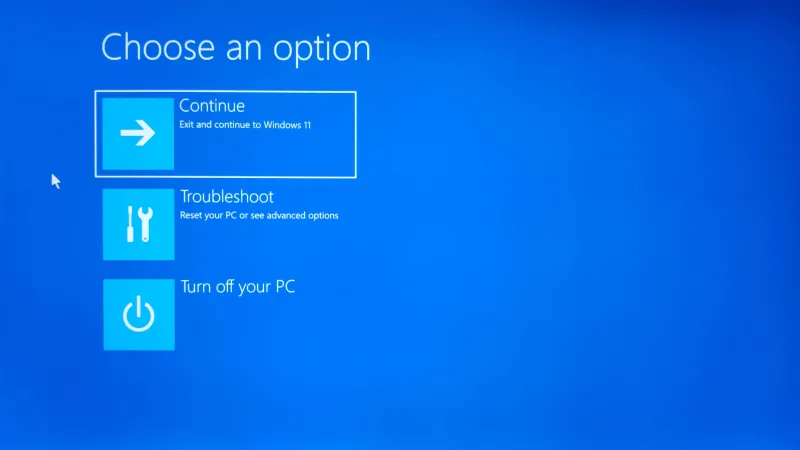
Every time I stare at that dreaded electric-blue canvas, my mind flashes back to the countless late‑night debugging sessions that have defined my career as a power‑user. In 2026, the Blue Screen of Death (BSOD) isn’t just a relic of legacy Windows; it’s a sophisticated diagnostic tool that, when read correctly, can reveal the exact fault line in a system. The key is to stop treating it as an ominous sign and start seeing it as a roadmap. From memory dumps to error codes like 0x0000007B, the clues are there, but you have to know where to look. I’ve learned that a systematic approach—documenting the error code, noting recent driver updates, and cross‑referencing with known hardware quirks—can turn a panic‑inducing crash into a manageable troubleshooting step. This mindset shift is what separates a frustrated user from a confident power‑user who can keep the machine humming even under the most demanding workloads.
Why the BSOD Still Happens in a Modern Era
The truth is, despite massive strides in driver signing, sandboxing, and firmware validation, the BSOD persists because it sits at the intersection of hardware, firmware, and the OS kernel. In 2026, we have ultra‑fast DDR5 memory, PCIe 5.0 GPUs, and AI‑accelerated workloads, all of which push the boundaries of what the Windows kernel can safely manage. When a new graphics driver tries to leverage a cutting‑edge feature without proper backward compatibility, the kernel may encounter an illegal memory access, triggering a crash. Similarly, aggressive power‑management settings in the latest BIOS can conflict with Windows’ own power‑state transitions, resulting in a sudden stop. Understanding that these crashes are often the byproduct of rapid innovation helps you anticipate where they might originate, and it underscores the importance of staying current with both Windows updates and firmware patches. For deeper insight into video‑card related crashes, check out Diagnosing and Fixing Common Video Card Issues in 2026.
Building a BSOD Response Playbook
My personal “BSOD Playbook” is a living document that I update after every major crash. The first step is to capture the STOP code and the list of drivers loaded at the time of the crash. Tools like WinDbg or the built‑in Windows Event Viewer can extract this data, and saving the dump file to a dedicated “Crash Dumps” folder makes future analysis painless. Next, I cross‑reference the STOP code with Microsoft’s online documentation and community forums; many error codes have well‑known culprits. For instance, a 0x000000D1 error often points to a faulty driver, while 0x0000009F can signal power‑state mismanagement. After pinpointing the suspect driver, I either roll back to a prior version or download the latest stable release. If the crash appears hardware‑related, I run stress tests on RAM and storage to rule out physical defects. This disciplined approach transforms a chaotic event into a repeatable, data‑driven process, reducing downtime dramatically.
One habit that has saved me countless hours is to keep a “Change Log” alongside my playbook. Every time I install a new piece of software, update a driver, or tweak a BIOS setting, I jot down the date, the exact change, and the reason behind it. When a BSOD follows, the log provides an instant timeline that narrows the suspect list. In my experience, the majority of crashes in 2026 can be traced back to a single change made within the previous 24‑48 hours. This is especially true for power‑users who frequently test beta drivers or overclock their hardware. By maintaining that granular record, you eliminate guesswork and accelerate the root‑cause analysis, turning a potential catastrophe into a routine maintenance task.
Another common pitfall is neglecting the role of third‑party security software. Modern endpoint protection suites are more aggressive than ever, injecting themselves deep into the kernel to monitor behavior. While this is great for thwarting malware, it can also cause unforeseen conflicts with legitimate drivers, especially those that interact closely with hardware. If you notice that BSODs coincide with a recent security update, consider temporarily disabling the real‑time protection module to see if stability improves. Of course, this should be a short‑term test, not a permanent solution. For a broader view on how hidden threats can destabilize a system, see The Hidden Malware Threats Power Users Must Outsmart in 2026.
Let’s talk about the role of Windows updates in this equation. While it may seem counterintuitive, the latest cumulative updates often include critical fixes for known BSOD triggers. However, they can also introduce new incompatibilities, especially on systems that run custom kernel modules or legacy hardware. In 2026, Microsoft has introduced “feature‑on‑demand” updates that let you selectively enable new capabilities without a full OS overhaul. As a power‑user, I recommend enabling the “Pause updates for 30 days” option before a major rollout, then testing the update on a secondary machine or virtual environment. If the update passes without incident, you can roll it out to your primary workstation with confidence. This strategy balances the need for security with the desire for stability, keeping the BSOD at bay while still benefiting from the latest improvements.
Hardware diagnostics should never be overlooked. A failing SSD, for instance, can corrupt the pagefile and cause the kernel to read invalid memory, prompting a crash. Tools like CrystalDiskInfo or the built‑in Windows Storage Diagnostic can surface SMART errors before they become fatal. Similarly, memory modules that fail under high‑frequency workloads can trigger a PAGE_FAULT_IN_NONPAGED_AREA error. Running MemTest86 for a full pass is a quick way to verify RAM health. If you discover a hardware flaw, replace the component promptly—prolonged use of a faulty part can cause cascading failures across the system, leading to increasingly erratic BSOD behavior.
One of the most underrated aspects of BSOD prevention is proper cooling and power delivery. In 2026, we have power supplies that can dynamically adjust voltage rails based on workload, and CPUs that throttle aggressively to avoid thermal runaway. However, if your cooling solution is compromised—say, dust‑clogged fans or a deteriorating thermal paste—the CPU may overheat, causing the kernel to shut down abruptly. Monitoring tools like HWInfo or the built‑in Task Manager’s Performance tab let you track temperature spikes in real time. If you see temperatures crossing 90 °C under load, it’s time to clean the internals or upgrade the cooling solution. A stable thermal environment reduces the chance of unexpected shutdowns that the OS interprets as fatal errors.
For many power‑users, the next logical step after stabilizing a system is to automate the response to future BSODs. Using PowerShell scripts, you can set up a scheduled task that triggers on event ID 1001 (the “BugCheck” event) to automatically collect the dump file, upload it to a cloud storage bucket, and even send a notification to your phone. This proactive approach ensures that even if you’re away from the desk, you’ll have the diagnostic data ready for analysis as soon as you return. Additionally, integrating this script with a ticketing system like Jira can create a formal incident record, making it easier to track recurring issues across multiple machines in an enterprise environment.
Finally, remember that the BSOD is a reminder of the complex dance between software and hardware. Embracing a mindset of continuous learning—staying current with driver release notes, reading Microsoft’s kernel documentation, and participating in forums—keeps you ahead of the curve. When you encounter a new STOP code that isn’t well‑documented, sharing your findings on community platforms contributes to the collective knowledge base. In turn, you’ll find solutions faster the next time a similar issue arises. For a broader perspective on why Windows remains the go‑to platform for power‑users, explore Why Windows Remains the Power‑User’s Playground in 2026.