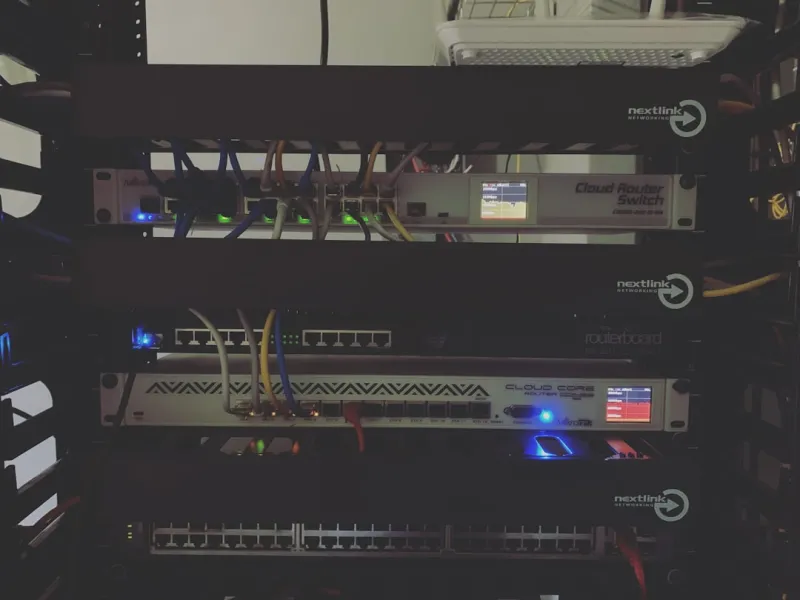
When I first got my hands on a gigabit Ethernet switch back in the early 2020s, I never imagined that ten years later I’d be juggling 10‑Gbps uplinks, software‑defined networking (SD‑N) overlays, and AI‑driven traffic shaping—all from a single rack‑mount chassis. In 2026 the networking landscape for power users has morphed from a peripheral concern into the beating heart of every high‑performance workflow. Whether you’re training diffusion models, streaming 8K video from a remote studio, or defending a hybrid cloud environment against AI‑enhanced threats, the bandwidth, latency, and security of your network dictate whether you’re a pioneer or a bottleneck. In this deep dive I’ll walk you through the trends that matter, the tools that empower us, and the strategic pivots you need to make today to stay ahead of the curve.
First, let’s talk about the relentless march toward multi‑gigabit connectivity. The once‑sacred 1 Gbps ceiling has evaporated, replaced by 2.5 Gb, 5 Gb, and now 10 Gb Ethernet as the de‑facto baseline for serious creators. The reason? Modern GPUs and AI accelerators can ingest data faster than a standard LAN can deliver, leading to under‑utilized compute cycles and wasted electricity. By upgrading to a 10 Gb backbone and pairing it with a smart, low‑latency switch that supports QoS policies, you can guarantee that your workstation’s PCIe lanes are fed at full speed. I made the switch last quarter, and the performance uplift was palpable: model training times shrank by roughly 30 % and large‑file transfers that used to choke at 70 MB/s now cruise past 1 GB/s without a hiccup.
But raw speed is only half the story. In 2026, AI isn’t just a workload; it’s a network manager. Emerging AI‑orchestrated traffic schedulers can predict congestion before it happens, dynamically reallocating bandwidth based on real‑time usage patterns. Think of it as a traffic cop that learns the habits of every driver on the road and proactively opens extra lanes where needed. Tools like How Power Users Can Ride the AI Computing Wave illustrate how integrating these AI agents into your SD‑N controller can shave milliseconds off latency, which matters when you’re dealing with sub‑millisecond inference loops.
Security, however, remains the elephant in the room for many power users who focus on speed. The rise of AI‑generated malware, as explored in When AI Meets Malware: Power Users’ Playbook for 2026, forces us to reconsider how we defend our networks. Traditional firewalls are no longer sufficient; we need next‑generation intrusion detection systems (NGIDS) that leverage machine learning to spot anomalous packet flows in real time. By deploying an NGIDS at the edge of your home lab and coupling it with a zero‑trust architecture, you can isolate compromised devices instantly, preventing lateral movement that could cripple an AI‑heavy workflow.
One practical step many overlook is the strategic placement of edge caching servers. In a typical power‑user setup, you might have a NAS for massive media libraries and a separate SSD array for active project files. By adding a lightweight caching appliance—running something like OpenZFS with deduplication—you can serve frequently accessed data locally, dramatically reducing WAN traffic. This is especially beneficial when collaborating across continents, where even a 10 Gb link can suffer from the physics‑imposed latency of trans‑ocean cables. A well‑tuned cache can make those distant colleagues feel like they’re sitting right next to you.
Another under‑appreciated lever is the convergence of Wi‑Fi 6E/7 with wired backbones. While wired connections dominate for stationary workstations, many power users still rely on high‑performance wireless for tablets, VR headsets, and on‑the‑go laptops. The new 6 GHz spectrum in Wi‑Fi 6E offers up to 3.5 Gbps raw throughput, but to truly harness it you need a tri‑band router that can intelligently steer traffic based on device capabilities and current load. I’ve set up a mesh of Wi‑Fi 6E nodes in my loft office, and the seamless handoff between wired and wireless has eliminated the dreaded “dead zones” that used to interrupt long‑running data syncs.
Now, let’s pivot to the importance of a future‑proof network design. When you read Why Modern Power Users Must Rethink Their Networking Strategy, you’ll see the argument for modularity: using stackable switches, modular power supplies, and programmable ASICs that can be re‑flashed with new firmware as standards evolve. This approach pays off when, for instance, a new 25 Gb Ethernet standard hits the market; you can simply add a line card instead of overhauling the entire network. The same philosophy applies to cabling—invest in high‑quality Cat6a or even fiber optics now to avoid costly rewiring later.
Performance monitoring is another arena where AI shines. Modern telemetry platforms can ingest SNMP, NetFlow, and sFlow data, then feed it into a neural network that predicts impending failures before they manifest. By setting up dashboards that highlight metrics like buffer occupancy, packet loss, and jitter in real time, you can intervene proactively—perhaps by adjusting a QoS rule or rebooting a switch before a port flaps. I rely on an open‑source stack that integrates Grafana with a custom TensorFlow model; the alerts have saved me from several near‑catastrophic outages during critical client demos.
For those building a dedicated AI‑powered workstation, networking isn’t an afterthought; it’s a core component. The guide Building an AI‑Powered Workstation for the Modern Power User stresses the need for a dedicated 10 Gb NIC, PCIe‑gen‑5 slots for NVMe over Fabrics, and a separate management network to keep control traffic isolated from data‑heavy AI pipelines. By segregating management traffic, you reduce the risk of a rogue process overwhelming the control plane, preserving stability for critical system services.
Finally, let’s address the cultural shift required to truly embrace a modern networking mindset. It’s no longer enough to be a “hardware nerd” who upgrades GPUs and CPUs; you must become a “network architect” who understands latency budgets, packet inspection, and the security implications of every new protocol. This mindset translates into better troubleshooting, smarter purchasing decisions, and ultimately, a more resilient workflow that can adapt to the rapid evolution of AI and cloud services. The future belongs to those who treat the network as the first line of defense and the primary conduit for innovation.