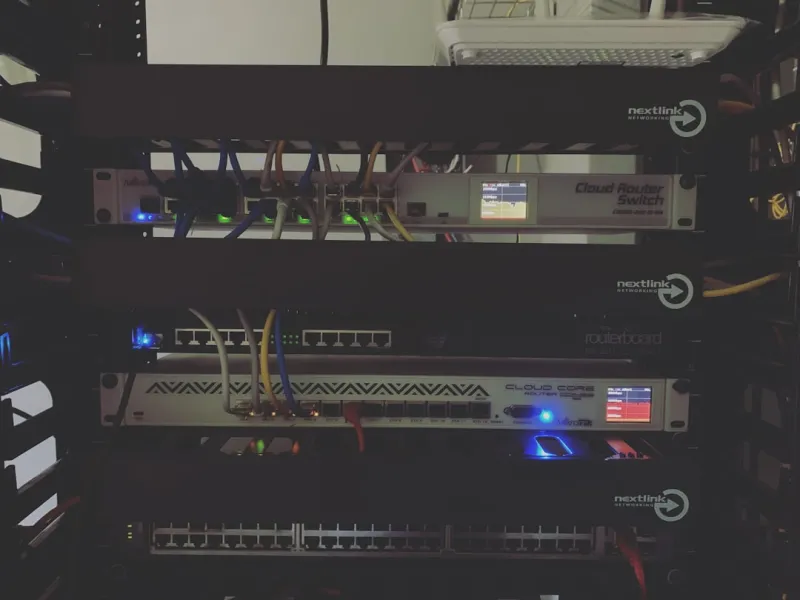
When I first cut my teeth on dial‑up modems back in the early 2000s, the idea of a network that could adapt itself with a whisper of AI seemed like sci‑fi. Fast‑forward to 2026, and we’re living in a world where the backbone of every creative project, AI‑driven model, or remote collaboration is a hyper‑responsive mesh of fiber, edge nodes, and software‑defined intelligence. As a power‑user who spends half the day fine‑tuning hardware and the other half wrestling with code, I’ve learned that the network is no longer a static utility—it’s the living, breathing infrastructure that can make or break a deadline. In this post, I’ll peel back the layers of today’s hottest networking trends, share the tricks I’ve refined on my own rigs, and point you toward the resources that keep my setups ahead of the curve.
Edge Computing Becomes the New Normal
Edge computing isn’t a buzzword any more; it’s the default architecture for latency‑critical workloads. In 2026, content creators are streaming 8K video from their home studios while simultaneously feeding real‑time data into AI models that render visual effects on the fly. To keep the round‑trip time under a millisecond, they’re deploying micro‑data centers just a few hops away from the end user. These edge nodes handle tasks like transcoding, inference, and even local security scanning, offloading the core data center and freeing up bandwidth for other traffic. For power users, the lesson is clear: treat your router like a mini‑server. Upgrade to devices that support containerized workloads, allocate spare CPU cores for edge services, and keep firmware up‑to‑date. This approach not only slashes latency but also creates a sandbox for testing new AI‑driven networking tools without jeopardizing your primary connection.
AI‑Powered Network Management
The next wave of network optimization comes from AI itself. Modern routers now embed machine‑learning models that predict congestion, automatically re‑route traffic, and even suggest QoS tweaks before you notice a slowdown. I’ve started feeding my home network telemetry into an open‑source AI platform that correlates device usage patterns with bandwidth spikes. The result? The system learns that my workstation spikes during nightly model training and pre‑emptively reserves a slice of the uplink, keeping video calls crystal clear. If you’re curious about building a similar setup, check out AI Computing for Power Users: Building a Future‑Ready Workstation for a deep dive on pairing AI workloads with network awareness. The key is to let the network become an active participant in performance, not just a passive conduit.
Zero‑Trust and the Evolving Malware Landscape
Security remains the elephant in the room for any network discussion. In 2026, malware has outpaced traditional signature‑based antiviruses, leveraging AI to morph and evade detection. That’s why the zero‑trust model—where every device, user, and packet is authenticated and authorized—has become non‑negotiable. Implementing micro‑segmentation on your LAN isolates critical machines (like your AI workstation) from less trusted devices (IoT thermostats, guest phones). When a breach occurs, the damage is contained to a single segment. For a practical guide on staying ahead of these threats, read Why Malware is Evolving Faster Than Your Antivirus—and What Power Users Must Do. Pair zero‑trust with continuous monitoring tools that flag anomalous traffic patterns—something AI‑driven network managers excel at. Remember, the network is both your biggest vulnerability and your strongest defense when you lock it down intelligently.
Bandwidth Hunger: From 8K Streams to VR Collaboration
Bandwidth consumption has exploded as creators move from 4K to 8K video, and immersive VR meetings become commonplace. A single 8K stream can gobble up 80 Mbps, while a multi‑user VR session can push 200 Mbps per headset. To accommodate this, many power users are transitioning from traditional coaxial ISP offerings to fiber‑to‑the‑home (FTTH) plans that promise gigabit symmetry. But raw speed isn’t enough; you need intelligent traffic shaping. Tools that classify traffic by application type—assigning higher priority to real‑time collaboration tools over background downloads—ensure a smooth experience. If you’re on a budget, consider a hybrid approach: keep a high‑speed fiber line for primary work, and a secondary LTE/5G backup for redundancy. This dual‑WAN setup not only safeguards against ISP outages but also provides a fallback path when one link becomes saturated during peak usage.
Home Office Networking: Mesh, Wi‑Fi 6E, and Power‑User Hardware
Most power users still rely on a single router placed in a central location, only to discover dead zones in the home office. The solution is a mesh Wi‑Fi 6E system that spreads the 6 GHz band across multiple nodes, delivering low‑latency connections for bandwidth‑intensive tasks like remote rendering. Pair your mesh with a high‑performance NIC that supports 2.5 GbE or even 10 GbE over copper for wired devices that demand the utmost reliability. If you’re still on the fence about upgrading your home network hardware, the article Future‑Ready Hardware Strategies for Power Users walks through the ROI of investing in premium network adapters, PoE switches, and modular routers that can host custom firmware. The takeaway? Treat your home network as an extension of your workstation—invest in quality components, and you’ll reap performance dividends across every application.
Troubleshooting with AI‑Assisted Tools
Network issues can be elusive, especially when they’re intermittent. Traditional ping and traceroute utilities give you raw data, but interpreting it takes skill. Today’s AI‑assisted diagnostics can ingest logs, compare them against a knowledge base, and suggest precise actions—think “Your router’s firmware is outdated; update to version 5.3.2 to resolve the packet loss spikes.” I’ve integrated such a tool into my daily routine, allowing me to resolve a Wi‑Fi dropout in under a minute instead of the usual 30‑minute hunt. For power users who love to dig deeper, the article Why Memory Issues Keep Sneaking Up on Power Users—and How to Crush Them provides a methodology for correlating memory pressure with network latency, a hidden culprit in many slow‑down complaints.
IPv6 Adoption and the IoT Explosion
IPv4 exhaustion forced the industry to accelerate IPv6 deployment, and by 2026 the majority of new devices ship with native IPv6 support. For power users, this opens the door to massive address spaces for IoT devices—smart lights, security cameras, and voice assistants—all without the NAT headaches of IPv4. However, IPv6 also introduces new security considerations: the lack of NAT means each device is directly reachable from the internet unless firewalled. Implementing an IPv6‑aware firewall that enforces strict inbound rules is essential. Moreover, many modern routers now offer dual‑stack operation with built‑in DHCPv6 prefix delegation, simplifying the process of assigning stable addresses to devices that need consistent remote access, like a home lab server.
SD‑WAN and Multi‑Cloud Connectivity
Enterprises have long adopted SD‑WAN to stitch together branch offices, but the same principles apply to power users juggling multiple cloud providers for AI workloads, storage, and CI/CD pipelines. By configuring a virtual SD‑WAN overlay using tools like WireGuard or Tailscale, you can create secure, low‑latency tunnels that intelligently route traffic based on real‑time path quality. For example, a large dataset destined for an Azure VM can be sent over the fastest path, while backup traffic to an AWS S3 bucket takes a lower‑priority route. This dynamic routing not only optimizes performance but also reduces egress costs by avoiding expensive ISP peering points. The flexibility of a software‑defined network means you can adapt to new cloud services as they emerge without rewiring your physical infrastructure.
Future‑Proofing Your Network Today
Looking ahead, the next frontier will be the seamless integration of quantum‑ready networking hardware and AI‑driven orchestration platforms. While most power users won’t need quantum key distribution tomorrow, preparing your network for modular upgrades—like plugging in a quantum‑safe NIC when the technology matures—will pay dividends. In practice, that means selecting chassis and switches with spare slots, using standardized cabling (e.g., MPO for fiber), and maintaining a clear inventory of firmware versions. Finally, adopt a habit of quarterly network audits: map traffic flows, verify security policies, and test failover scenarios. By treating your network as a living system that evolves alongside your computing needs, you’ll stay ahead of the curve, avoid nasty surprises, and keep your creative engine humming at full throttle.