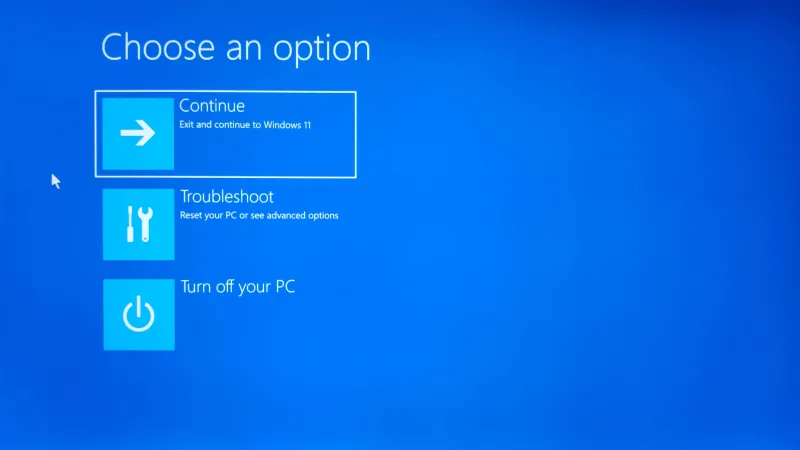
When a blue screen splashes across my monitor, I swear I hear a faint, nostalgic chorus of old‑school tech anthems echoing from the BIOS. It’s a moment that still feels dramatic in 2026, even though my rig runs on the latest silicon and AI‑enhanced drivers. I’ve spent countless evenings chasing these “STOP” messages, and each encounter has taught me that the BSOD is less a relic and more a diagnostic beacon for power users who demand transparency from their machines. In my world, a blue screen isn’t just a failure—it’s a conversation starter with the hardware, firmware, and the operating system itself. I’ve learned to read the error codes like a seasoned mechanic reads a car’s check engine light, translating cryptic hex into actionable insight. So, if you’ve ever stared at a blue canvas and wondered whether to reboot or rip the power cord, stay with me. This guide pulls together the hard‑earned lessons I’ve gathered, the tools I trust, and the proactive strategies that keep my workstation humming—even when Windows decides to throw a tantrum.
Why the BSOD Still Matters in 2026
Even as cloud‑first architectures dominate enterprise IT, the desktop remains the frontline for developers, creators, and gamers—especially power users who push every core to the limit. The blue screen is the operating system’s last‑ditch effort to protect your data when something catastrophic occurs, and it still carries weight because it forces you to confront the underlying issue rather than silently failing in the background. Why Blue Screens Still Matter to Power Users in 2026 dives deeper into the cultural significance of these events, but the practical reality is that ignoring a BSOD can mask driver bugs, firmware mismatches, or even malicious exploits that could corrupt your work. For me, each stop code is a clue—an invitation to refine my system’s resilience. Understanding why the BSOD persists helps you appreciate that it’s not a relic of the past but a vital feedback loop for anyone who treats their PC as a precision instrument.
The Modern Causes: Drivers, Firmware, and AI Loads
In the era of AI‑accelerated workloads, the most common culprits behind blue screens have evolved. Out‑of‑date graphics drivers still top the list, but now they’re often tangled with AI inference engines that constantly re‑configure GPU pipelines on the fly. Firmware bugs in newer UEFI implementations also surface when you enable advanced power‑saving states like C‑states beyond C6, especially on motherboards that promise “future‑proof” performance. Memory errors remain a classic trigger, but today’s DDR5 modules are pushed to tighter timings, and a single timing mismatch can cascade into a STOP error during intensive tensor calculations. I’ve seen my own rig crash when a third‑party AI‑optimizing driver attempted to overclock the VRAM while a background data‑scrubbing task ran. The key is to recognize that today’s BSODs are rarely random; they’re usually the result of a complex interplay between software stacks, firmware, and the raw computational demand you place on your system.
Diagnosing the Crash: From Minidumps to Real‑Time Telemetry
When Windows finally reboots after a blue screen, the first place to look is the minidump file stored in C:\Windows\Minidump. Tools like WinDbg or the more user‑friendly WhoCrashed can translate those cryptic binaries into readable stacks, pointing you at the offending driver or kernel module. In 2026, many power‑user tools now integrate real‑time telemetry, streaming crash data to a local dashboard that correlates error codes with recent system events—think recent driver installs, firmware updates, or even a newly added PCIe card. I personally use a lightweight PowerShell script that parses the dump and cross‑references it against my Choosing the Right Motherboard for Power‑User Performance in 2026 checklist, highlighting any mismatched BIOS settings. By automating this analysis, you cut down the investigative time from hours to minutes, allowing you to focus on fixing the root cause rather than chasing false leads.
Preventive Maintenance: Updates, Driver Signing, and BIOS Hygiene
The most reliable way to avoid a BSOD is proactive maintenance. First, enable automatic driver signing enforcement in Windows; this blocks unsigned or tampered drivers from loading and prevents many low‑level crashes. Second, schedule regular firmware checks—most motherboard manufacturers now push BIOS updates through dedicated utilities that can be scripted for nightly execution. I set my system to download and stage BIOS updates during off‑peak hours, then apply them on the next reboot, ensuring that any micro‑code patches for known CPU errata are applied before they can cause instability. Third, keep your OS updated, but be selective: sometimes a cumulative update introduces a regression that triggers a blue screen on specific hardware configurations. In those cases, I roll back the offending patch using Windows’ “View update history” feature, then monitor the vendor’s hotfix release schedule. Consistent patch hygiene, combined with a disciplined driver vetting process, dramatically reduces the frequency of unexpected stop errors.
Hardware Health: Power Delivery, RAM Integrity, and Cooling
Even the cleanest software stack can’t compensate for hardware that’s on the brink of failure. A weak power delivery subsystem—especially on over‑clocked rigs—can cause voltage droops that manifest as STOP errors under load. I recommend using a high‑efficiency 80+ Gold (or better) PSU with enough headroom for peak AI workloads; an underrated unit will whisper “blue screen” before you even notice a performance dip. Memory integrity is equally critical: run a full MemTest86+ suite after any RAM upgrade, and keep an eye on ECC error logs if your platform supports it. Lastly, thermal throttling can masquerade as a driver crash. Modern CPUs and GPUs now expose temperature thresholds directly to the OS, and when they’re breached, the kernel may issue a STOP to protect the silicon. Regularly clean dust, verify fan curves, and consider liquid cooling solutions if you routinely push your hardware to its limits.
Security Implications: Zero‑Day Exploits and the Blue Screen
One often overlooked angle is that a blue screen can be a symptom of a security breach. Certain zero‑day exploits target kernel memory, forcing a system crash to execute malicious code or to wipe logs. In 2026, power users are advised to adopt a “Zero‑Day Defense” mindset—maintaining a minimal attack surface by disabling unnecessary services, employing application whitelisting, and leveraging hardware‑rooted security like TPM 2.0 for measured boot. I integrate the strategies from Zero‑Day Defense: Power‑User Security Strategies into my daily workflow, ensuring that a sudden BSOD isn’t silently masking a deeper intrusion. Regularly reviewing Windows Event Viewer for unexpected driver loads and cross‑checking them against known-good signatures can reveal suspicious activity before it escalates to a catastrophic crash.
Future‑Proofing: AI‑Driven Crash Prediction and Telemetry
Looking ahead, the next wave of stability comes from AI‑assisted predictive diagnostics. Modern telemetry agents can analyze patterns in CPU usage, memory allocation, and driver interaction, flagging a potential crash before the system actually trips. Vendors are beginning to ship firmware that reports micro‑code health metrics to a local AI model, which then suggests pre‑emptive actions—like throttling a specific GPU kernel or rolling back a recently installed driver. I’ve started experimenting with an open‑source predictor that ingests Windows Performance Recorder logs and raises an alert when a particular combination of high‑GPU temperature and driver version has historically led to a BSOD. While still in its infancy, this approach promises to turn the blue screen from a reactive emergency into a proactive maintenance signal.
Actionable Checklist: Turning BSODs into Learning Opportunities
To wrap up, here’s a concise, power‑user‑focused checklist you can adopt immediately: 1) Enable driver signature enforcement and keep all drivers sourced from OEM portals. 2) Automate BIOS and firmware updates, verifying each change with a reboot‑stability test. 3) Schedule weekly minidump analyses using WinDbg scripts that cross‑reference known issue databases. 4) Monitor power delivery with a hardware sensor suite; replace the PSU if voltage rails dip below 5% of nominal under load. 5) Run MemTest86+ after any RAM change and keep ECC error logs under review. 6) Harden your OS with zero‑day defenses—disable unnecessary services and enforce TPM‑based secure boot. 7) Deploy AI‑driven telemetry agents that flag abnormal resource patterns before they trigger a STOP. By treating each blue screen as a data point rather than an annoyance, you not only extend the life of your rig but also sharpen your troubleshooting instincts—a win‑win for any power user navigating the demanding landscape of 2026.