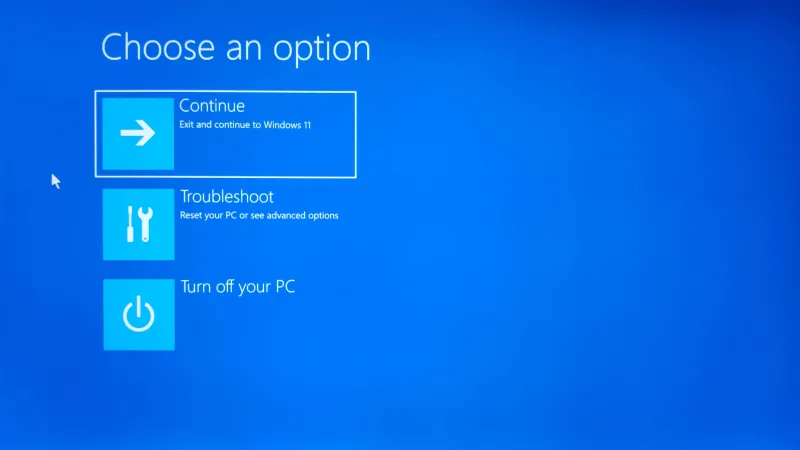
When my workstation flashed that infamous cobalt slab last month, I felt the familiar mix of panic and curiosity that every power‑user knows too well. In 2026, blue screens have evolved from cryptic error codes that required a dusty manual to sophisticated, data‑rich crash dumps that can be dissected with a few keystrokes—if you know where to look. As someone who builds development rigs, tweaks BIOS settings, and spends weekends chasing down elusive driver bugs, I’ve learned that a blue screen isn’t just a nuisance; it’s a diagnostic goldmine. In this post I’ll walk you through the modern causes of the dreaded BSOD, share the tools that turned my debugging nightmare into a systematic process, and explain how to turn each crash into a step toward a more resilient machine.
Understanding the Modern BSOD Landscape
First, let’s demystify what a blue screen actually tells us in today’s environment. The STOP code still appears, but it’s accompanied by a QR‑code that links to Microsoft’s online knowledge base, and a detailed memory dump that can be uploaded directly to Azure for AI‑assisted analysis. In 2026, the OS also logs a “Live Kernel Dump” that captures the exact state of every driver thread at the moment of failure. This level of granularity means you no longer need to guess whether a rogue RAM module or an outdated firmware is to blame. However, the sheer amount of data can be overwhelming. That’s why I recommend a two‑step approach: capture the dump with werfault.exe, then feed it into the new Windows Debugger (WinDbg) UI that integrates directly with the cloud. If you’re still on the fence about why these crashes happen, my deep‑dive article Why Your PC Keeps Throwing Blue Screens and How to Stop It breaks down the most common culprits, from faulty power delivery to misbehaving third‑party drivers.
Power‑User Hardware Checks Before You Panic
Before you even open WinDbg, perform a quick hardware sanity check. In 2026, power supplies have become more modular, but they also deliver higher wattages that can stress older components. Use a programmable power meter to verify that voltage rails stay within ±5% of spec under load. Next, run a full memory diagnostic—even if Windows Memory Diagnostic reports “no errors,” a borderline RAM stick can still trigger intermittent BSODs under heavy multitasking. Don’t forget to check BIOS/UEFI firmware; the latest releases often include microcode updates that resolve known CPU bugs that manifest as blue screens. Finally, inspect your motherboard’s VRM cooling. Overheating VRMs can cause voltage spikes that the OS interprets as fatal hardware faults, and in a high‑performance rig those spikes can happen in seconds.
Software Layers: Drivers, Updates, and the OS
The software stack is where most modern blue screens originate. Windows 11’s “Dynamic Refresh” feature, while great for battery life, sometimes clashes with third‑party GPU drivers that haven’t been updated for the latest DirectX 12.12 release. My personal strategy is to pin my graphics driver to the “Long-Term Support” (LTS) branch, which receives quarterly stability patches rather than aggressive feature rolls. Similarly, keep your storage controller drivers current; NVMe firmware updates can resolve subtle timing issues that otherwise manifest as “CRITICAL_PROCESS_DIED” errors. When you install a new piece of software, especially low‑level utilities like virtualization tools, enable the “Driver Verifier” test mode for a short period. It forces the OS to stress‑test each driver and will surface hidden bugs before they cause a full‑system crash. For a broader view of OS choices and how they impact stability, see my guide The Operating System Choices Power Users Must Make in 2026.
Leveraging Cloud‑Based Debugging Tools
One of the most exciting developments this year is Microsoft’s integration of Azure AI with WinDbg. After you capture a crash dump, you can upload it to Azure and let a trained model suggest the most probable root cause, complete with a confidence score. I’ve used this feature to pinpoint a rare conflict between a USB‑C hub’s firmware and the latest chipset driver—something that would have taken days of manual log sifting. The AI also cross‑references your dump against a global database of similar crashes, highlighting patterns you might otherwise miss. While privacy‑concerned users should enable the “local analysis only” mode, the cloud approach is a game‑changer for anyone who manages multiple workstations and needs a fast, repeatable diagnostic workflow.
Creating a Blue‑Screen‑Resilient Workflow
To keep productivity humming, I’ve built a workflow that treats each blue screen as a ticket in my personal incident‑response system. First, the system automatically saves the dump to a designated “CrashLogs” folder on a secondary SSD. Then a PowerShell script parses the dump with !analyze, extracts the STOP code, driver name, and any associated module, and writes a concise markdown report to a Git repository. I use GitHub Actions to flag any new reports and send a Slack notification to my “Tech Ops” channel. This not only creates a historical record but also enables trend analysis—if a particular driver shows up repeatedly, I can schedule a targeted update or replacement. The habit of logging each crash might sound tedious, but the long‑term payoff is a machine that learns from its own failures.
When to Consider Hardware Replacement
Even with diligent diagnostics, some blue screens point to hardware that’s simply at the end of its life. A recurring “PAGE_FAULT_IN_NONPAGED_AREA” error that traces back to a specific PCIe lane often signals a failing motherboard trace or a fatigued solder joint. In my own build, after three months of intermittent crashes, I replaced the motherboard with a newer model that featured improved VRM cooling and a PCIe 5.0 layout. The upgrade eliminated the error and also gave me headroom for next‑gen GPUs. If you’re debating whether to replace a component, weigh the cost of downtime against the price of the part. For power users, the ROI of a more reliable platform often justifies the expense, especially when you factor in the lost productivity from repeated crashes.
Proactive Maintenance: Updating Before the Crash
One of the best ways to stay ahead of blue screens is to adopt a proactive update cadence. Subscribe to the Microsoft “Windows Insider Dev Channel” for early access to patches, but only apply them on a test rig first. This allows you to verify that a new cumulative update doesn’t introduce regressions with your specific driver mix. Pair this with a quarterly review of firmware releases from your SSD, GPU, and motherboard vendors. I keep a spreadsheet that lists each component’s latest firmware version and the date I last applied it—simple, but incredibly effective. For those looking to deepen their knowledge of Windows internals, my article Unlocking Windows Power‑User Secrets for 2026 provides a roadmap for mastering the OS’s hidden diagnostic tools.
Learning From the Community: Forums and Shared Dumps
The power‑user community is a treasure trove of collective wisdom. Sites like the /r/techsupport subreddit, the Microsoft Tech Community, and niche Discord servers often feature members who have already dissected similar dump files. When you post a crash report, be sure to redact any personal data, then ask for insights on the specific driver versions and hardware configuration. Many users share anonymized dump analysis scripts that can automate the extraction of key fields, saving you minutes of manual work. I’ve incorporated a community‑sourced PowerShell module that flags any driver with a known “bugcheck” pattern, and it has already saved me from three potential catastrophes this year.
Turning Blue Screens Into a Competitive Edge
Finally, embrace the mindset that a blue screen is not a failure but an opportunity for optimization. Each crash forces you to examine a layer of the stack you might otherwise ignore, leading to a tighter, more efficient system. In a field where milliseconds matter—whether you’re compiling massive codebases, rendering 8K video, or running AI inference locally—every stability gain translates directly into performance gains. By systematically capturing, analyzing, and acting on each BSOD, you transform a dreaded interruption into a feedback loop that continuously refines your rig. So the next time that cobalt screen lights up, remember: you have the tools, the knowledge, and the community to turn that moment into a step toward a truly future‑proof workstation.