When I first cracked open a beige tower back in the early 2000s, the idea of a PC that could think for itself was pure sci‑fi. Fast forward to 2026, and we’re living that reality every time we fire up a workstation. The hardware landscape has been reshaped by AI accelerators, quantum‑ready silicon, and a new breed of smart firmware that constantly re‑optimizes performance on the fly. As a veteran builder who’s soldered countless sockets, I’m fascinated by how every component now talks to an on‑board AI “brain,” making decisions that used to require manual tweaking. This article is a deep dive into those shifts—how CPUs, GPUs, motherboards, storage, and even power delivery have been reinvented to serve an AI‑first world, and what you, the enthusiast, need to know to stay ahead of the curve.
AI‑Enhanced CPUs: The New Engine Room
The traditional CPU is no longer just a collection of cores executing instructions; it’s now a hybrid powerhouse that blends classic vector units with dedicated AI tensor cores. Companies have introduced “smart cores” that dynamically allocate compute lanes to machine‑learning tasks, delivering up to a 3x boost in inference speed for workloads like real‑time voice assistants and on‑device image recognition. In 2026, the most popular desktop processors ship with an integrated neural processing unit (NPU) that can offload background tasks such as predictive file indexing, adaptive power scaling, and even security anomaly detection without waking the main cores. This shift means you can run heavy AI models locally without relying on cloud latency, and it also frees up GPU bandwidth for graphics rendering. For power users, the key is to pair these CPUs with motherboards that expose the AI lanes—otherwise you’re leaving a lot of performance on the table.
Graphics Cards Go Full AI
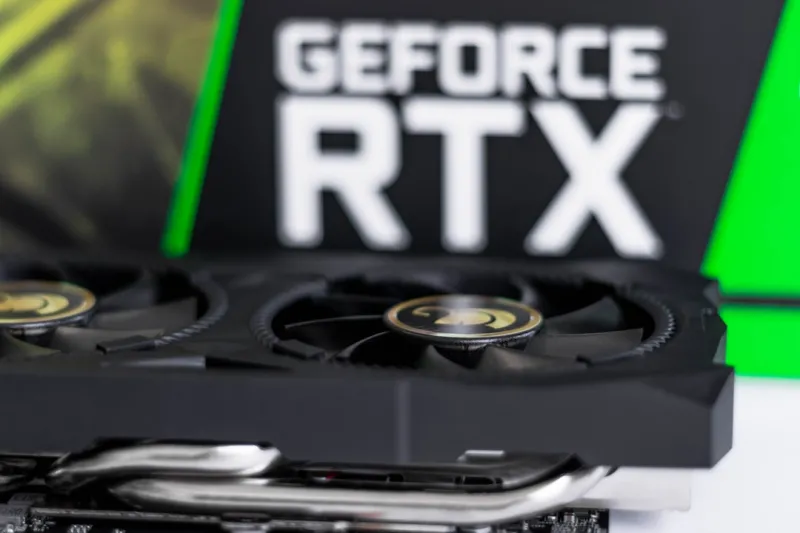
Graphics cards have always been the workhorses of visual computing, but in 2026 they’ve taken a decisive leap into the AI arena. Modern GPUs now come equipped with multi‑layered AI engines that handle everything from DLSS‑style upscaling to real‑time ray‑tracing denoising, and they even support on‑board neural network training for hobbyist developers. The integration of AI means that a single GPU can now manage both the rendering pipeline and complex inference tasks, dramatically reducing system latency. However, with greater complexity comes new failure modes—thermal throttling can now be caused by AI workloads that push the die beyond traditional graphics limits. If you ever find yourself staring at a frozen screen, check out How to Diagnose and Fix Common Video Card Problems in 2026 for a step‑by‑step troubleshooting guide.
Motherboards: The AI‑Driven Core
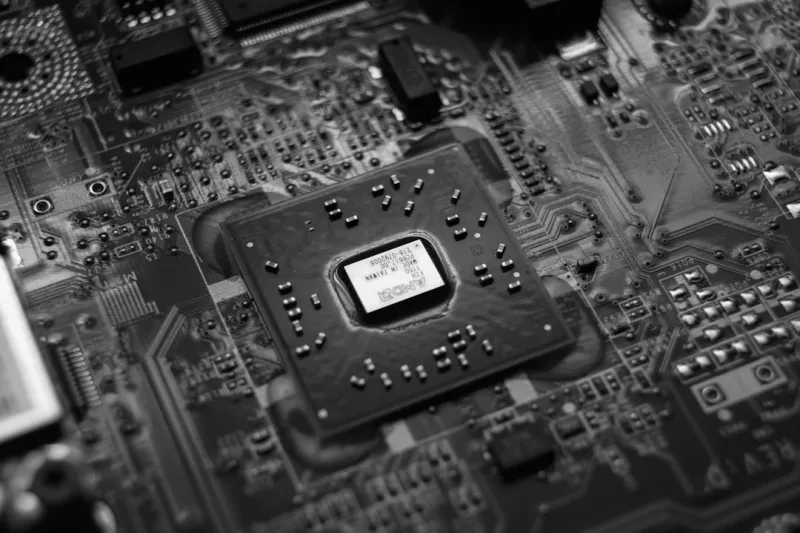
The motherboard has always been the silent conductor of a PC, but today it’s an active participant in AI‑driven performance tuning. With firmware that can analyze workload patterns in real time, modern boards intelligently re‑route PCIe lanes, adjust memory timings, and even overclock components on the fly—all without a reboot. This level of dynamism is covered in depth in Motherboards in 2026: The AI‑Driven Core of Modern PC Builds, where you’ll learn how BIOS‑level AI can keep your system humming at peak efficiency. When selecting a board, look for features like AI‑assisted power delivery, integrated NPU support, and firmware that offers a “learning mode” to adapt to your specific usage patterns, whether you’re gaming, streaming, or crunching data sets.
Storage Gets Smarter, Faster, and More Predictive
SSD technology in 2026 isn’t just about raw speed; it’s about intelligent data placement. NVMe drives now embed machine‑learning models that predict which files you’ll need next, pre‑fetching them into high‑speed cache before you even click. This predictive I/O reduces load times for large games and professional applications by up to 40%. Moreover, many drives now feature built‑in encryption that leverages AI to detect anomalous access patterns, automatically locking down suspicious activity. When building a system, consider drives that support the new “AI‑Cache” protocol, which allows the OS and the SSD to share predictive data, ensuring that your most‑used assets are always on the fastest tier of storage.
Power Delivery and Cooling: AI‑Optimized Reliability
Power supplies and cooling solutions have embraced AI to a degree that would have seemed impossible a decade ago. Smart PSUs now monitor voltage ripple and current draw on each rail, adjusting duty cycles in microseconds to maintain optimal efficiency while extending component lifespan. On the cooling side, AI‑driven fan controllers analyze thermal maps across the motherboard, GPU, and CPU, dynamically tweaking fan curves and even altering liquid pump speeds to balance noise and performance. Some high‑end cooling kits even incorporate machine‑learning models that predict future thermal spikes based on workload trends, pre‑emptively ramping up cooling before temperatures climb. This proactive approach means quieter builds that stay cooler under sustained AI workloads—a win for both performance and longevity.
Building AI‑Ready PCs: A Practical Playbook
If you’re ready to assemble a machine that can handle today’s AI demands and tomorrow’s breakthroughs, the Building AI‑Ready PCs: The 2026 Hardware Playbook is the definitive guide. It walks you through component selection, from CPUs with integrated NPUs to motherboards that expose AI lanes, and even recommends storage solutions that support AI‑Cache. The playbook also emphasizes modularity: choosing a case with ample airflow and a power supply that can adapt its output based on AI‑driven power profiles. By following this roadmap, you’ll end up with a system that not only excels at gaming and content creation but also serves as a capable edge‑AI node for developers experimenting with on‑device models.
Security in an AI‑Dominated Ecosystem
As hardware becomes smarter, the attack surface expands. AI‑enabled firmware can be a double‑edged sword—while it can detect anomalies faster, it also offers new vectors for adversaries to manipulate. The emerging field of AI‑driven security aims to counteract these threats by continuously learning from system behavior and isolating suspicious processes before they cause harm. For a deeper look at protecting your rig, see The Next Frontier: Securing Your PC in an AI‑Driven World. Implementing hardware‑rooted security modules, enabling TPM 2.2, and keeping firmware updated are now baseline practices. Pair these with AI‑based intrusion detection software that can recognize subtle deviations in power draw or memory usage, and you’ll have a defense system that evolves alongside the threats.
Upgrade Strategies: Maximizing AI‑Powered Performance
Even if you’re not building from scratch, you can future‑proof an existing rig by focusing on AI‑centric upgrades. Swapping in a CPU with an integrated NPU, adding a motherboard that supports AI lane expansion, or installing an SSD with predictive caching can yield noticeable gains. The veteran’s perspective on this is captured in Upgrade Your PC in 2026: A Veteran Builder’s Guide to AI‑Powered Performance, where you’ll find step‑by‑step instructions for phasing in these components without breaking your budget. Prioritize upgrades that unlock AI features first—those tend to have the highest ROI because they improve both everyday responsiveness and specialized workloads like video rendering or machine‑learning inference.
Looking Ahead: The Future of AI‑First Hardware
The momentum behind AI‑first hardware shows no signs of slowing. In the next few years, we can expect even tighter integration of quantum‑ready cores, more ubiquitous on‑die AI accelerators, and operating systems that treat hardware as a collaborative partner rather than a passive resource. For builders and power users, the challenge will be staying adaptable—embracing modular designs, keeping firmware current, and continuously learning about emerging AI capabilities. By understanding the current landscape and making strategic, AI‑aware choices today, you’ll ensure that your PC not only meets the demands of 2026 but also evolves gracefully into the next era of intelligent computing.