When I first booted Windows back in the early 2000s, the idea of a “cloud‑first” OS felt like sci‑fi. Fast‑forward to 2026, and Microsoft has woven AI so tightly into the fabric of Windows that even the most seasoned power user can’t ignore it. From contextual Copilot suggestions that anticipate your next command to a revamped Windows Terminal that speaks the language of containers and GPU‑accelerated workloads, the OS has transformed from a static platform into a dynamic, learning partner. But with great power comes great responsibility—especially for us who push machines to their limits. In this post, I’ll walk through the most critical Windows trends shaping the power‑user experience this year, highlight hidden pitfalls, and share the strategies that keep my workflow humming while the rest of the world chases the latest feature fad.
AI‑Infused Desktop: The New Normal
Windows 11’s “Copilot” integration has matured into a full‑blown AI assistant that lives not just in the taskbar but also in the File Explorer, Settings, and even the command line. It can draft emails, generate PowerShell scripts on the fly, and suggest performance tweaks based on real‑time telemetry. The real game‑changer, however, is the deep‑learning model that runs locally on the device, meaning you get instant responses without compromising privacy. For power users, this translates to faster debugging cycles—Copilot can analyze crash dumps and propose registry edits before you even open Event Viewer. The challenge is to balance reliance on AI with manual control; over‑automation can obscure the underlying system behavior that you need to understand for troubleshooting. My advice: use Copilot as a first‑line assistant, then verify its recommendations with tools like Process Explorer or Windows Performance Analyzer. This hybrid approach ensures you reap the speed benefits while maintaining the granular insight that only a hands‑on expert can provide.
Stay Ahead with the Latest Updates
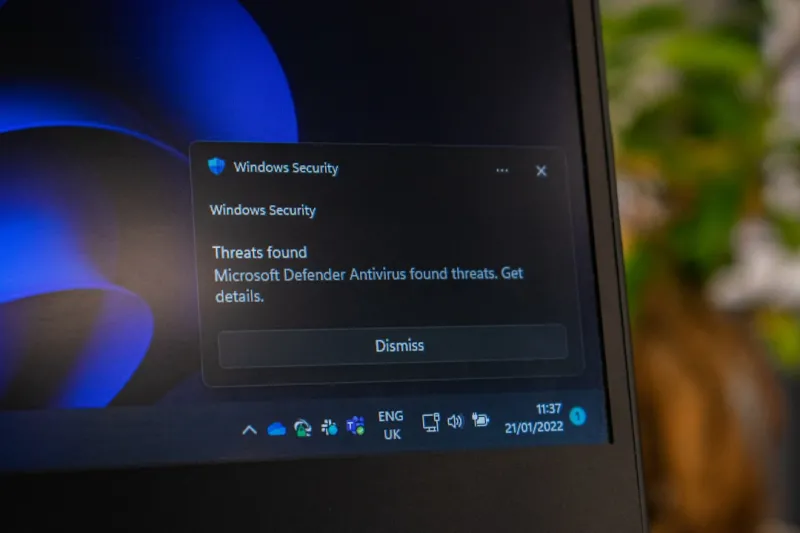
The cadence of Windows updates has accelerated dramatically. In 2026, Microsoft delivers feature drops every six weeks, each packed with AI‑driven enhancements and security hardening. Ignoring these can leave you vulnerable to the latest malware strains that leverage AI to bypass traditional signatures. That’s why I treat the “Critical 2026 Power‑User Updates You Can’t Afford to Miss” as a non‑negotiable weekly ritual. By subscribing to the Windows Insider Dev Channel, you gain early access to experimental features—like the new DirectStorage API that shaves milliseconds off load times for heavy data workloads. Testing these builds on a secondary partition lets you validate stability before committing to production. Remember, the key isn’t just installing updates but also reviewing the associated release notes. They often contain hidden flags that enable performance profiling or disable telemetry modules that could otherwise skew your benchmark data. In short, staying current is no longer optional; it’s a core component of any power‑user’s playbook.
Decoding the Blue Screen: A Power‑User’s Perspective
Even in an age of sophisticated diagnostics, the infamous Blue Screen of Death (BSOD) remains a vital signal that something deep in the kernel has gone awry. While many users treat it as a fatal error, seasoned professionals see it as a breadcrumb trail. In my experience, the most common culprits are mismatched driver stacks and rogue firmware updates—issues that often surface after a major Windows patch. The article Why Blue Screens Still Matter: A Power User’s Playbook dives into systematic analysis: capture the dump file with WinDbg, filter for the “BugCheck” code, and map it against known hardware incompatibilities. By integrating the Windows Debugger with the new AI‑assisted symbol resolution, you can pinpoint the offending driver within seconds. Moreover, leveraging the “Kernel Memory Dump” setting in System Properties gives you a richer dataset for post‑mortem analysis. The takeaway? Treat each BSOD as a learning opportunity, not a dead end, and use it to fine‑tune your system’s stability profile.
Memory Management in the AI Era
RAM has always been the lifeblood of a responsive Windows machine, but 2026 brings a new twist: AI workloads that dynamically allocate gigabytes of memory for on‑device inference. This fluid demand can expose latent memory leaks that would otherwise stay hidden under typical office usage. The deep dive Why RAM Troubles Keep Haunting Power Users—and How to Fix Them in 2026 outlines a three‑step approach: first, monitor working set sizes with Resource Monitor while running AI‑intensive tasks; second, employ the Windows Performance Recorder to capture heap fragmentation over time; and third, apply the new “Memory Compression” tuning knobs introduced in the latest update to reclaim idle pages without swapping. I’ve found that pairing these techniques with the built‑in “Memory Diagnostic” tool—run from an elevated PowerShell prompt—helps isolate flaky DIMM modules that can masquerade as software bugs. Ultimately, a proactive memory hygiene routine keeps your AI pipelines smooth and prevents the dreaded “System has rebooted unexpectedly” messages that plague unoptimized builds.
Future‑Proofing Your Hardware Stack
Power users can no longer afford to buy components based solely on price‑to‑performance ratios; the trajectory of AI acceleration demands a forward‑looking hardware strategy. The guide Future‑Proof Your PC: 2026 Hardware Trends for Power Users emphasizes three pillars: modular GPU architectures that support both CUDA and DirectX 12 Ultimate, DDR5‑8000 memory kits that handle sustained AI inference, and PCIe 5.0 SSDs that keep up with real‑time data streams. In practice, I’ve built a workstation with a dual‑GPU setup—one dedicated to rasterization and another to tensor operations—connected via NVLink. This configuration lets Windows offload AI tasks to the secondary GPU while the primary handles the UI, resulting in a buttery‑smooth experience even under heavy multitasking. Pair that with a motherboard that supports firmware updates over the network, and you have a platform that can evolve alongside Microsoft’s AI‑centric roadmap without a complete rebuild. The secret sauce is to select components that expose open APIs, ensuring you can script custom integrations with Windows PowerShell or the new Windows AI SDK.
Mesh Networking Meets Windows AI
As we migrate more workloads to the edge, a robust home network becomes a prerequisite for any serious Windows power user. Traditional routers struggle with the low‑latency demands of AI‑enhanced remote desktops and cloud‑backed development environments. That’s where a mesh network—augmented by AI‑driven traffic shaping—steps in. The deep dive Building a Future‑Ready Home Network: AI, Mesh, and Edge Strategies for Power Users outlines how to configure Windows Subnetting and Quality of Service (QoS) policies to prioritize AI inference traffic. By deploying a tri‑band mesh system that supports Wi‑6E, you can allocate a dedicated 6 GHz slice for latency‑sensitive Windows Subsystem for Linux (WSL) containers running GPU‑accelerated workloads. Coupled with the new Windows Edge Compute framework, you can offload preprocessing tasks to an edge node, reducing the round‑trip time for data‑intensive AI models. The net effect is a seamless experience where your Windows laptop feels like an extension of your desktop, regardless of which room you’re in—a true testament to the power of AI‑infused networking.
Mastering AI Computing on Windows
The Windows AI ecosystem has exploded, and today’s power user must be fluent in both the GUI and the command line to harness its full potential. Microsoft’s “AI Compute” stack now ships with native support for ONNX Runtime, DirectML, and the Windows AI Platform (WAI). My go‑to workflow involves scripting model deployment with PowerShell 7, where I invoke Install‑WindowsFeature -Name AI-Compute to pull in the latest drivers, then use New‑WaiModel to register a custom model directly into the OS. This allows any application—be it Excel, Power BI, or a third‑party IDE—to call the model via a simple COM interface, eliminating the need for bulky SDKs. To keep performance in check, I monitor GPU utilization with the new Windows Performance Analyzer presets that highlight tensor core occupancy. The result is an end‑to‑end pipeline where data ingestion, preprocessing, inference, and visualization happen within a single Windows environment, drastically reducing context switches and boosting productivity.
Conclusion: Embrace the Change, Own the Platform
Windows in 2026 is no longer a passive operating system; it’s an active collaborator that learns, adapts, and accelerates your workflow. By staying on top of rapid updates, decoding blue‑screen clues, mastering memory management, and building a future‑ready hardware and networking foundation, you position yourself to extract maximum value from Microsoft’s AI‑first vision. The key is a disciplined approach: treat each new feature as an experiment, validate it with proven diagnostics, and integrate it only when it demonstrably improves your performance metrics. As a power user, you have the unique ability to shape how Windows evolves—your feedback loops, scripts, and community contributions feed directly into Microsoft’s roadmap. So keep tinkering, keep sharing, and most importantly, keep pushing the boundaries of what a Windows machine can achieve.