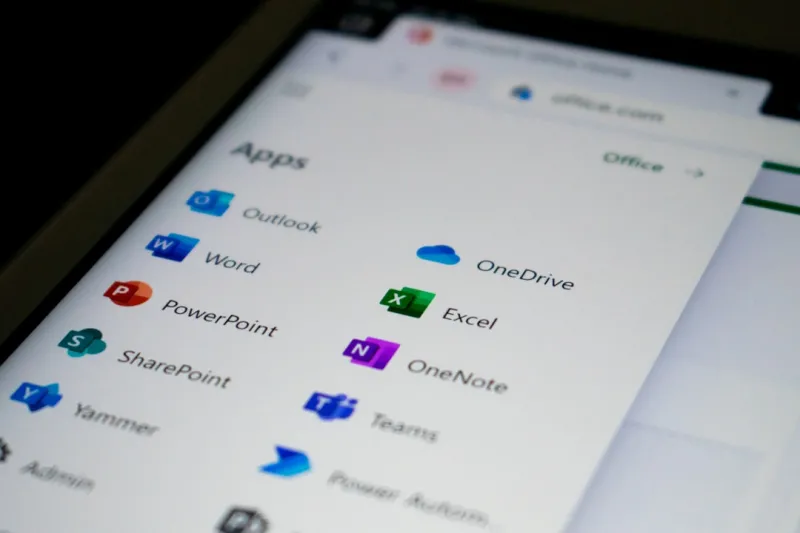
When I first opened a Word document back in the early 2000s, I never imagined I’d still be drafting proposals, spreadsheets, and presentations from the same ecosystem three decades later. Yet here we are in 2026, and Microsoft Office remains the undisputed workhorse of the modern office, not merely because of brand inertia but because it has continuously adapted to the way power users think and work. From the seamless cloud sync that lets me jump from my laptop to my desktop without missing a beat, to the AI‑driven Copilot that drafts, edits, and even visualizes data on the fly, Office feels less like a static suite and more like a living, breathing partner. As a long‑time power user, I’ve learned to lean into those hidden shortcuts, macro‑level automations, and integration points that turn a simple spreadsheet into a decision‑making engine. The real magic, however, isn’t just in the features themselves; it’s in the way they align with the power‑user mindset that drives efficiency, creativity, and reliability across every project I tackle.
Unlocking the Hidden Power of Office in 2026
Most users stick to the obvious “bold, italic, underline” toolbar, but the real horsepower lies in the lesser‑known functions that have been quietly enhanced over the past few releases. Take Excel’s new “Dynamic Arrays” and “LET” functions – they let you build complex models without drowning in nested formulas, and when paired with Power Query’s revamped data connectors, the workflow becomes almost entirely drag‑and‑drop. In PowerPoint, the “Designer” AI now suggests layout changes that respect your brand guidelines, while the “Presenter Coach” offers real‑time feedback on pacing and filler words. Even Outlook has become a strategic hub: the integrated “Focused Inbox” now learns from your interaction patterns, and the new “Meeting Insights” panel pulls relevant documents and emails into a single view before you even click “Join.” For those of us who thrive on automation, the ability to embed Office scripts directly into SharePoint or Teams channels means we can trigger a report generation with a single click, turning routine tasks into one‑click processes.
Beyond the core apps, Microsoft has leaned heavily into the ecosystem, weaving Office into Teams, OneDrive, and the broader Microsoft 365 cloud. This interconnectedness is a game‑changer for anyone who juggles multiple devices or collaborates across borders. When I’m on a conference call in Teams, I can open a Word document directly in the chat pane, make live edits, and have those changes instantly reflected for every participant. The real‑time co‑authoring experience feels as fluid as Google Docs once did, but with the added depth of Office’s advanced formatting and data tools. Moreover, the new “Data Types” feature in Excel now pulls live market data, sports stats, or even custom company metrics straight from the cloud, eliminating the need for external plugins. It’s this blend of deep functionality and seamless connectivity that makes Office feel less like a suite of isolated apps and more like a unified, intelligent workspace.
Power‑User Strategies for an Optimized Office Experience
To truly harness Office’s potential, I treat my PC setup as an extension of the software. A laggy machine can nullify even the smartest AI assistance, so I regularly reference my Future‑Proof Your Rig: The Power‑User’s Guide to 2026 PC Upgrades guide to keep my hardware on point. A fast SSD, ample RAM, and a modern GPU ensure that large Excel models or high‑resolution PowerPoint graphics render without a hiccup. But hardware is only half the story; I also fine‑tune my operating system settings. The article How Modern Operating Systems Empower the Power User walks through disabling unnecessary background services, enabling fast startup, and leveraging virtualization for sandboxed testing of new Office add‑ins. By aligning my OS, hardware, and Office configurations, I create a frictionless pipeline where data flows from intake to insight in seconds, not minutes.
One habit that has saved me countless hours is the strategic use of keyboard shortcuts and custom macros. In Word, I’ve mapped a shortcut to insert a pre‑formatted citation style with a single keystroke, while in Excel I’ve built a macro that cleans and normalizes incoming CSV files before they ever hit my dashboard. PowerPoint’s “Slide Master” templates, when combined with the new “Design Ideas” AI, let me produce brand‑consistent decks in a fraction of the time. And thanks to the Office Script editor, I can write JavaScript‑like scripts that run across Excel, Word, and PowerPoint, automating cross‑document workflows that used to require manual copy‑pasting. These tiny efficiencies compound dramatically over the course of a week, turning what could be a marathon of repetitive tasks into a sprint of strategic work.
Future‑Proofing Your Office Suite for the Next Wave of Innovation
Looking ahead, Microsoft’s roadmap signals even deeper integration with AI and mixed reality. The upcoming “Copilot for Teams” promises to draft meeting agendas, summarize discussions, and even suggest action items based on the conversation context. Meanwhile, the “Excel Data Types” platform is set to expand into custom corporate data models, meaning your internal ERP or CRM can become a native Excel data source without any third‑party connectors. As a power user, I’m already experimenting with these preview features, using them to prototype dashboards that pull live sales data directly into a single workbook, automatically updating visualizations as numbers shift. This forward‑thinking approach ensures that when the features fully roll out, my workflows are already primed to leverage them.
Security remains a top concern, especially as Office documents become richer with macros and embedded scripts. I keep a close eye on the latest guidance from the Hardening High‑Performance PCs article, applying policies that restrict unsigned macros while still allowing trusted automation. Enabling Multi‑Factor Authentication (MFA) across my Microsoft 365 tenant, coupled with conditional access policies, adds an extra layer of protection against credential‑theft attacks that increasingly target power users. By staying proactive—updating my Office suite, reviewing permission settings, and regularly scanning for suspicious activity—I can enjoy the productivity gains without exposing my data to unnecessary risk.
Ultimately, Microsoft Office’s staying power lies in its ability to evolve alongside the needs of power users. From AI‑driven assistants that draft content in seconds, to robust automation tools that turn repetitive steps into single‑click actions, the suite offers a depth that few competitors can match. By aligning my hardware, operating system, and daily habits with the latest Office capabilities, I not only boost my own efficiency but also set a benchmark for colleagues who aspire to work smarter, not harder. As we continue into the latter half of 2026, the only constant is change, and with Office’s relentless innovation, I’m confident that the tools I rely on will keep pace with my ambition.