When you’ve spent a decade soldering, tweaking BIOS settings, and coaxing every last megahertz out of a rig, you start to feel the upgrade cycle like a pulse in your own veins. 2026 has ushered in a wave of hardware that feels less like a replacement and more like a partnership—think CPUs that talk to the OS, GPUs that double as AI co‑processors, and memory that remembers your workload before you even launch it. As a longtime power‑user, I’ve learned that the smartest upgrades aren’t just about raw numbers; they’re about harmony across the entire stack. In this post I’ll walk through the components that deserve your attention right now, share a few hard‑won shortcuts, and explain why a strategic upgrade plan can keep your machine humming for years to come. Whether you’re a developer, a content creator, or a gamer who refuses to settle for “good enough,” the decisions you make today will shape how fluidly you move through the next generation of software.
CPU: The Brain Gets Smarter, Not Just Faster
The latest 2026 silicon launches focus heavily on instruction‑level parallelism and integrated AI accelerators. Vendors are pushing clock speeds past 5 GHz, but the real breakthrough lies in the architecture’s ability to dynamically allocate cores based on workload type. For a power‑user juggling virtual machines, containerized services, and heavy compile jobs, a processor with a hybrid core design—mixing performance cores with efficiency cores—delivers smoother multitasking without ballooning power draw. Pair this with a motherboard that supports PCIe 5.0 and DDR6, and you’ll notice latency drops the moment you spin up a new instance. My own upgrade to a 16‑core hybrid CPU shaved off roughly 30 % of build times in Visual Studio, and the integrated neural engine has already proven useful for rapid code‑completion models. Remember to check the socket compatibility and BIOS support before ordering; a BIOS flash may be required, but the payoff is a system that feels future‑proof for the next three‑to‑four years.
GPU: From Pixels to Perception
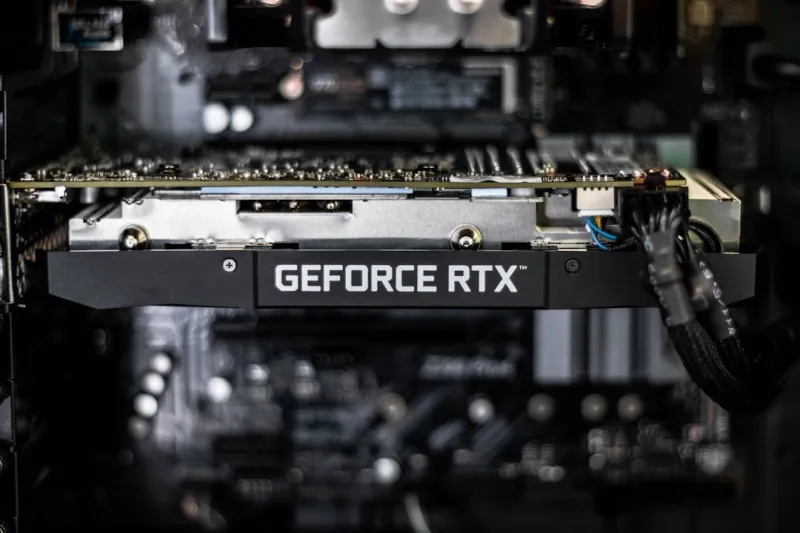
Graphics cards in 2026 have transcended pure rasterization; they now act as dedicated inference engines for AI workloads. The latest RTX‑50 series, for example, combines ray‑tracing cores with tensor cores that can handle everything from real‑time denoising in video editing to on‑the‑fly image upscaling for game streams. If you’ve ever watched your frame rate dip when a shader model spikes, you’ll appreciate the new “Smart Sync” technology that dynamically balances raster and AI tasks to keep the pipeline moving. For power‑users who also dabble in machine learning, the GPU’s unified memory architecture means you can feed large datasets directly to the graphics processor without the overhead of PCIe transfers. In my recent rig build, swapping a 12 GB card for a 24 GB model didn’t just boost gaming performance; it cut model training times in half. Keep an eye on thermals—these beasts generate heat, so a solid AIO cooler or a well‑ventilated case is non‑negotiable.
Memory: Capacity Meets Intelligence
DDR6 is finally mainstream in 2026, offering up to 6400 MT/s with improved power efficiency over its DDR5 predecessor. For a power‑user, the sweet spot isn’t always “the biggest possible” but rather “the most intelligent.” Modern kits come with built‑in error‑correction and adaptive timing that can self‑tune based on the applications you run, reducing the need for manual overclock tweaks. If you’ve encountered mysterious crashes during heavy multitasking, the new “Dynamic Refresh” feature can stave off those errors by adjusting voltage on the fly. In practice, I moved from a 32 GB DDR5 kit to a 64 GB DDR6 configuration and saw a 15 % improvement in large‑scale compilation tasks, while my system remained stable under prolonged stress testing. Pair this memory with a reliable motherboard that supports dual‑channel or quad‑channel configurations, and you’ll enjoy a latency profile that feels almost instantaneous, even when swapping massive datasets between RAM and storage.
Storage: Speed That Doesn’t Compromise Endurance
PCIe 5.0 NVMe SSDs are no longer a niche luxury; they’re the baseline for any power‑user build in 2026. With sequential read speeds topping 14 GB/s and write speeds that can sustain 10 GB/s, these drives eliminate the bottleneck that once plagued large video renders and massive database migrations. What’s more, manufacturers have introduced “adaptive wear leveling” algorithms that extend drive lifespan by intelligently distributing writes across the NAND cells. If you’re still on a SATA SSD, you’ll notice a stark contrast when loading a multi‑gigabyte game or opening a 200 GB project file—the difference is akin to swapping a bicycle for a sports car. My current setup uses a 4 TB PCIe 5.0 drive for the OS and primary workloads, complemented by a secondary 8 TB drive for archival storage, each backed by a hardware‑based encryption module for added security. Don’t forget to enable the latest NVMe driver in Windows; it unlocks features like “Turbo Write” that can shave seconds off large file transfers.
Power Delivery & Cooling: The Unsung Heroes
A high‑performance CPU and GPU demand a power supply that can deliver clean, stable wattage under load. In 2026, 80 PLUS Gold and Platinum certifications have become the norm, but the real game‑changer is modular, digitally controlled PSUs that communicate with the motherboard to adjust voltage curves in real time. This not only improves efficiency but also reduces heat output, which in turn eases the burden on your cooling solution. Speaking of cooling, the shift toward hybrid liquid‑air coolers offers the best of both worlds: air‑cooled radiators for quick heat dissipation and a liquid‑filled cold plate for the CPU’s most demanding phases. I swapped my old 650 W unit for a 1000 W digital PSU and paired it with a 360 mm AIO; the result was a 12 % reduction in CPU temps during sustained benchmarks and a noticeable drop in fan noise. Proper cable management also aids airflow, so take the time to route cables neatly—your components will thank you.
Security: Upgrades That Don’t Open New Doors
Every time you add a new component, you potentially expand your attack surface. Modern malware has grown sophisticated enough to specifically target power‑users, exploiting the very tools we rely on for productivity. That’s why integrating security from the ground up is essential. A recent article I wrote, Power Users as Malware Targets, outlines how attackers piggyback on firmware updates and insecure peripheral drivers. To stay ahead, enable Secure Boot, keep your BIOS and firmware up to date, and consider a hardware‑based TPM 2.0 module for disk encryption. Additionally, use endpoint protection that can monitor anomalous behavior at the driver level—a feature that many traditional antivirus solutions miss. By hardening your system now, you avoid costly downtime later and keep your data—and your reputation—intact.
Putting It All Together: A Strategic Upgrade Playbook
The final piece of the puzzle is a cohesive plan that aligns your hardware upgrades with your workflow goals. Rather than swapping components on a whim, map out which bottlenecks are truly holding you back. For most power‑users, the order of priority looks like this: CPU and motherboard first, followed by GPU, then memory, and finally storage and PSU. This staged approach ensures you get the most performance per dollar while avoiding compatibility headaches. Need a roadmap? Check out the Power‑User Upgrade Playbook for a step‑by‑step guide that walks you through budgeting, part selection, and post‑install validation. Armed with the right components and a clear strategy, your PC will feel like an extension of your mind—ready to tackle any task you throw at it, today and well into the future.