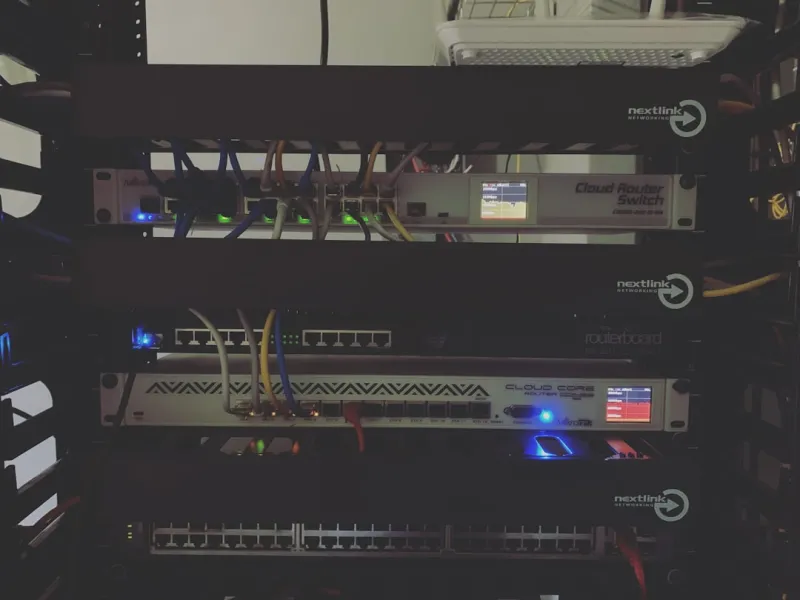
Network architecture in 2026 feels like the wild west of possibilities, where every packet carries not just data but a slice of AI‑enhanced intent. As power users, we no longer accept “good enough” latency; we demand sub‑millisecond responses that keep our gaming rigs, streaming studios, and AI‑driven workloads humming without a hiccup. The explosion of edge devices, 5G‑plus, and the nascent 6G trials are reshaping how we think about bandwidth, reliability, and security—all from the comfort of a home lab or a boutique co‑working space. In this era, the network is as much a processor as the CPU, and mastering it means treating it like a living, learning organism you can coax into peak performance.
The AI‑Infused Router Revolution
Modern routers have graduated from simple packet forwarders to miniature AI engines capable of predictive traffic shaping. By analyzing usage patterns in real time, these devices can pre‑allocate bandwidth to high‑priority streams before you even open the application. This shift mirrors the insights I explored in AI Computing for Power Users: Harnessing the Future of Performance and Security, where the convergence of AI and hardware is not just a buzzword but a tangible performance lever. Imagine a router that learns your nightly streaming schedule, boosts your home theater QoS, and then gracefully steps back when you switch to a latency‑sensitive multiplayer session. The key is to enable firmware that supports custom ML models, giving you the flexibility to fine‑tune the network’s “brain” to your exact workflow.
Security at the Speed of Light
The same AI that accelerates traffic also becomes a double‑edged sword for attackers. AI‑driven malware can now sniff network anomalies and adapt its payload on the fly, making traditional signature‑based defenses obsolete. Power users must pivot to behavior‑based detection, leveraging machine learning to spot the subtle deviations that signal a breach. My deep‑dive in How Power Users Can Outsmart AI‑Driven Malware in 2026 outlines a three‑step playbook: (1) Deploy an AI‑enabled IDS that learns your baseline traffic, (2) Segment your network with micro‑VLANs to contain lateral movement, and (3) Rotate encryption keys daily to invalidate any stolen session tokens. Proactive monitoring becomes the new antivirus, and it’s essential to integrate it directly into your router’s firmware or a dedicated edge appliance.
Rethinking Encryption for Modern Networks
Encryption standards that were rock‑solid a few years ago are now showing cracks under quantum‑ready attacks and sophisticated side‑channel exploits. The shift toward post‑quantum cryptography is no longer a theoretical exercise; it’s a practical necessity for any power user who values privacy and data integrity. In my article Why Modern Power Users Must Rethink Encryption Strategies, I argue that a layered approach—combining TLS 1.3, WireGuard, and emerging PQC algorithms—provides both forward secrecy and resilience against future threats. Moreover, integrating encryption at the network layer, rather than only at the application layer, reduces overhead and eliminates blind spots where data could be exposed during transit.
Fine‑Tuning Performance with the Next‑Level Playbook
When it comes to squeezing every ounce of speed from your connection, the Next‑Level Networking Playbook serves as a cheat sheet for advanced QoS, BBR congestion control, and custom routing tables. Start by mapping your most bandwidth‑hungry applications—whether it’s a GPU‑heavy rendering farm or a low‑latency trading bot—and assign them to dedicated traffic classes. Next, enable BBR (Bottleneck Bandwidth and Round‑Trip time) on compatible devices; it dynamically adjusts the congestion window to maximize throughput without triggering packet loss. Finally, leverage static routes for critical endpoints, bypassing ISP‑level peering bottlenecks and ensuring a direct path to cloud services you rely on daily.
Hybrid Cloud Connectivity and SD‑WAN Evolution
The boundary between on‑prem and cloud is dissolving, and SD‑WAN solutions are the glue that holds this hybrid tapestry together. Modern SD‑WAN appliances now embed AI to predict link degradation and automatically reroute traffic through the most reliable path—be it fiber, 5G, or satellite. For a power user juggling a personal NAS, a cloud‑based AI lab, and a remote development environment, this means you can maintain sub‑millisecond latency across disparate resources without manual reconfiguration. The trick is to choose an SD‑WAN vendor that offers open APIs, allowing you to script custom failover policies that align with your unique workload patterns.
Future‑Proofing Your Hardware Stack
Hardware upgrades remain the backbone of any networking overhaul. While a sleek Wi‑Fi 7 router may look tempting, the true long‑term investment lies in modular platforms that support interchangeable radios, upgraded CPUs, and even FPGA accelerators for custom packet processing. My guide on Future‑Proof Your PC: The 2026 Power‑User Upgrade Playbook highlights the importance of selecting a chassis with ample space for additional NICs and the ability to hot‑swap SSDs without downtime. Pairing these upgrades with a high‑throughput, low‑latency switch that supports 25 GbE or higher ensures your network can scale alongside your computing ambitions for years to come.
AI‑Driven Monitoring and Analytics
Traditional network monitoring tools often drown you in raw packet dumps, making it hard to extract actionable insights. The new wave of AI‑powered analytics platforms ingests flow data, correlates it with application logs, and presents a heat map of latency hotspots in real time. By setting thresholds for jitter, packet loss, and throughput, the system can automatically trigger remediation scripts—think restarting a stuck service or reallocating bandwidth. This level of automation frees you to focus on creative tasks while the network self‑optimizes, embodying the very definition of a “smart” infrastructure.
Community, Continuous Learning, and Hidden Threats
Staying ahead in the networking game is as much about community as it is about technology. Forums, Discord channels, and open‑source projects provide a rapid feedback loop for emerging threats and novel configurations. For those who want to dive deeper into the unseen dangers lurking in modern setups, the piece The Hidden Threats Lurking in Modern Power‑User Environments uncovers subtle attack vectors—like rogue DHCP servers on guest networks and firmware backdoors in IoT devices—that can compromise even the most hardened environments. Engaging with peers, sharing your own findings, and contributing to collective defense mechanisms is the most effective way to keep your network resilient.
Wrapping Up: Your Roadmap to a Hyper‑Responsive Network
In 2026, the line between networking and computing is virtually invisible, and mastering that convergence is the ultimate power‑user advantage. By embracing AI‑enabled routers, adopting next‑gen encryption, fine‑tuning QoS with proven playbooks, and staying vigilant through community intel, you can craft a network that feels like an extension of your own mind—anticipating needs, defending against threats, and delivering relentless performance. The future is already here; it’s just waiting for you to flip the switch and let your network run at full throttle.