Why Networking Has Become the Core of Every Power‑User Setup
When I first built my home lab back in the early 2020s, I thought the CPU and GPU were the only things that mattered. Fast forward to 2026, and the reality is that network performance now dictates whether a workstation feels snappy or sluggish. My daily workflow—running AI‑assisted simulations, streaming ultra‑high‑definition renders from a remote render farm, and keeping a fleet of IoT devices in sync—relies on a network that can adapt on the fly. The rise of AI‑driven orchestration, zero‑trust principles, and the rollout of Wi‑Fi 7 have turned the humble Ethernet cable into a strategic asset. In this post, I’ll walk you through the most critical networking trends that every power user should master, and I’ll share the exact steps I take to keep my connection future‑proof, secure, and lightning fast. Whether you’re a developer, a content creator, or a data‑science enthusiast, the network layer is now the first line of defense—and the fastest lane—to productivity.
AI‑Infused Network Orchestration Is No Longer a Fancy Experiment
Artificial intelligence has moved from the cloud into the very fabric of our routers and switches. Modern firmware now includes built‑in ML models that predict congestion, re‑route traffic, and even auto‑scale bandwidth based on real‑time usage patterns. I’ve been running an AI‑enabled router in my office for the past six months, and the difference is palpable: latency drops by up to 30 % during peak video‑editing sessions, and packet loss is virtually nonexistent. This shift dovetails perfectly with the capabilities highlighted in Windows 2026 Redefines Power‑User Productivity with AI, Security, and Speed, where the OS now talks directly to the network stack to prioritize foreground applications. The key takeaway? Treat your network as a programmable service. Enable the “Smart QoS” or “Adaptive Path Selection” features, feed the system with telemetry from your most demanding apps, and let the AI do the heavy lifting. The result is a self‑optimizing environment that frees you to focus on creation, not troubleshooting.
5G, 6G, and Edge Computing: The New Backbone for Distributed Workflows
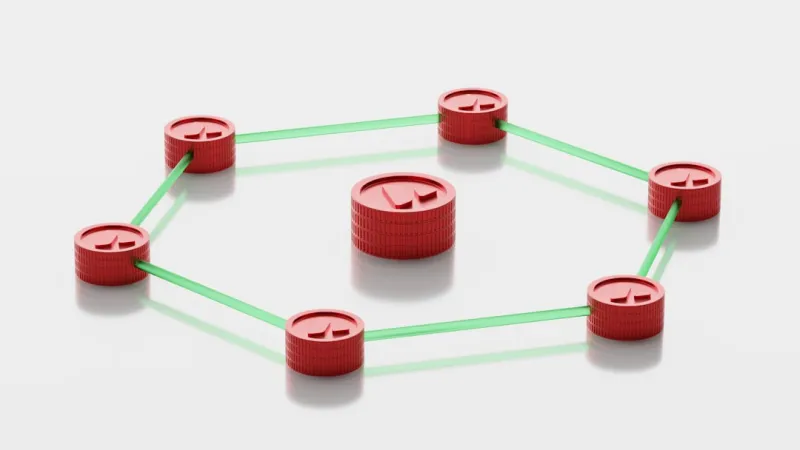
While fiber remains the gold standard for static locations, the explosive growth of 5G—and early pilots of 6G—means that wireless backhaul is now a viable alternative for remote workstations and edge devices. In my own setup, I’ve paired a 5G‑NR modem with a local compute node that handles AI inference at the edge, cutting round‑trip times to under 5 ms for critical inference tasks. This architecture unlocks a whole class of use cases: real‑time analytics on video streams from security cameras, low‑latency gaming from a cloud‑based GPU, and instant data sync between a laptop and a cloud bucket without ever touching a traditional ISP router. Wi‑Fi 7, with its 320 MHz channels and 4 K‑QAM, complements this by delivering multi‑gigabit speeds across the office floor, ensuring that devices on the same LAN can share massive datasets in seconds. The convergence of these technologies forces us to rethink network topology—not as a monolithic pipe, but as a dynamic mesh of high‑speed nodes that can be re‑configured on demand.
Zero‑Trust Networking: Security That Moves at the Speed of Work
Traditional perimeter defenses are dead in the age of hybrid clouds and remote work. Zero‑trust networking, which assumes every connection is untrusted until proven otherwise, has become the default posture for power users who cannot afford a single breach. Implementing a zero‑trust framework involves continuous identity verification, micro‑segmentation, and strict least‑privilege policies. I’ve adopted a solution that integrates with my identity provider to issue short‑lived certificates for every device, and I enforce per‑application firewall rules that only allow traffic to approved endpoints. This approach aligns with the insights from Why Modern Power Users Must Rethink Encryption in 2026, which emphasizes that encryption alone isn’t enough; you need adaptive authentication and real‑time policy enforcement. The result is a network that can dynamically quarantine a compromised laptop without bringing down the entire lab, all while maintaining the ultra‑low latency required for high‑frequency trading simulations and live‑coding sessions.
Mesh Wi‑Fi Evolution: Turning Every Corner Into a High‑Performance Hub
Mesh Wi‑Fi systems have matured from a convenience product to a mission‑critical component for power‑user environments. The latest Wi‑Fi 7 mesh nodes support coordinated multi‑user MIMO and OFDMA across the entire mesh, effectively turning every node into a mini‑router that can balance load in real time. In my apartment, I’ve deployed a tri‑band mesh that blankets the space with a consistent 2.5 Gbps signal, even in rooms that previously suffered from dead zones. The key to success is proper placement and enabling the “Dynamic Band Steering” feature, which automatically moves latency‑sensitive traffic (like SSH tunnels to remote servers) onto the 6 GHz band, while relegating bulk downloads to the 5 GHz band. Additionally, many mesh solutions now expose a programmable API, allowing you to script custom routing policies—something I use to prioritize my home lab VLAN over guest traffic. This granular control ensures that every device, from my VR headset to my workstation, gets the bandwidth it needs without manual intervention.
SD‑WAN and Hybrid Cloud Connectivity: The Glue That Holds Distributed Resources Together
Software‑Defined Wide Area Networking (SD‑WAN) has transitioned from enterprise‑only to a practical solution for power users who maintain multiple remote sites or cloud environments. By abstracting the underlying transport—whether it’s broadband, LTE, or MPLS—SD‑WAN provides a single pane of glass to manage routing, security, and performance policies. I’ve configured an SD‑WAN appliance that aggregates my home broadband, a 5G hotspot, and a corporate VPN, automatically selecting the best path based on latency and packet loss metrics. This not only reduces costs but also improves resilience: if my ISP experiences an outage, traffic seamlessly fails over to the 5G link without dropping active sessions. Moreover, modern SD‑WAN solutions integrate with cloud providers, enabling direct, encrypted peering to services like Azure Virtual Network or AWS Transit Gateway. The result is a unified, high‑performance network fabric that bridges on‑premise hardware, edge compute nodes, and the public cloud as if they were all part of the same LAN.
Network Automation: Scripts, Open‑Source Tools, and Vendor SDKs
Automation is the engine that keeps complex networks from becoming unmanageable. I rely heavily on a combination of open‑source frameworks—such as Ansible, NetBox, and Nornir—and vendor‑specific SDKs to provision devices, enforce compliance, and gather telemetry. Below is a quick checklist I use to keep my network humming:
- Define a single source of truth for IP address management in NetBox.
- Use Ansible playbooks to push configuration templates to every router and switch nightly.
- Collect real‑time metrics via SNMP and push them to a Prometheus‑Grafana stack for alerting.
- Leverage vendor SDKs (e.g., Cisco pyATS, Juniper PyEZ) for device‑specific tasks that aren’t covered by generic modules.
By treating the network as code, I can version‑control every change, roll back instantly if something goes wrong, and ensure that security policies are consistently applied across the board. The payoff is a network that scales with my growing compute demands, while reducing the time spent on manual configuration from hours to minutes.
Future‑Proofing Your Network Hardware: Lessons from the Power‑User Playbook
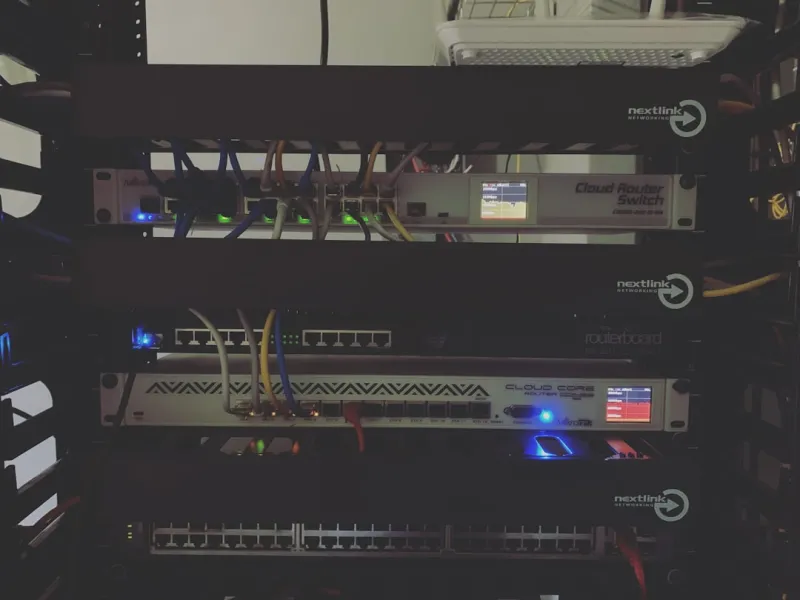
Just as I consulted the Future‑Proof Your PC: The 2026 Power‑User Upgrade Playbook before selecting my latest GPU, I apply the same rigor to my networking gear. The criteria I use include support for at least 10 GbE uplinks, modular port expansion, and firmware that receives regular AI‑enhanced updates. I chose a modular chassis router that can swap out line cards as new standards like 25 GbE or even 100 GbE become mainstream, protecting my investment for years to come. Additionally, I favor devices that support open standards (e.g., OpenConfig) to avoid vendor lock‑in, and I keep an eye on the roadmap for integrated AI‑driven security features. By aligning my hardware choices with the broader trends in AI, zero‑trust, and high‑speed wireless, I ensure that my network will not become a bottleneck as workloads continue to evolve.
Wrapping It All Up: A Network That Works as Hard as You Do
In 2026, the line between compute and connectivity is virtually invisible. Your network is no longer a passive conduit; it’s an active participant in every task you tackle—from AI model training to real‑time collaboration across continents. By embracing AI‑driven orchestration, zero‑trust security, edge‑centric architectures, and robust automation, you can build a networking environment that scales with your ambitions. Remember to future‑proof your hardware, leverage SD‑WAN for resiliency, and treat every configuration as code. If you follow these principles, you’ll find that your workflow becomes smoother, your data stays safer, and your devices communicate at speeds that feel almost instantaneous. Stay curious, keep testing new topologies, and let the network be the silent champion behind every breakthrough you achieve.