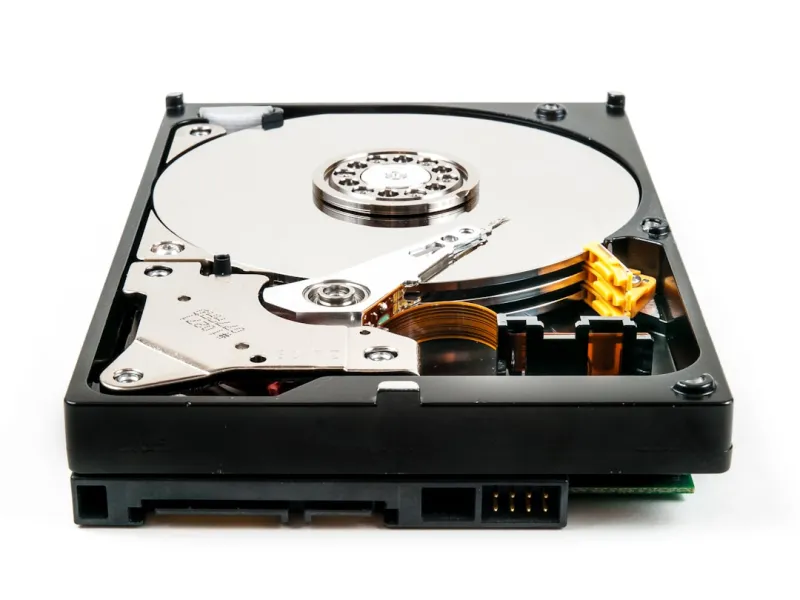
When I first cracked open a 3.5‑inch platter back in the early 2000s, the whirring sound was practically a badge of honor for any power user. Fast‑forward to 2026, and that nostalgic hum still has a place in the modern rig, but it’s now sharing the stage with lightning‑fast NVMe flash. My name is Shawn DesRochers, and after years of building and tearing down systems for the most demanding workloads, I’ve learned that the right hard drive can be the difference between a buttery‑smooth workflow and a frustrating bottleneck. In this deep dive, I’ll walk you through the current state of hard‑drive technology, why capacity and speed still matter, and how to future‑proof your storage without breaking the bank. Whether you’re a content creator juggling 8K footage, a developer compiling massive codebases, or a gamer looking for instant load times, understanding the nuances of today’s storage options is essential for keeping your rig running at peak performance.
Why Hard Drives Still Matter in a Flash‑Driven World
It’s easy to assume that solid‑state drives have made traditional spinning disks obsolete, but the reality is far more nuanced. In 2026, HDDs still dominate the bulk‑storage market because they offer the most cost‑effective way to hoard terabytes of data. A 10 TB SATA HDD can be found for a fraction of the price of an equivalent‑capacity NVMe SSD, making them ideal for archival libraries, massive media collections, and backup vaults where sheer speed isn’t the priority. Yet, the performance gap has narrowed thanks to innovations like shingled magnetic recording (SMR) and heat‑assisted magnetic recording (HAMR), which push densities higher while maintaining reliability. For power users who demand both capacity and reasonable throughput, a hybrid approach—pairing a high‑capacity HDD for storage with a PCIe 5.0 NVMe for active projects—delivers the best of both worlds. As I always say, “Don’t let the hype dictate your hardware; let the workload dictate the tool.”
The 2026 Storage Landscape: Speed, Capacity, and Cost
One of the most striking trends this year is the aggressive pricing drop for PCIe 5.0 NVMe drives. What used to cost $300 for a 2 TB drive is now hovering around $120, making high‑speed storage accessible to the average enthusiast. Meanwhile, HDD manufacturers have pushed platter densities to a new high, with 18 TB and 20 TB models becoming commonplace on retail shelves. This explosion in capacity is driven by demand from AI‑generated content creators who need petabytes of raw data for training models. However, the price‑per‑gigabyte for HDDs still beats SSDs by a wide margin, especially when you consider the diminishing returns of QLC NAND at the high‑end. As you plan your next upgrade, remember that the sweet spot for most power users lies in a tiered storage hierarchy: an ultra‑fast NVMe for OS and applications, a mid‑range SATA SSD for active projects, and a massive HDD for long‑term archives.
Reliability is another factor that can’t be ignored. Modern HDDs boast mean‑time‑between‑failure (MTBF) ratings that exceed 1.5 million hours, and manufacturers have refined error‑correction algorithms to mitigate bit‑rot. That said, mechanical drives are still susceptible to physical shocks, so proper mounting and vibration damping are crucial in a high‑performance chassis. If you’re building a workstation that will sit on a desk all day, consider using anti‑vibration grommets and a dedicated HDD cage. For those who demand rock‑solid data integrity—think financial analysts or medical researchers—pairing these drives with robust encryption and backup strategies is non‑negotiable.
Security and Backup: Protecting Your Data in 2026
Security is no longer an afterthought; it’s a baseline requirement for any serious rig. With ransomware attacks becoming more sophisticated, encrypting data at rest is essential, especially for drives that travel off‑site or sit in external enclosures. I recommend following the practices outlined in Encryption Mastery for Power Users: Protecting Data in 2026, which walks you through hardware‑based AES‑256 encryption, TPM integration, and secure key management. Remember, encryption adds a slight performance overhead, but the trade‑off for peace of mind is worth it. Moreover, a layered backup strategy—commonly known as the 3‑2‑1 rule: three copies of data, on two different media, with one off‑site—remains the gold standard. Cloud providers now offer near‑instant snapshot capabilities, but local backups on high‑capacity HDDs provide an additional safety net against internet outages or provider failures.
When setting up your backup regimen, think about automation. Tools like Windows Storage Spaces Direct and Linux’s Snapper can schedule incremental backups to your HDD array, ensuring that every change is captured without manual intervention. For power users who juggle massive datasets, incremental deduplication can save both storage space and time. Pair this with a reliable UPS and you’ve built a fortress for your data. As always, test your restores regularly; a backup is only as good as its ability to bring you back online when disaster strikes.
Choosing the Right Drive for Your Use‑Case
Now that we’ve covered the macro trends, let’s get personal. Selecting the perfect hard drive depends on three core questions: What’s your primary workload? How much data do you need to store long‑term? And what’s your budget? For those who spend most of their day rendering video or training AI models, a high‑end PCIe 5.0 NVMe with at least 4 TB of capacity provides the bandwidth needed to keep pipelines flowing. If you’re a gamer or a developer who values quick load times, a 2 TB SATA SSD can serve as a sweet spot between speed and cost. Meanwhile, if you’re curating a massive media library or need archival storage for compliance purposes, a 16 TB or 20 TB HDD is the logical choice. To dive deeper into the decision matrix, check out Comp Doc's Guide to Choosing the Perfect Hard Drive, which breaks down performance metrics, endurance ratings, and price per gigabyte across the board.
One often‑overlooked factor is the drive’s interface. While SATA III remains ubiquitous, the shift toward PCIe 5.0 and even the early rollout of PCIe 6.0 means you should future‑proof your motherboard with enough M.2 slots and appropriate lanes. If you’re building a new rig, consider a motherboard that supports both PCIe 5.0 NVMe and offers a dedicated SATA controller for HDDs, ensuring you won’t be bottlenecked as you upgrade. Additionally, keep an eye on the drive’s power consumption; modern SSDs can draw up to 8 W under load, which may affect thermals in a compact case. Balancing these technical specs with your real‑world needs is the art of power‑user storage planning.
Performance Bottlenecks and How to Eliminate Them
Even the fastest NVMe drive can become a choke point if the rest of the system can’t keep up. In my experience, the most common culprit is an under‑powered CPU that can’t feed data fast enough to the storage subsystem. Pairing a PCIe 5.0 SSD with a mid‑range processor often leads to sub‑optimal throughput, especially when handling large sequential reads—think 4K video streams. The solution? Align your CPU, motherboard, and storage tiers. A modern Zen‑4 or Alder Lake‑X platform provides ample PCIe lanes and memory bandwidth, ensuring the SSD operates at its advertised speeds. Also, don’t forget firmware updates; manufacturers regularly release patches that improve stability and performance, especially for drives that support Host Memory Buffer (HMB) technology.
Another hidden bottleneck is the file system. While NTFS remains the default for most Windows users, switching to ReFS or even the newer exFAT for large media drives can improve resilience and reduce fragmentation. Linux power users might opt for XFS or Btrfs, which offer advanced features like snapshots and checksums that add an extra layer of data integrity. In my rigs, I typically format my SSDs with NTFS for Windows compatibility, while my archival HDDs run on XFS under a dual‑boot setup, giving me the best of both worlds. The key takeaway is that storage performance isn’t just about the hardware; it’s also about how the software interacts with that hardware.
Looking Ahead: Emerging Technologies on the Horizon
What’s next for hard‑drive technology? While SSDs continue their meteoric rise, research into magnetic storage isn’t dead. Companies are perfecting HAMR (Heat‑Assisted Magnetic Recording) and MAMR (Microwave‑Assisted Magnetic Recording), promising drives that can exceed 30 TB per platter without sacrificing reliability. In 2026, we’re seeing early adoption of these techs in enterprise environments, and I expect them to trickle down to consumer markets within the next few years. On the flash side, PCIe 6.0 SSDs promise bandwidths upwards of 64 GB/s, which could render even the fastest SATA drives obsolete for high‑intensity workloads. However, the cost will remain prohibitive for most hobbyists for the near term.
Another exciting development is the rise of computational storage—drives that embed processing cores to offload tasks like compression, encryption, or AI inference. Imagine an HDD that can encrypt data on the fly without taxing your CPU, or an SSD that can pre‑process video frames before they hit your GPU. While still in its infancy, this paradigm could reshape how we think about storage hierarchy, turning drives from passive repositories into active participants in the compute pipeline. As power users, staying abreast of these trends ensures we can make informed choices that keep our rigs ahead of the curve.
Actionable Checklist for Building a Balanced Storage Suite
Before you head to your favorite retailer or click “Add to Cart,” run through this quick checklist to verify you’ve covered all bases. 1️⃣ Define your primary workloads: gaming, content creation, AI, or archiving? 2️⃣ Choose a tiered storage architecture: NVMe for OS/apps, SATA SSD for active projects, HDD for long‑term storage. 3️⃣ Verify interface compatibility: ensure your motherboard supports PCIe 5.0 or higher and has enough SATA ports. 4️⃣ Implement encryption using hardware‑based AES‑256, as detailed in Encryption Mastery for Power Users: Protecting Data in 2026. 5️⃣ Set up a 3‑2‑1 backup strategy with both local HDD mirrors and cloud snapshots. 6️⃣ Keep firmware updated on all drives to maximize performance and security. 7️⃣ Monitor health metrics via SMART tools and schedule regular checks. By ticking these boxes, you’ll build a storage system that’s fast, secure, and future‑proof—exactly what any power user needs in 2026.
In closing, the hard‑drive market in 2026 is a vibrant ecosystem where mechanical and solid‑state technologies coexist, each serving distinct roles. By understanding the strengths and limitations of each, leveraging encryption and backup best practices, and staying attuned to emerging innovations, you can craft a storage solution that not only meets today’s demands but also scales gracefully into the future. So grab that 20 TB HDD, pair it with a blazing‑fast NVMe, and watch your rig transform from a sluggish workhorse into a high‑octane data machine. Happy building, and may your drives spin (or flash) forever without a glitch.