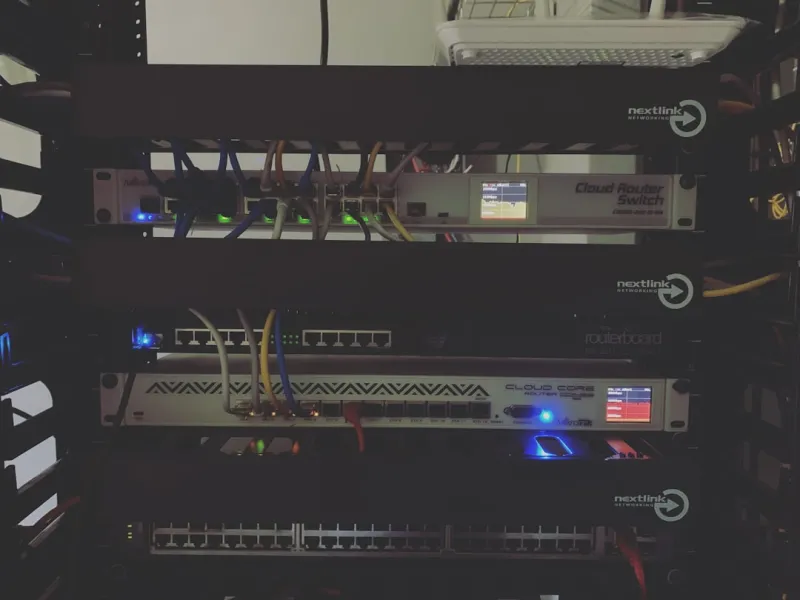
When I first started tinkering with routers in my dorm room a decade ago, networking felt like the back‑office plumbing of the digital world—necessary but invisible. Fast‑forward to 2026, and it’s become the front‑line battleground where performance, security, and creativity collide. As a self‑described power user, I’ve learned that a robust network is the linchpin for everything from multi‑GPU rendering farms to AI‑driven data pipelines. In today’s hyper‑connected landscape, the slightest latency spike can cripple a live‑streamed esports tournament or delay a critical financial transaction. That’s why I’m obsessively tracking the latest standards, hardware releases, and software tricks that keep my home lab humming like a well‑tuned race car. This post dives deep into the trends shaping computer networking this year, and shares the concrete steps I take to stay ahead of the curve while still keeping the setup manageable for a single enthusiast.
Why Networking Is the New Frontier for Power Users
The rise of edge computing is rewriting the rules of where data lives and how it moves. Instead of funneling everything to a distant cloud, modern workloads are being processed on micro‑servers positioned just a few hops away from the user. This shift reduces round‑trip time to milliseconds, which is a game‑changer for latency‑sensitive applications like VR collaboration and autonomous vehicle simulations. For power users, it means we can offload heavy AI inference to a local edge node and keep the feedback loop tight enough to feel instantaneous. The key is building a mesh of high‑throughput links—often a blend of wired 10 GbE and Wi‑Fi 7—that can handle the bursty traffic patterns typical of AI workloads. I’ve started deploying small‑form‑factor switches with built‑in PoE to power my Wi‑Fi 7 access points, creating a resilient fabric that automatically reroutes traffic if a node goes down, much like a mini‑SDN in my own apartment.
Speaking of Wi‑Fi 7, the rollout of this next‑gen wireless standard is finally hitting the consumer market in 2026, promising multi‑gigabit speeds and dramatically lower latency thanks to the new 320 MHz channel width and 4K QAM. Coupled with the ongoing expansion of 5G and the early whispers of 6G trials, we now have a convergence of ultra‑fast wireless technologies that can rival traditional Ethernet in many scenarios. For a power user who values flexibility, this means I can ditch some of the clutter of Ethernet cables without sacrificing performance—especially when I’m constantly re‑configuring my workspace or moving between home and office. However, I’m careful not to treat Wi‑Fi as a silver bullet; I still prioritize wired backbones for core services like NAS storage, hyper‑visors, and my AI inference clusters, because a stable, low‑jitter connection is non‑negotiable for those workloads.
Security has never been more critical in the networking sphere, especially as we embrace a broader attack surface with IoT devices, remote workstations, and distributed cloud nodes. The zero‑trust model—where every connection must prove its identity before any data exchange—has become the de‑facto standard for protecting modern networks. I’ve integrated certificate‑based authentication on every device, enforced strict VLAN segmentation, and layered network‑wide intrusion detection systems that leverage machine learning to flag anomalies in real time. To keep my data safe in transit, I rely heavily on strong encryption protocols, and for those interested in a deeper dive, the guide Encryption Essentials for the Modern Power User offers a practical roadmap for implementing AES‑256, TLS 1.3, and post‑quantum key exchange mechanisms without sacrificing speed.
Software‑Defined Networking (SDN) and network automation have moved from enterprise‑only buzzwords to indispensable tools for anyone looking to scale their home or small‑office lab. By abstracting the control plane from the data plane, SDN lets me script network changes, spin up virtual switches, and dynamically allocate bandwidth based on real‑time demand. I use open‑source controllers like OpenDaylight and integrate them with Ansible playbooks, allowing a single command to reconfigure firewalls, adjust QoS policies, and provision new VLANs across multiple devices. This level of automation frees me from manual, error‑prone CLI edits and makes the network adaptable enough to support spontaneous projects—whether I’m launching a containerized Kubernetes cluster for a weekend hackathon or provisioning a dedicated VPN tunnel for a remote collaborator.
For those wondering how to translate these high‑level concepts into a tangible home lab, I’ve found that starting with a solid foundation is essential. The Future‑Proof PC Upgrades article outlines the hardware roadmap I follow, and the same principles apply to networking gear. I prioritize devices with modularity in mind: a 10 GbE NIC that can be swapped for a 25 GbE model down the line, a switch with extra SFP+ ports for future fiber expansion, and a router that supports both IPv4 and IPv6 dual‑stack. Cable management, too, plays a surprisingly big role; high‑quality Cat8 cables paired with proper shielding minimize crosstalk and future‑proof the physical layer for speeds well beyond today’s mainstream offerings.
Hybrid cloud connectivity has also become a cornerstone of my networking strategy. By establishing direct, low‑latency links to major cloud providers using services like AWS Direct Connect or Azure ExpressRoute, I can treat the cloud as an extension of my local data center rather than a distant storage silo. This “data fabric” approach lets workloads burst into the cloud when local resources hit capacity, then gracefully migrate back when the demand subsides. The result is a seamless, cost‑effective balance between on‑prem performance and the elasticity of public cloud resources—a setup that would have been unthinkable just a few years ago.
Artificial intelligence is no longer confined to the GPU; it’s now infiltrating the network itself. AI‑driven monitoring tools analyze traffic patterns, predict congestion, and even auto‑remediate issues before they become noticeable to the user. I’ve integrated an open‑source AI analytics platform that ingests NetFlow data, correlates it with application logs, and surfaces actionable insights through a sleek dashboard. This proactive stance not only keeps my latency low for demanding tasks like real‑time video encoding but also helps me spot security anomalies that traditional signatures might miss. The synergy between AI and networking is a feedback loop: better network data fuels smarter AI, which in turn optimizes the network further.
Practical tips for power users looking to future‑proof their networks start with the obvious—invest in quality hardware and keep firmware up to date. Beyond that, consider adopting a layered architecture: a dedicated backbone of fiber‑optic or 10 GbE cabling, a flexible aggregation layer of managed switches, and a smart edge consisting of Wi‑Fi 7 access points with built‑in security features. Don’t overlook the power budget; using PoE++ (802.3bt) ensures you can power high‑performance APs and IoT devices without adding separate power supplies. Finally, document every change. A simple markdown repository with network diagrams, IP schemes, and configuration snippets becomes invaluable when troubleshooting or scaling, and it aligns perfectly with the reproducible‑infrastructure mindset that many power users champion.
In closing, the networking landscape in 2026 is a dynamic, intertwined tapestry of speed, security, and intelligence. By embracing edge computing, leveraging the latest Wi‑Fi 7 and 5G advancements, adopting zero‑trust principles, and automating with SDN, power users can build networks that not only meet today’s demanding workloads but also adapt gracefully to tomorrow’s innovations. If you’re ready to take your home lab from “good enough” to “industry‑grade,” start by assessing your current bottlenecks, upgrade strategically, and never stop experimenting. The internet of the future rewards those who treat networking as a core competency—not an afterthought.