When you’ve been tearing apart rigs for a decade, 2026 feels like the year the industry finally stopped pretending it’s about “newness” and started delivering real, usable horsepower. The shelves are bursting with GPUs that can render a photorealistic city in a blink, CPUs that squeeze more cores into the same thermal envelope, and memory that whispers instead of shouts. As a power‑user who lives in the sweet spot between hobbyist tinkering and enterprise‑grade reliability, I’m constantly asking: which of these shiny specs actually translate into a smoother workflow, and which are just marketing glitter? In this deep dive, we’ll dissect the hardware currents shaping our builds, flag the hype that’s worth chasing, and map out a practical upgrade path that lets you stay ahead without burning cash—or your sanity.
The GPU Surge: AI‑Ready Powerhouses
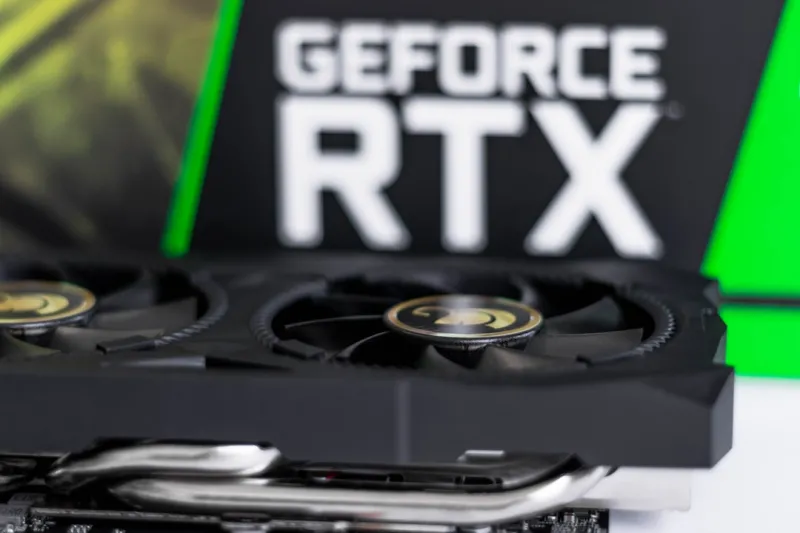
Graphics cards have become the unofficial AI accelerators of the consumer market. The latest RTX‑50 series leverages NVIDIA’s Ada Lovelace 2.0 architecture, delivering up to 40 TFLOPs of AI tensor performance while still crushing traditional rasterization tasks. AMD’s Radeon X9000 line counters with a fresh RDNA 4 stack that pushes ray‑tracing efficiency past the 2× barrier of its predecessor. What matters for a power‑user is not just raw frame rates in games, but how these GPUs accelerate deep‑learning workloads, video encoding, and real‑time data analytics. With the rise of AI‑enhanced content creation tools—think AI‑driven video upscaling and generative art—having a GPU that can offload those tensor operations means you’ll finish projects in a fraction of the time. The trick is pairing the right card with sufficient VRAM (12 GB minimum for 8K editing) and a driver stack that stays ahead of the rapidly evolving AI APIs.
CPU Architecture: Performance per Watt Gets Real
The CPU landscape in 2026 has finally embraced the “performance per watt” mantra that enthusiasts have been chanting for years. Intel’s 14‑nm “Meteor” line introduces a hybrid core design that blends high‑frequency performance cores with ultra‑efficient efficiency cores, delivering up to 24 threads without a proportional jump in power draw. Meanwhile, AMD’s Zen 5 architecture pushes the envelope with a 5 GHz boost clock on its flagship cores while maintaining a sub‑65 W TDP for mainstream parts. For power‑users, the real benefit is multitasking fluidity: you can compile massive codebases, run virtual machines, and stream high‑resolution content simultaneously without throttling. The key is to look beyond clock speed and examine the cache hierarchy—L3 caches now sit at 64 MB for flagship chips, dramatically reducing latency for data‑intensive applications. Pairing these CPUs with a motherboard that supports PCIe 5.0 and DDR6 memory ensures you’re not bottlenecked by older bus standards.
Memory Evolution: From DDR5 to DDR6
Memory has been the silent hero of every performance boost you’ve felt this year. DDR5, once a niche for early adopters, is now the baseline for most mid‑range builds, offering up to 6400 MT/s. Yet the real game‑changer is DDR6, which debuted earlier this year and pushes data rates past 9600 MT/s with tighter latency windows. For workloads like large‑scale simulations or AI model training, that extra bandwidth can shave seconds off processing times—a noticeable difference when you’re iterating on complex datasets. If you’re still on DDR4, the upgrade cost versus performance gain is too steep to ignore. My go‑to guide for navigating memory issues is the memory troubleshooting playbook, which walks you through timing tweaks, voltage adjustments, and the subtle art of hand‑selecting low‑latency modules that play nice with your CPU’s memory controller.
Storage Speed: PCIe 5 and the Emerging PCIe 6
While GPUs and CPUs steal the limelight, storage is quietly reshaping how quickly you can move data from point A to point B. PCIe 5.0 NVMe SSDs have become the norm, delivering sequential read speeds that flirt with 14 GB/s. The newer PCIe 6.0 drives, though still premium, promise up to 30 GB/s—enough to keep up with multi‑camera 8K video pipelines without a hiccup. For power‑users, the real advantage lies in reduced latency and higher IOPS, which translates to snappier application launches and faster database queries. Opt for drives with DRAM‑less architectures only if you’re on a tight budget; the performance hit can be noticeable in heavy workloads. Additionally, consider a tiered storage strategy: a PCIe 6.0 drive for active projects, paired with a high‑capacity SATA or QLC SSD for archival data. This balances speed and cost, ensuring your primary workbench never stalls.
Motherboard Choices: Features That Matter
Choosing a motherboard in 2026 feels a bit like picking a future‑proof foundation for a skyscraper. You want robust VRM clusters to handle those power‑hungry CPUs, native support for PCIe 6.0, and enough M.2 slots to accommodate your storage ambitions. The newer X‑Series chipsets also bring integrated USB 4.0 ports, which simplify connectivity for high‑speed external drives and Thunderbolt‑compatible peripherals. Don’t overlook the importance of BIOS stability—frequent updates can introduce bugs that jeopardize overclocking or power‑management settings. My trusted reference for navigating motherboard quirks is the mastering motherboard troubleshooting playbook. It offers a systematic approach to diagnosing POST failures, BIOS flash‑back procedures, and ensuring that your board’s firmware is in lockstep with the latest CPU microcode releases.
Power Delivery: Efficient PSUs and Smart Management
Power supplies have finally caught up with the demand for efficiency and modularity. 80 PLUS Platinum units now dominate the high‑end market, delivering up to 96% efficiency at typical loads. What’s more, many modern PSUs feature digital monitoring interfaces that expose real‑time voltage, current, and temperature data via USB‑C or SMBus, allowing you to integrate power metrics into your system’s health dashboard. For a power‑user, this means you can set alerts for voltage droops before they cause instability, and you can fine‑tune your system’s power envelope to maximize performance without exceeding thermal limits. Pair your PSU with a smart power strip that can automatically shut down idle components, further reducing your electricity bill and prolonging component lifespan.
Cooling Innovations: From Vapor Chambers to AI‑Driven Fans
Cooling has become an art form, especially with the thermal density of today’s CPUs and GPUs. Vapor‑chamber coolers, once reserved for flagship laptops, now populate desktop AIO solutions, spreading heat more evenly across the PCB. Meanwhile, AI‑driven fan controllers use machine‑learning algorithms to predict thermal spikes and adjust fan curves preemptively, maintaining a whisper‑quiet profile while keeping temperatures in check. Liquid cooling loops have also embraced modularity, featuring quick‑disconnect fittings that make upgrades painless. If you’re building a workstation that runs 24/7, consider a hybrid approach: a high‑capacity AIO for the CPU paired with targeted airflow over the GPU and VRMs. Monitoring tools like HWInfo can display per‑zone temperatures, letting you fine‑tune pump speeds and fan curves for optimal acoustic performance.
Strategic Upgrades: When to Pull the Trigger
Even the best components become obsolete eventually, but the art of upgrading lies in timing. A rule of thumb I follow is the “30‑60‑90 rule”: if a component’s performance boost exceeds 30% over your current part and the price‑to‑performance ratio stays under 60 % of the predecessor’s cost, it’s worth the jump. The ultimate PC upgrade playbook breaks down this methodology, helping you prioritize GPU swaps before chasing the latest CPU if your workload is GPU‑centric. Also, keep an eye on the secondary market; many enthusiasts offload barely‑used components when they chase the next big thing, providing a cost‑effective route to high‑end hardware. Finally, always benchmark before and after an upgrade using tools like Cinebench R23 or 3DMark Time Spy, so you have concrete data to justify the investment.
Future‑Proofing Your Rig: The 2026 Blueprint
Future‑proofing isn’t about buying the most expensive parts today; it’s about building a platform that can adapt to tomorrow’s demands with minimal friction. In 2026, that means selecting a motherboard with spare PCIe 5.0/6.0 slots, opting for a PSU with headroom of at least 20%, and using a case that supports up to 360 mm radiators and additional drive bays. Investing in DDR6 memory now ensures you won’t need a costly RAM upgrade when software starts leveraging higher bandwidth. And don’t forget firmware—regularly updating BIOS, GPU drivers, and firmware on SSDs can extend the lifespan of your hardware by keeping compatibility with new standards. By following the future‑proof your PC guide, you’ll create a resilient workstation that remains competitive for years, letting you focus on creation rather than constant tinkering.