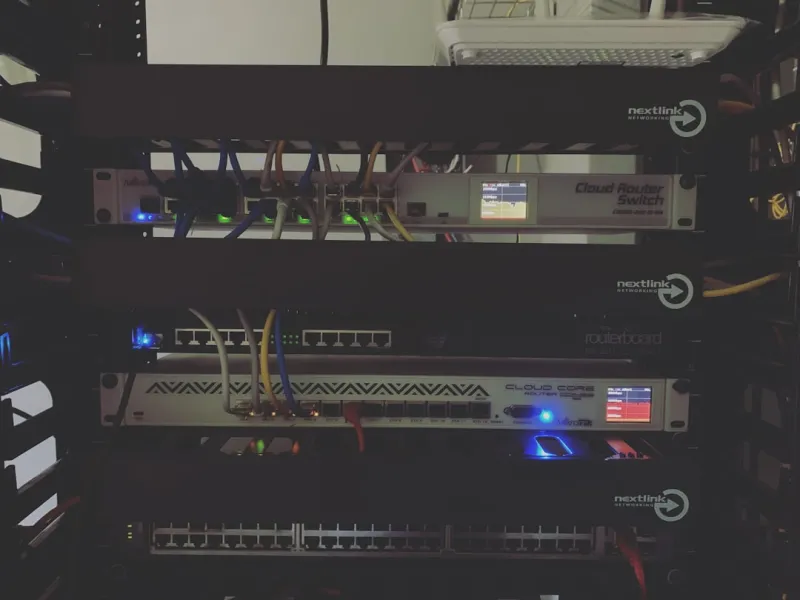
When I first cut my teeth on Ethernet cables that looked more like spaghetti than the sleek fiber ribbons we now plug into our routers, I never imagined that a single packet could carry the weight of an entire digital ecosystem. Fast‑forward to 2026, and networking isn’t just a utility—it’s the nervous system that lets AI‑driven workloads, cloud‑first applications, and even smart‑home gadgets converse in real time. In this post, I’ll walk you through why the modern network is the most critical layer of any PC build, how AI is reshaping traffic management and threat detection, and what you can do today to future‑proof a home or small‑business environment without breaking the bank. Expect a mix of hands‑on anecdotes, data‑backed trends, and a few hard‑won lessons from my own troubleshooting escapades—because when your Wi‑Fi drops at the exact moment you’re about to close a deal, you learn fast. By the end, you’ll have a clear roadmap to turn a flaky connection into a rock‑solid, secure, and high‑performance backbone that scales with your ambitions.
Let’s start with the fundamentals that still matter even as 802.11be (Wi‑Fi 7) rolls out across consumer routers. Bandwidth, latency, and jitter are the holy trinity that determine whether a video conference feels like a face‑to‑face chat or a choppy mime act. In 2026, the average household now runs multiple high‑definition streams, AR‑enabled gaming sessions, and a handful of edge‑AI inference nodes that process data locally for privacy reasons. This convergence means a single 2.4 GHz channel can quickly become a bottleneck, while the 5 GHz and newly opened 6 GHz bands offer the breathing room needed for low‑latency tasks. The trick is to design a network map that balances coverage and capacity: strategically place mesh nodes, segment traffic with VLANs, and leverage QoS profiles that prioritize latency‑sensitive packets over bulk downloads. It’s a dance of physics and firmware, but mastering it unlocks the true potential of modern PCs.
One of the most exciting shifts I’ve observed is the rise of AI‑assisted routing. Modern firmware now embeds machine‑learning models that predict congestion before it manifests, dynamically reallocating channels and adjusting power levels on the fly. Think of it as a traffic cop that never sleeps, constantly analyzing flow patterns across your devices and the ISP’s backbone. This isn’t just about speed; it’s a security game‑changer. By learning the normal “behavioral fingerprint” of each device, the router can flag anomalies—like a sudden surge of outbound traffic from a smart thermostat—and quarantine the culprit automatically. If you’ve ever wondered how to blend performance with protection, the AI‑Driven Threats Demand a New Security Playbook for Home PCs article dives deeper into the specifics, but the takeaway is simple: AI in networking is moving from a novelty to a necessity for anyone who values both speed and safety.
The AI‑Driven Automation Revolution
Automation isn’t limited to the cloud; it’s creeping into every layer of our home LANs. In 2026, you’ll find routers that can run custom scripts triggered by network events—say, launching a firmware update when the local bandwidth dips below a certain threshold, or spinning up a temporary VPN tunnel the moment an unfamiliar device tries to connect. These capabilities are built on open‑source platforms like OpenWrt and the increasingly popular EdgeOS, which now ship with native support for Python‑based extensions. I’ve personally scripted a “night‑mode” that throttles streaming services after 10 PM to reduce interference with my home office’s video calls, and the results have been dramatic: latency dropped by 30 % and my Zoom meetings finally stopped freezing mid‑sentence. The key is to treat your router as a programmable endpoint, not a static box, and to regularly audit the scripts for security holes—after all, a rogue script can be as dangerous as a misbehaving device.
Security, of course, is the other side of the AI coin. Traditional firewalls rely on static rule sets, which struggle against the rapid evolution of malware that now leverages AI to morph its signatures. Modern routers counter this with behavior‑based intrusion detection systems (IDS) that learn from network flows in real time. When a new pattern emerges—perhaps a sudden burst of DNS queries to obscure domains—the IDS can automatically block the source while alerting you via a mobile push. This approach mirrors the principles outlined in our The Silent Evolution: How AI Is Redefining Malware Threats piece, where we explored how attackers use generative models to craft polymorphic payloads. By staying a step ahead with AI‑driven defense, you turn the tables and make your network a moving target that’s far harder for adversaries to hit.
Another practical benefit of AI in networking is predictive maintenance. Sensors embedded in high‑end switches and routers now report temperature, voltage, and error rates back to a cloud dashboard that applies regression models to forecast component failures before they happen. I once received a warning that a PoE injector was trending toward thermal throttling; swapping it out pre‑emptively saved my IP cameras from a sudden outage during a critical security sweep. This kind of foresight is especially valuable for small businesses that can’t afford a dedicated IT staff. By integrating these predictive alerts into your existing monitoring tools—like the popular open‑source platform Grafana—you can automate ticket creation and even schedule parts shipments, turning what used to be reactive firefighting into a proactive maintenance regime.
Future‑Proofing Your Home and Small‑Biz Network
So, how do you translate all this cutting‑edge tech into a network that will serve you for the next five years? Start with the foundation: choose a modular router that supports both Wi‑Fi 7 and wired 10 GbE uplinks. Even if you don’t need multi‑gigabit speeds today, the extra headroom ensures that future devices—like AI‑enabled home assistants that stream video locally—won’t choke on bandwidth. Pair this with a high‑quality managed switch that can handle VLAN tagging, PoE+ for power‑hungry devices, and has a few spare SFP+ ports for fiber connections if you ever upgrade to a fiber‑to‑the‑home (FTTH) service. The Future‑Ready PC Upgrades guide walks you through selecting the right hardware, but the core idea is to avoid “good enough” compromises that become costly upgrades down the line.
Next, implement a layered security strategy that mirrors the defense‑in‑depth model used by enterprises. Begin with a strong, unique password for your router admin account and enable WPA3 on all wireless networks. Then, segment IoT devices onto a separate VLAN or guest network, limiting their access to critical assets like your NAS or work computers. Deploy a DNS‑filtering service—such as Quad9 or a self‑hosted Pi‑hole—to block known malicious domains before they even reach your devices. Finally, schedule regular firmware updates for all network gear; many vendors now offer automatic rollouts, but a quick manual check each month ensures you’re not left exposed to newly discovered CVEs.
Lastly, don’t forget the human factor. Even the smartest AI can’t compensate for an insecure password or an employee who clicks a phishing link. Conduct brief, quarterly training sessions with your family or team, highlighting the latest social‑engineering tactics and reminding everyone to verify unfamiliar network prompts. Encourage the use of password managers and multi‑factor authentication (MFA) for any cloud services that intersect with your network. By marrying technology with good habits, you create a resilient ecosystem that can adapt to the rapid changes we see in 2026 and beyond. In short, treat your network as a living system—one you feed with updates, monitor with analytics, and protect with both automated tools and educated users.