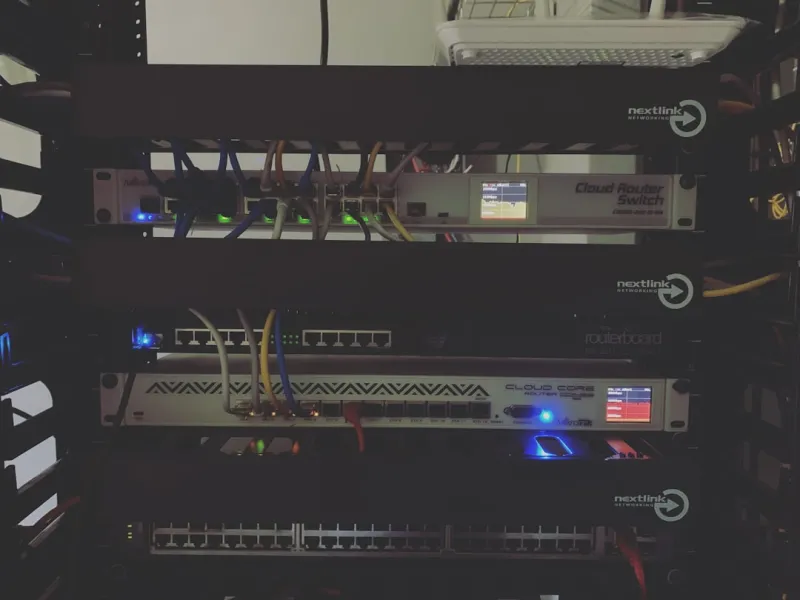
When you ask anyone in 2026 what fuels the digital heartbeat of our world, they’ll point to the invisible veins of computer networking. From the gigabit‑speed home office to the sprawling, AI‑enhanced data centers that power the newest generative models, the network is no longer just a conduit—it’s the brain’s nervous system. As someone who’s spent the last decade dissecting packets, wrestling with rogue routers, and watching the evolution of Wi‑Fi from the clunky 802.11n era to the ultra‑low‑latency streams of today, I’ve learned that staying ahead isn’t a luxury; it’s survival. In this deep dive, I’ll walk you through the most transformative trends shaping our connectivity, the security challenges that keep us awake at night, and the strategic moves you can make right now to future‑proof your environment.
The Rise of Wi‑Fi 7 and the Quest for Untethered Performance
Wi‑Fi 7 (802.11be) finally crossed the finish line in early 2026, promising multi‑gigabit speeds, sub‑millisecond latency, and the ability to juggle dozens of simultaneous streams without a hiccup. For most of us, the upgrade feels like swapping a bicycle for a sports car: the raw power is exhilarating, but the real value comes from how we harness it. The new 320 MHz channels and 4K QAM modulation mean that dense apartment complexes can finally enjoy seamless 4K streaming on every device, even when the whole building is streaming the same live event. However, the flip side is that the spectrum is getting crowded fast, and interference mitigation is now a critical skill for any network engineer. Tools that auto‑tune channel allocation using AI are emerging, but they require a solid understanding of your environment’s RF fingerprint. If you’re still on Wi‑Fi 6, the performance gap is noticeable—your smart home devices will feel sluggish, and video conferences will betray you with jitter at the worst moments. Upgrading to Wi‑Fi 7 isn’t just a nice‑to‑have; it’s the gateway to a truly responsive, cloud‑first lifestyle.
5G, 6G, and the Edge: Converging Mobile and Fixed Networks
Mobile connectivity has been on a tear, and 2026 is the year we finally see the convergence of 5G’s massive‑MIMO capabilities with the nascent promises of 6G research. While 6G is still in the experimental phase, its projected terahertz‑range frequencies promise unprecedented bandwidth for edge devices. This convergence means that the traditional line between “wired” and “wireless” networks is blurring. Enterprises are deploying micro‑cells inside office buildings to offload traffic from the core network, reducing latency for real‑time AI inference at the edge. For remote workers, this translates into near‑zero lag when interacting with cloud‑hosted virtual desktops or AR‑enhanced collaboration tools. Yet, the rapid rollout of small‑cell infrastructure also introduces new management complexities—think of juggling dozens of tiny base stations, each with its own firmware quirks and security patches. Embracing a unified network management platform that can oversee both Wi‑Fi and cellular edge nodes is becoming a non‑negotiable strategy for forward‑thinking IT teams.
AI‑Driven Orchestration: Networks That Learn and Adapt
Artificial intelligence is no longer a buzzword confined to data science labs; it’s now the operating system of modern networks. AI‑driven orchestration platforms analyze traffic patterns in real time, automatically reallocating bandwidth, rerouting congested paths, and even predicting hardware failures before they happen. In my own lab, I’ve seen an AI controller detect a subtle rise in packet loss on a critical VLAN and preemptively shift traffic to a backup link, all without human intervention. The result? A near‑zero impact on end‑user experience during what would have otherwise been a painful outage. However, these systems are only as good as the data they ingest. Poorly labeled traffic, legacy devices that don’t expose telemetry, or misconfigured SNMP endpoints can lead to false positives and wasted resources. The key is to pair AI tools with a solid foundation of clean, standardized metrics—think NetFlow v9, sFlow, and the emerging OpenTelemetry standards. When done right, AI transforms the network from a static pipeline into a dynamic, self‑optimizing organism.
SD‑WAN Evolution: The Cloud‑First Backbone
Software‑Defined Wide Area Networking (SD‑WAN) has matured from a cost‑cutting alternative to a strategic cloud‑first backbone. In 2026, most organizations are deploying SD‑WAN appliances that natively integrate with multi‑cloud gateways, allowing seamless traffic steering between AWS, Azure, and Google Cloud. This flexibility is a game‑changer for hybrid workloads that bounce between on‑premises servers and cloud functions based on real‑time demand. The latest SD‑WAN solutions also embed security functions—such as next‑generation firewalls and intrusion detection—directly into the data plane, reducing the need for separate security appliances. For small‑to‑medium businesses, the pay‑as‑you‑go pricing models mean you can start with a few branches and scale effortlessly as you open new locations. Yet, the real power lies in the policy engine: by defining application‑aware policies, you can guarantee that critical SaaS tools get priority bandwidth while bulk data backups are throttled during peak office hours. This granular control, combined with centralized visibility, empowers IT teams to deliver consistent performance across a geographically dispersed workforce.
Zero‑Trust Networking: Rethinking Perimeter Security
Traditional perimeter defenses are crumbling under the weight of modern threats, and the industry’s response has been a shift to zero‑trust networking. In a zero‑trust model, every device, user, and service must authenticate and authorize before gaining any network access, regardless of its location. This approach is essential in an era where remote work, BYOD policies, and IoT devices multiply the attack surface daily. For anyone still relying on a single firewall to protect an entire enterprise, the risk is unacceptable. To dive deeper into why this shift matters, check out Why Modern Threats Demand a New Security Playbook. The playbook emphasizes continuous verification, micro‑segmentation, and least‑privilege access—all pillars of zero‑trust. Additionally, the surge in ransomware and supply‑chain attacks highlighted in Inside the Malware Surge underscores the urgency of adopting these measures. By integrating identity‑based policies with network fabric controls, organizations can limit lateral movement and isolate compromised endpoints before they wreak havoc.
Observability and Proactive Monitoring: Seeing the Unseen
In the age of AI‑driven networks, observability has become the new holy grail. It’s no longer enough to simply log events; you need real‑time insights that correlate performance metrics, security alerts, and user experience data into a single, coherent view. Platforms that fuse telemetry from routers, switches, and cloud gateways with AI analytics can surface anomalies that would otherwise be buried in noise. For a practical guide on staying ahead of these complexities, refer to Staying Ahead of the Curve: Essential Tech Updates You Can’t Ignore. This resource walks you through the latest observability tools, from distributed tracing frameworks to predictive analytics dashboards. Implementing a robust observability stack not only accelerates incident response but also fuels the AI models that drive proactive network adjustments. Think of it as giving your network a pair of glasses—suddenly, everything that was once hidden becomes visible, and you can act before users even notice a slowdown.
Strategic Upgrades for Home and SMB Networks
While enterprise environments chase the latest edge compute chips, home users and small‑business owners also need a roadmap for staying current. A strategic upgrade in 2026 often starts with a modest investment: swapping out an aging router for a Wi‑Fi 7‑compatible unit, enabling mesh networking for seamless coverage, and adding a modest SD‑WAN appliance to manage multiple internet connections. Pair these hardware changes with cloud‑based security suites that enforce zero‑trust principles, even on a small scale. For those wondering where to begin, the article Unlock the Power of Your PC: Strategic Upgrades for 2026 offers a step‑by‑step guide to prioritize upgrades that yield the biggest performance gains. Remember, the goal isn’t to chase every shiny new gadget; it’s to build a resilient, scalable foundation that can gracefully absorb future advances, whether that’s a new IoT protocol or an emerging AI‑driven service.
Future‑Proofing with Open Standards and Vendor Neutrality
One of the biggest pitfalls in network design is becoming locked into a single vendor’s ecosystem. In 2026, the rise of open‑source networking stacks and standards like OpenConfig, gNMI, and the continued evolution of the Open Networking Foundation’s (ONF) projects make it easier than ever to maintain vendor neutrality. By adopting devices that expose standardized APIs, you retain the flexibility to swap hardware, integrate best‑of‑breed solutions, and avoid costly migration paths. Moreover, open standards accelerate innovation: community‑driven projects often roll out features months ahead of proprietary offerings, giving early adopters a competitive edge. When you design your architecture around open, programmable interfaces, you future‑proof your network against the rapid churn of technology cycles, ensuring that the next wave of AI‑enhanced routing or quantum‑resistant encryption can be integrated with minimal friction.
Conclusion: Embrace the Network as a Strategic Asset
The network landscape in 2026 is a dynamic tapestry woven from ultra‑fast Wi‑Fi, cellular edge, AI orchestration, and zero‑trust security. It demands a mindset shift—from treating networking as a background utility to recognizing it as a strategic asset that directly impacts productivity, innovation, and risk management. By staying informed about emerging standards, leveraging AI‑driven observability, and committing to open, vendor‑agnostic designs, you position yourself—and your organization—to thrive amid rapid change. So, the next time you hear someone say “the network is just a pipe,” smile and remember that in today’s world, that pipe is a living, breathing organism, capable of learning, defending, and evolving alongside your business. Dive in, experiment, and most importantly, keep the conversation going—because the future of networking is being built today, one packet at a time.