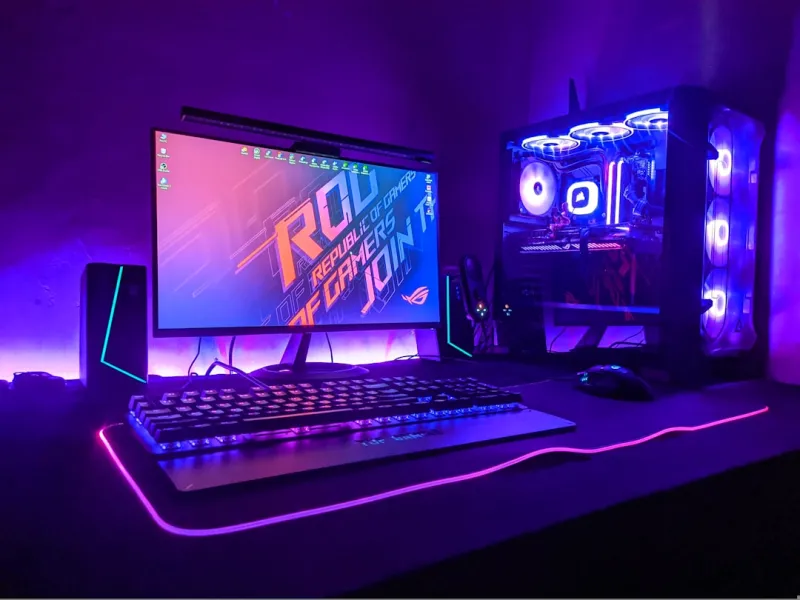
When I first cracked open my old tower back in 2022, the smell of dust and the faint hum of aging fans felt like a rite of passage for any serious PC enthusiast. Fast forward to 2026, and the upgrade landscape has morphed into a high‑stakes arena where every component decision can either catapult you into the next level of performance or leave you stuck in a perpetual bottleneck. In this post, I’m pulling back the curtain on the upgrade strategies that have become my daily mantra—strategies that let me squeeze every ounce of horsepower out of my rig while keeping an eye on the future. Whether you’re a content creator wrestling with 8K video renders, a competitive gamer chasing that sub‑1 ms latency, or a developer diving deep into AI model training, the principles I share will help you prioritize the right parts, avoid costly missteps, and stay ahead of the curve without breaking the bank.
CPU Choices: Balancing Core Count, Clock Speed, and Power Efficiency
The heart of any upgrade cycle is the processor, and in 2026 the market offers a bewildering array of options—from ultra‑efficient 12‑core beasts to monster 32‑core monsters designed for AI workloads. My personal workflow leans heavily on multi‑threaded rendering, so I gravitate toward CPUs that deliver high core counts without sacrificing single‑thread performance, because that sweet spot determines both my gaming frame rates and my compilation times. One trick I’ve adopted is to examine the performance‑per‑watt metric, especially if you’re running a compact case where thermals are a constant battle. Pairing a modern 16‑core Zen 4‑based CPU with a 65 W TDP not only trims electricity costs but also frees up thermal headroom for overclocking the GPU later on. For those still on older platforms, consider a drop‑in upgrade to a 13th‑gen Intel chip; the backward‑compatible socket can give you a noticeable boost without a full motherboard swap. And remember, the CPU isn’t an island—matching it with the right motherboard chipset ensures you unlock all the PCIe 5.0 lanes you’ll need for next‑gen SSDs and GPU expansions.
GPU Evolution: When Bigger Isn’t Always Better
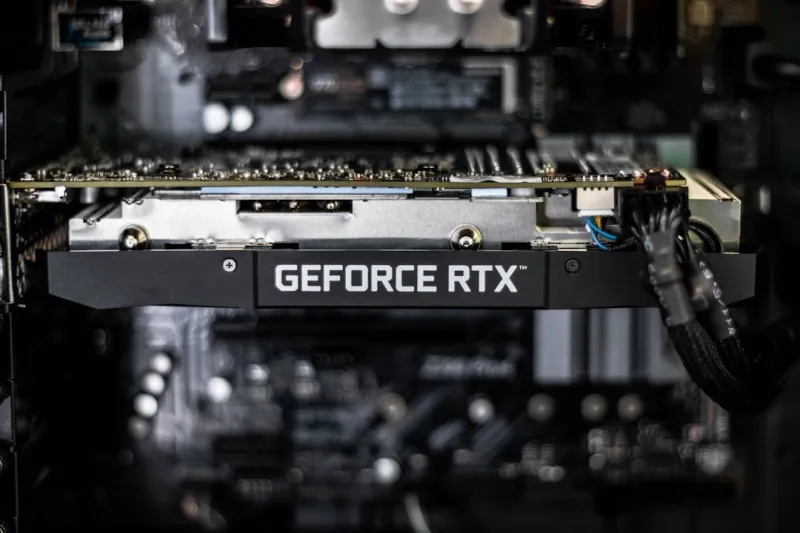
Graphics cards in 2026 have moved beyond raw rasterization power; they now embed dedicated AI accelerators, ray‑tracing cores, and even hardware‑level video encode/decode engines that can offload 4K streaming tasks. My own upgrade path last year saw me trade a 3080 for the newer 48‑GB RTX 5090, not because I needed that massive VRAM for gaming, but because the AI‑enhanced upscaling and DLSS 3.5 dramatically lowered frame‑time variance in my VR simulations. That said, blindly buying the biggest card is a rookie mistake—your power supply, case dimensions, and cooling solution must all be re‑evaluated. If you’re still on a 750 W PSU, you’ll likely need a step up to 1000 W to safely sustain dual‑GPU or high‑power cards under load. I also recommend checking the card’s thermal design power (TDP) against your chassis airflow; a well‑ventilated mid‑tower can often handle a 350 W GPU with a quality aftermarket cooler, but a cramped mini‑ITX case will struggle unless you invest in liquid cooling. For many creators, a 24 GB RTX 4070 Ti paired with a dedicated AI inference card offers a sweet spot between cost, performance, and future‑proofing.
RAM Realities: Size, Speed, and Latency in a Unified Memory World
Memory has become the silent workhorse that can make or break modern workflows. In 2026, DDR5‑6000 kits are mainstream, but the real game‑changer is the latency profile and the ability to run dual‑channel or quad‑channel configurations without sacrificing stability. I recently migrated from 32 GB of DDR4‑3200 to a 64 GB DDR5‑5600 quad‑channel setup, and the impact on my video editing timelines was immediate—render queues dropped by roughly 20 % and my AI model training sessions saw smoother data throughput. If you’re still on DDR4, consider whether a motherboard upgrade will let you tap into DDR5’s higher bandwidth; the payoff is especially noticeable when you pair it with a high‑end GPU that can feed data faster than the memory can keep up. For those troubleshooting intermittent crashes, my go‑to resource is the Diagnosing Memory Madness guide, which walks you through stress‑testing tools like MemTest86 and the importance of matching memory timings to your CPU’s integrated memory controller. Remember, more RAM is only beneficial if it runs at optimal speed and latency for your specific use case.
Storage Strategies: NVMe, PCIe 5.0, and the Enduring Role of HDDs
When I first built a workstation in the early 2020s, I thought SSDs would eventually make hard drives obsolete. Fast forward to today, and while NVMe drives dominate primary storage, a well‑balanced system still benefits from a reliable HDD for archival and bulk media storage. In 2026, PCIe 5.0 SSDs have hit the sweet spot of 14 GB/s sequential reads, making them perfect for massive 8K video projects and rapid AI dataset loading. My current configuration pairs a 4 TB PCIe 5.0 NVMe drive with a 10 TB 7200 RPM hard drive, giving me the best of both worlds—blazing‑fast scratch space and ample room for long‑term backups. If budget constraints keep you from a top‑tier SSD, a PCIe 4.0 2 TB drive still offers superb performance for most workloads and leaves you room to add a secondary drive later. For those still unsure about the right storage mix, the article Why Hard Drives Still Matter for Power Users in 2026 breaks down cost‑per‑gigabyte trends and backup best practices.
Cooling and Airflow: Keeping the Beast Calm Under Load
All the high‑end components on the market today can generate a combined heat output that would make a sauna blush, so mastering cooling is non‑negotiable. I’ve transitioned from traditional air coolers to a hybrid AIO liquid cooling loop that covers both the CPU and GPU, and the difference in sustained boost clocks is night and day. The key is to design a airflow path that moves cool air from the front intake, across the radiators, and out the rear or top exhaust, while ensuring that dust filters are cleaned regularly to maintain static pressure. For smaller cases, a single 240 mm radiator with high‑static fans can keep a 16‑core CPU under 70 °C even under full AI inference loads. Don’t overlook the importance of thermal paste—modern liquid metal compounds can shave off a few degrees, but they require careful application. If you’re on a budget, a high‑quality air cooler with a 6‑heat‑pipe design can still rival entry‑level AIOs, especially when paired with a well‑ventilated chassis and a positive pressure setup that pushes dust out rather than pulling it in.
Power Supply Considerations: Planning for Headroom and Efficiency
Power delivery is often the unsung hero that determines the stability of your entire upgrade. In 2026, 80 PLUS Platinum and Titanium certified units have become more affordable, offering up to 96 % efficiency at typical loads—a crucial factor for reducing heat and electricity bills in a home office. When I upgraded to a 1000 W Platinum PSU, I not only gained the headroom needed for a dual‑GPU setup, but I also noticed lower coil whine across the system. A good rule of thumb is to calculate your total system draw using online wattage calculators, then add a 20‑30 % buffer to accommodate future upgrades and peak spikes. Modular designs keep cable management tidy, improving airflow and making it easier to troubleshoot any power‑related issues. If you’re still on a 500 W unit, expect to encounter throttling or sudden shutdowns once you install a high‑end GPU and a robust CPU; upgrading now saves you the hassle of a mid‑cycle power revamp later.
Future‑Proofing: Modular Design and the Upgrade Roadmap
One of the biggest lessons I’ve learned over the past four years is that a truly future‑ready build isn’t about buying the most expensive parts today, but about designing a platform that can evolve. Choosing a motherboard with abundant PCIe 5.0 slots, multiple M.2 bays, and a robust VRM heatsink gives you the flexibility to swap in next‑gen GPUs, storage, or even a dedicated AI accelerator card without a full system rebuild. My current rig follows the upgrade strategy outlined in Upgrade Strategies That Power Users Swear By in 2026, which emphasizes a “core‑first” approach: secure a strong CPU and motherboard platform, then layer on the GPU, RAM, and storage as your workload demands shift. This modular mindset also extends to the case—opt for a chassis with removable drive cages and ample cable routing space, so you can add larger radiators or additional fans as needed. By planning for expansion, you not only protect your investment but also stay agile in a tech landscape where AI‑enhanced workloads and real‑time ray tracing become the norm faster than ever.
Putting It All Together: A Practical Upgrade Checklist
Before you start unscrewing panels, grab a pen and run through this quick checklist: 1) Verify your case dimensions and airflow design to accommodate new radiators or larger GPUs. 2) Confirm the motherboard’s BIOS supports the chosen CPU out of the box; if not, a BIOS flash may be required. 3) Ensure your PSU meets the total wattage demand with at least a 20 % safety margin. 4) Match RAM speed and latency to your CPU’s memory controller specs—consult the manufacturer’s QVL list. 5) Plan your storage hierarchy: NVMe for OS and active projects, HDD for archives. 6) Review cooling solutions—air vs. liquid—and decide based on case size and noise preferences. 7) Finally, update firmware on all components, especially SSDs and GPU BIOS, to leverage performance patches released throughout 2026. Following this systematic approach has saved me countless hours of trial‑and‑error and kept my system humming smoothly during marathon rendering sessions. When you combine careful planning with the right parts, the upgrade experience transforms from a stressful gamble into a rewarding evolution of your digital workspace.