When I first opened Word on a clunky Windows XP machine, I never imagined the suite would evolve into a cloud‑first, AI‑enhanced powerhouse that feels almost alive today. Fast forward to 2026, and Microsoft Office isn’t just a collection of static apps; it’s a living ecosystem that learns how you write, calculates, and collaborates. As a long‑time power user, I’ve watched the transformation from simple templates to the hyper‑intelligent Copilot that drafts emails, suggests data visualizations, and even anticipates my next move in a spreadsheet. This shift has turned the everyday office worker into a creative strategist, and it’s reshaped how I structure my day, my projects, and even my mindset about productivity.
One of the most striking changes is the seamless integration of generative AI across the entire Office suite. In Word, Copilot can spin up a polished report from bullet points in seconds, while in Excel it can generate complex formulas just from a natural‑language request. Power users who once spent hours wrestling with pivot tables now watch as AI surfaces insights in real time, letting them focus on interpretation rather than calculation. The AI isn’t a gimmick; it’s built on the same large‑language models that power ChatGPT, but tuned specifically for business data, compliance, and security. This means the suggestions are not only fast, but also aligned with corporate policies, making the workflow both efficient and safe.
My favorite productivity hack involves pairing Copilot with custom macros. I’ve built a small library of VBA scripts that trigger Copilot to pull data from an external API, then format it automatically in PowerPoint. The result is a dynamic deck that updates itself whenever new metrics roll in—perfect for weekly stakeholder meetings. By leveraging the “Ask Copilot” pane, I can ask for a slide outline, and the macro populates each slide with live charts, speaker notes, and even suggested talking points. This hybrid approach—human‑crafted automation plus AI‑generated content—has cut my slide‑deck creation time by nearly 70%, freeing up hours for strategic planning.
Collaboration has taken a quantum leap thanks to Teams’ deep integration with Office apps. No longer do we toggle between a separate chat client and a document; the conversation lives directly inside the file. When I edit a spreadsheet, my teammates see the changes in a side pane, can comment in real time, and even launch a quick video call without leaving the interface. The new “Live Sync” feature ensures that everyone works off the same version down to the cell level, eliminating the old version‑control nightmares. For power users who manage cross‑departmental projects, this unified environment is a game‑changer, turning what used to be a fragmented workflow into a single, coherent narrative.
Security, however, remains a top concern, especially as AI features introduce new attack surfaces. That’s why I regularly revisit the principles outlined in Why Modern Power Users Must Rethink Their Malware Defense Playbook. Microsoft has bolstered Office with built‑in threat detection that scans documents for malicious macros before they execute, but savvy attackers still find ways to embed payloads in seemingly innocuous files. By enabling “Protected View” for all external documents and enforcing multi‑factor authentication for Office 365, I’ve created a layered defense that complements the platform’s native safeguards. Staying ahead of the threat curve means treating every new feature—especially AI—as both an opportunity and a potential vector.
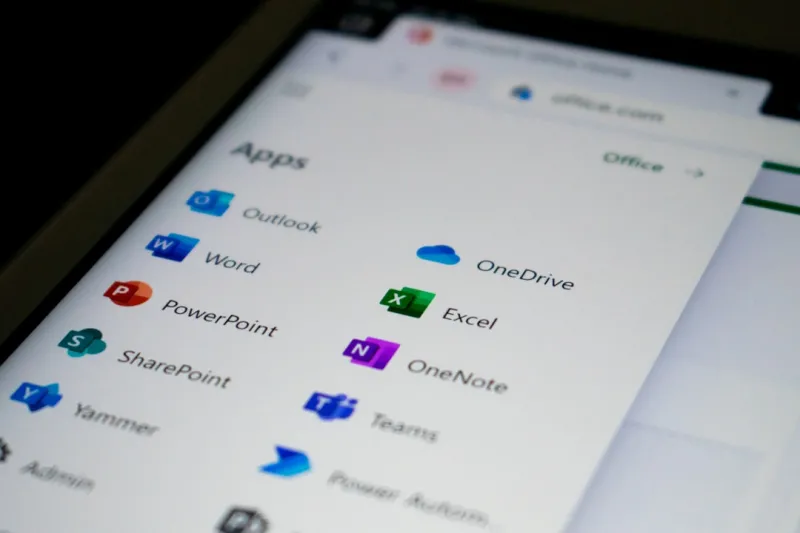
Customization continues to be the secret sauce for power users. The Office Add‑in store now offers AI‑driven extensions that can, for example, auto‑translate a Word document into multiple languages while preserving formatting. I’ve also embraced Power Automate flows that trigger a Teams notification whenever a high‑priority email lands in my Outlook inbox, and then automatically create a task in Planner. These integrations knit together the disparate parts of the Microsoft ecosystem, turning a siloed suite into a responsive, interconnected workflow engine. By investing time in building and curating these add‑ins, I’ve turned Office from a static toolbox into a dynamic command center.
Cross‑platform consistency has finally become a reality. Whether I’m drafting a proposal on my iPad, reviewing data on a Surface Pro, or finalizing a presentation on my desktop, the cloud sync is instantaneous and reliable. The mobile versions of Word and Excel have caught up to the desktop experience, supporting full‑featured editing, AI suggestions, and even offline work that syncs the moment I reconnect. This level of parity means I can hop between devices without losing context, a boon for the modern remote‑first worker. The continuity also extends to OneDrive, where version history and granular permissions let me roll back changes or share a read‑only link with a client in seconds.
Looking ahead, the next wave of Office innovation will revolve around predictive analytics and hyper‑personalized assistance. Outlook is already experimenting with AI‑drafted replies that adapt tone based on the recipient’s communication style, while Excel is moving toward auto‑generating entire financial models from a few high‑level inputs. These advances will push us from reactive document creation to proactive insight generation, where the suite anticipates our needs before we even articulate them. For power users, that means staying curious, learning the new prompts, and continuously refining the prompts to get the most relevant output.
All of these software enhancements only shine when backed by solid hardware. My workstation, tuned for heavy Office workloads, runs on a 12th‑gen Intel processor with 32 GB of DDR5 RAM, and I’ve enabled the performance tweaks outlined in Unlocking Windows 2026. Fast SSD storage ensures that large PowerPoint decks open instantly, while the integrated graphics handle real‑time rendering of complex charts without lag. By aligning the hardware to the software’s capabilities, I get the smooth, lag‑free experience that makes AI‑driven features feel native rather than an afterthought.
In summary, Microsoft Office in 2026 is a living, learning platform that rewards the curious and the adaptable. From AI‑powered content generation to deep collaboration, security‑first design, and a thriving ecosystem of add‑ins, the suite has become the central nervous system of my digital workflow. I encourage fellow power users to experiment with Copilot, automate repetitive tasks, and stay vigilant about security. The future of work is already here—embrace it, tweak it, and let Office amplify your expertise rather than replace it.