When I first cracked open a custom rig back in the early 2020s, the buzz was all about chasing the highest clock speeds and stuffing as many cores as possible onto a single board. Fast forward to 2026, and the conversation has shifted dramatically—power users are now talking about intentional architecture rather than sheer brute force. The modern workstation is a symphony of AI‑accelerated GPUs, ultra‑low‑latency DDR5 X, and hybrid storage that balances raw speed with data durability. This evolution isn’t just about bragging rights; it’s a response to workloads that demand real‑time inference, massive parallelism, and relentless uptime. In this post I’ll walk through the hardware trends that are reshaping the power‑user landscape, why they matter to anyone who treats a PC as a creative and analytical engine, and how you can future‑proof your next build without breaking the bank.
Why Hardware Evolution Matters for Power Users
Power users aren’t just gamers or hobbyists—they’re data scientists, video editors, and developers who rely on their machines as daily workhorses. In 2026, the line between consumer and enterprise hardware blurs, with features like AI‑enhanced kernels and hardware‑level encryption becoming standard in consumer‑grade silicon. This shift means you can now run complex machine‑learning models locally, edit 8K footage in real time, and spin up containers on the fly without needing a dedicated server rack. But with great power comes the need for a balanced ecosystem; a top‑tier GPU will underperform if paired with insufficient memory bandwidth or an under‑powered PSU. Understanding the interplay between these components helps you avoid bottlenecks, maximize ROI, and keep your system resilient against the rapid software advancements we see every year.
The AI‑Driven GPU Landscape
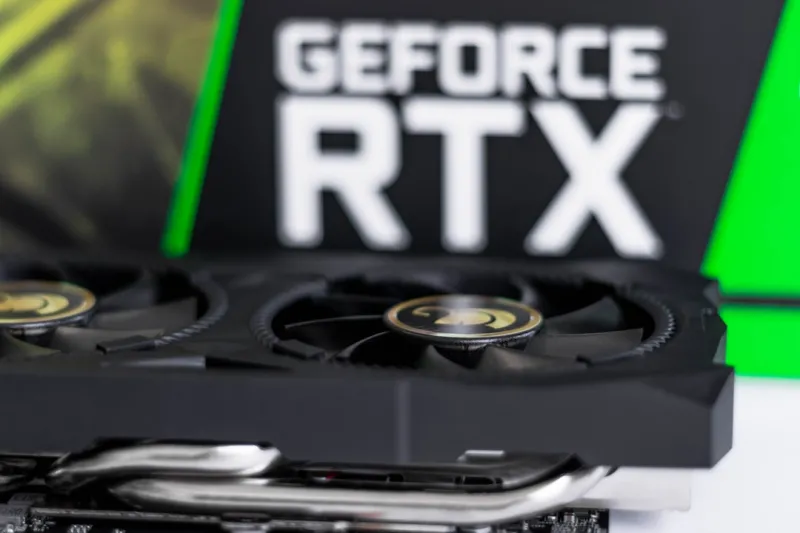
Graphics processing units have transcended their original role of rendering frames. In 2026, GPUs are the primary engines for AI inference, video transcoding, and even cryptocurrency mining—though the latter has taken a back seat to sustainability concerns. Manufacturers are rolling out dedicated tensor cores optimized for mixed‑precision workloads, which deliver up to 4× the performance of traditional CUDA cores in neural‑network tasks. Pair this with driver ecosystems that now integrate directly with popular AI frameworks, and you’ve got a platform that can train small models in minutes instead of hours. If you’re building a machine for AI‑heavy tasks, I recommend focusing on GPUs that advertise high TFLOPs in both FP16 and INT8 modes. For deeper insights on troubleshooting GPU issues, check out Diagnosing and Fixing GPU Headaches: A Power‑User’s Playbook for 2026.
Storage Strategies for Power Users
The storage debate is no longer “SSD vs. HDD”—it’s about orchestrating a tiered system that leverages the strengths of each medium. NVMe drives now boast read speeds beyond 10 GB/s, but they still suffer from limited write endurance under constant heavy workloads. That’s where a reliable SATA‑III hard drive shines: it provides massive capacity for archival footage, raw datasets, and backup snapshots without the cost penalty of enterprise‑grade SSDs. By using a fast NVMe for OS, applications, and active project files, and a high‑capacity HDD for long‑term storage, you get the best of both worlds. I’ve written extensively on this balance in Why Hard Drives Still Matter in a Flash‑Dominated World, and the principles still hold true as we head deeper into 2026.
RAM and Memory Architecture in 2026
Memory is the silent workhorse that determines how fluidly your system handles multitasking and data‑intensive applications. DDR5 X, the latest iteration of the standard, now offers up to 6400 MT/s with on‑die ECC support, delivering both speed and reliability—a crucial combo for AI model training where a single bit flip can corrupt results. Yet, raw frequency isn’t everything; latency has become the new performance metric, especially for low‑latency inference workloads. When selecting RAM, prioritize lower CL values and consider a dual‑channel or quad‑channel configuration to maximize bandwidth. For those who’ve experienced the dreaded “blue screen” due to memory faults, my guide Mastering RAM Troubleshooting: A Power‑User’s Blueprint for 2026 offers a systematic approach to diagnose and resolve these issues before they cripple your workflow.
Power Supply and Cooling: The Unsung Heroes
A robust power delivery system and efficient cooling solution are often overlooked, yet they dictate the long‑term stability of your high‑performance components. Modern 80+ Platinum PSUs now provide up to 1500 W with tighter voltage regulation, essential for multi‑GPU rigs that can draw upwards of 1200 W under load. Coupled with hybrid cooling—liquid loops for the CPU and high‑static‑pressure fans for the GPU—these setups keep temperatures in the low‑70 °C range even during sustained AI training sessions. Moreover, intelligent fan curves that adapt to workload patterns, powered by AI‑driven firmware, are becoming common, reducing noise without sacrificing thermal headroom. Investing in a quality PSU and cooling loop pays dividends in component lifespan and reduces the likelihood of power‑related crashes.
Future‑Ready Motherboards and Connectivity
The motherboard is the nervous system of your build, and in 2026 it has evolved to support PCIe 5.0, Thunderbolt 5, and integrated AI accelerators. Look for boards that offer multiple M.2 slots with full PCIe 5.0 bandwidth, allowing you to stack high‑speed NVMe drives without bottlenecking. Integrated Wi‑Fi 7 and 2.5 GbE Ethernet ensure you’re ready for the next generation of network‑intensive applications, from cloud‑synced render farms to real‑time collaborative coding environments. Additionally, some manufacturers now embed small AI inference chips directly on the motherboard, offloading routine tasks like voice activation and predictive storage caching. Selecting a motherboard with a robust VRM design and ample BIOS customization will let you fine‑tune power delivery to each component, a critical advantage when pushing hardware to its limits.
Putting It All Together: Building Your Next Machine
Now that we’ve dissected each component, the real art lies in harmonizing them into a cohesive system. Start with a future‑ready motherboard that supports the latest standards, then match it with a CPU that offers enough cores for parallel workloads—AMD’s Threadripper series and Intel’s Xeon‑class chips are both strong contenders. Pair that with a GPU that boasts dedicated AI tensor cores, and you’ve covered the heavy lifting for both graphics and machine learning. Allocate at least 32 GB of DDR5 X RAM on a low‑latency kit, and configure a tiered storage solution with a 2 TB NVMe for active projects and a 6 TB 7200 RPM HDD for archival. Finish the build with a 1200 W Platinum PSU, a custom liquid cooling loop for the CPU, and high‑static‑pressure fans for GPU and VRM cooling. After assembly, spend time fine‑tuning BIOS settings, enabling XMP profiles, and calibrating fan curves to strike the perfect balance between performance and silence. With this roadmap, your 2026 PC will not only meet today’s demanding workloads but also stay relevant as software continues to evolve.
Adapting Your Workflow for an AI‑Centric Future
The hardware you choose directly influences how you structure your daily workflow. With AI‑enabled GPUs and on‑board inference chips, tasks that once required cloud credits can now be performed locally, drastically reducing latency and cost. Take advantage of software that leverages hardware acceleration—photo and video editors that tap into GPU shaders, IDEs that offload code analysis to dedicated AI cores, and virtualization platforms that distribute workloads across multiple GPUs for sandboxed testing. Moreover, keep your operating system updated with the latest AI‑driven kernel patches; they improve scheduling efficiency and security, ensuring your machine remains both fast and protected. By aligning your software stack with the capabilities of your hardware, you unlock a level of productivity that feels almost futuristic, yet is firmly grounded in the components you’ve assembled today.