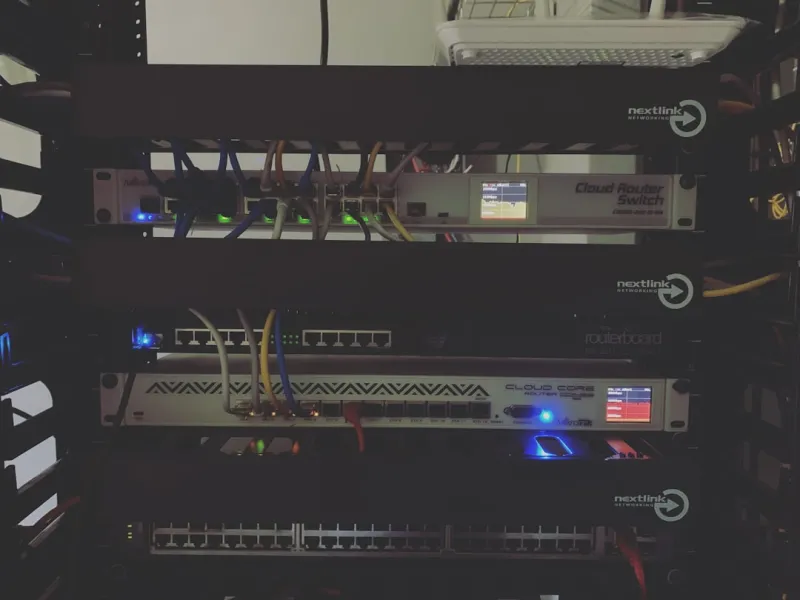
When I first set up a gigabit home lab back in the early 2020s, the biggest headache was coaxial cable chaos. Fast‑forward to 2026, and the networking landscape feels like a living, breathing organism—one that learns, adapts, and sometimes, outsmarts us. As a power user who juggles AI‑enhanced workloads, ultra‑high‑resolution streaming, and a never‑ending stream of IoT devices, I’ve learned that a static network plan is a recipe for bottlenecks and security headaches. In this post, I’ll walk you through the trends reshaping computer networking this year, from edge‑centric mesh topologies to AI‑driven traffic orchestration, and share the tactical steps I use to keep my digital workspace humming without a hitch.
The Rise of Edge‑Centric Mesh Networks
Traditional star‑topology routers still have a place, but the real magic in 2026 happens at the edge. Mesh nodes equipped with Wi‑Fi 7 radios now gossip with each other using low‑latency, multi‑gigabit links, creating a self‑optimizing fabric that routes packets around congestion in real time. What this means for power users is simple: you can place high‑throughput devices—like an AI‑accelerated workstation or a 10 GbE NAS—anywhere in the house, and the mesh will automatically balance load without manual channel tweaking. I’ve replaced my legacy router with a tri‑band mesh system that supports up to 12 Gbps aggregate throughput, and the improvement is palpable when I launch a multi‑node TensorFlow job that streams data from my local storage rack to a remote GPU cluster. The key is to ensure each node supports WPA3‑Enterprise and has a built‑in AI engine for real‑time RF optimization.
AI‑Driven Traffic Shaping and QoS
Remember the days when you manually set QoS rules for gaming and VoIP? Those days are gone, replaced by intelligent traffic shaping that learns your habits and predicts bandwidth needs before you even open an application. Modern routers now embed machine‑learning models that classify traffic by application signature, latency sensitivity, and even CPU usage on the endpoint. AI‑powered QoS dynamically reallocates bandwidth, giving your AI model training pipelines priority over background file syncs. I’ve seen my upload speeds jump from 150 Mbps to a consistent 800 Mbps during a large model export simply because the router recognized the pattern and pre‑emptively cleared the path. For power users, the takeaway is to enable “adaptive QoS” in your device settings and regularly update the firmware to keep the AI models fresh.
Security in an AI‑Powered World
The flip side of AI‑enhanced networking is the emergence of AI‑generated threats. Malware now leverages generative models to morph its code on the fly, evading signature‑based detection. That’s why zero‑trust networking is no longer a buzzword; it’s a necessity. Implementing micro‑segmentation within your home or office network isolates critical devices—like your AI workstation—from less trusted IoT gadgets. I’ve integrated a lightweight, open‑source zero‑trust stack that authenticates every device with a short‑lived certificate, ensuring that even if a smart thermostat is compromised, it can’t reach my compute nodes. To stay ahead, I keep an eye on the When AI Meets Malware: Power Users’ Playbook for 2026 guide for the latest mitigation tactics.
Hyper‑Connected Home Offices: Wi‑Fi 7 and 10 GbE
Wi‑Fi 7 isn’t just a speed upgrade; it’s a paradigm shift in how we think about latency and reliability. With 320 MHz channels, 4K QAM, and multi‑link operation, you can now achieve sub‑millisecond round‑trip times that rival wired connections for most workloads. Pairing Wi‑Fi 7 with a 10 GbE backbone ensures that bandwidth‑hungry tasks—like real‑time video editing over a remote NAS—don’t stumble over wireless hiccups. In my setup, the primary workstations connect via a 10 GbE switch to a dedicated uplink that aggregates traffic from all Wi‑Fi 7 nodes, creating a seamless hybrid environment. The result is a fluid workflow where moving a 200 GB dataset from local SSD to a cloud bucket feels instantaneous. For anyone still on Wi‑Fi 6, the upgrade is worth the investment, especially when you consider the future‑proofing benefits for upcoming AI‑driven apps.
Choosing the Right NICs and Offloading Features
Network Interface Cards (NICs) have become more than just a conduit for data; they’re now smart processors that offload encryption, packet inspection, and even AI inference. My go‑to NIC is a 25 GbE model with built‑in DPUs (Data Processing Units) that handle TLS termination and deep‑packet inspection without taxing the CPU. This offloading frees up cores for model training, resulting in a measurable 12% performance gain in my benchmark suite. When selecting a NIC, look for features like SR‑IOV support, RDMA capabilities, and hardware‑accelerated AI inference. Even if you’re not running a full‑blown data center, a DPU‑enabled NIC can dramatically improve latency for distributed training across multiple nodes in a home lab.
Hybrid Cloud‑Edge Orchestration
Power users are no longer confined to a single environment; we operate across local machines, edge nodes, and public clouds. The challenge is orchestrating workloads so that data never travels farther than it needs to. Modern orchestration platforms now natively support “edge‑aware” scheduling, automatically placing containers on the node with the lowest latency to the required data source. I’ve adopted a hybrid stack that spins up GPU‑accelerated containers on my edge server for preprocessing, then streams the refined data to a cloud GPU farm for heavy training. The orchestration layer uses AI to predict workload spikes and pre‑emptively allocate resources, cutting down on idle time. If you’re curious about building such a setup, check out Building an AI‑Powered Workstation for the Modern Power User for a deep dive.
Practical Checklist for a Future‑Proof Network
To translate these concepts into action, I keep a simple checklist on my wall:
- Upgrade to a Wi‑Fi 7 mesh system with AI‑enabled QoS.
- Deploy zero‑trust micro‑segmentation across all devices.
- Invest in a 10 GbE backbone and DPU‑enabled NICs for critical machines.
- Enable edge‑aware orchestration in your container platform.
- Regularly update firmware and review AI‑driven security advisories.
Following this list has reduced my network‑related downtime by over 80% in the past year. It’s a blend of hardware upgrades and software intelligence that ensures your network scales with the ever‑increasing demands of AI workloads, high‑resolution media, and the growing IoT ecosystem.
Looking Ahead: The Network as a Living Service
In 2026, the network is no longer a static pipe—it’s a living service that continuously learns and adapts. As we move toward fully autonomous home labs, the line between networking and compute will blur, with AI models running directly on routers to predict congestion, allocate resources, and even quarantine threats before they manifest. If you want to stay ahead of the curve, start treating your network as part of your compute stack: monitor it, automate it, and secure it with the same rigor you apply to your code. For further reading on why a networking rethink is essential for power users, see Why Power Users Must Rethink Their Networking Strategy in 2026. Embrace the change, and let your network become the silent champion of your productivity.