When I first cracked open a tower back in the early 2000s, the notion of a “future‑proof” machine felt like a fantasy. Fast‑forward to 2026, and the conversation has shifted from “will it run Windows 10?” to “can my rig handle on‑the‑fly AI inference without throttling?” As a longtime power‑user and hardware tinkerer, I’ve watched the industry sprint from quad‑core CPUs to heterogeneous architectures that blend traditional silicon with dedicated AI accelerators. In this article I’m pulling together the lessons I’ve learned over the past two decades, marrying hard‑won experience with the latest specs, so you can assemble a system that doesn’t just survive the next two years—it thrives for the next decade. Think of this as a living blueprint: every component is chosen not only for raw performance but for adaptability, upgrade paths, and the subtle art of balancing power consumption with thermal headroom. Strap in, because we’re about to dissect the hardware stack from the ground up.
The CPU Landscape: From Clock Speed to Compute Fusion
Processor design in 2026 is a study in specialization. While raw clock speed still matters for single‑threaded workloads, the real power comes from integrating high‑performance cores (P‑cores) with efficiency cores (E‑cores) and on‑die AI engines. Intel’s 13th‑gen “Meteor Lake” successors and AMD’s “Zen 5” chips now sport up to 24 cores, but the magic is in how those cores are allocated by the OS. Modern operating systems, especially Windows, have become adept at scheduling background AI tasks to E‑cores while reserving P‑cores for gaming or intensive rendering. For a power‑user like me, the sweet spot is a CPU that offers at least 8 P‑cores and 8 E‑cores, ensuring that multitasking—whether it’s video transcoding while training a small language model—remains silky smooth. Don’t overlook the importance of a robust L3 cache and support for PCIe 5.0, as these directly affect GPU and storage bandwidth, two critical lanes in a high‑performance pipeline.
GPU Evolution: The Rise of AI‑Optimized Graphics
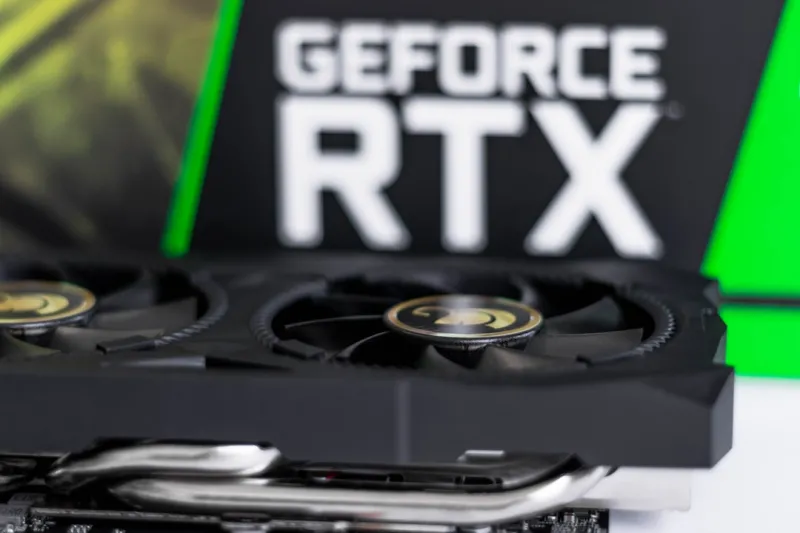
Graphics cards have long been the darling of the enthusiast community, but 2026 marks a pivot: GPUs are now first‑class AI accelerators. NVIDIA’s RTX 6000 Ada Lovelace series and AMD’s Radeon RX 9000 “Zenith” line both embed tensor cores that can crunch matrix multiplications an order of magnitude faster than previous generations. This matters beyond gaming; developers are offloading inference workloads—think real‑time speech-to-text or image upscaling—directly to the GPU. When selecting a card, look for a balance of VRAM (at least 24 GB GDDR6X is ideal for large models) and tensor throughput (TFLOPs). Also, check for support of the latest DirectX 13 and OpenCL 3.0 standards, as these ensure compatibility with both creative applications and emerging AI frameworks. Pairing a powerful GPU with a CPU that can feed it data without bottlenecks is essential, so make sure your motherboard and PCIe lanes can handle the load.
Memory Matters: Capacity, Speed, and Stability
RAM isn’t just a speed bump; it’s the nervous system of your rig. In 2026, DDR5‑6000 is the baseline for high‑end builds, and many enthusiasts are already testing DDR5‑7200 modules. The higher the frequency, the lower the latency, which directly translates to smoother multitasking and faster data shuffling for AI workloads. However, speed alone isn’t enough—capacity is king. I recommend a minimum of 64 GB for a power‑user workstation, with the option to expand to 128 GB if you’re routinely training models or editing 8K video. Stability is equally critical; a single bad stick can wreak havoc on long‑running processes. If you ever encounter mysterious crashes, my Troubleshooting RAM: A Power‑User’s Step‑by‑Step Playbook can guide you through diagnostic tools like MemTest86+ and the Windows Memory Diagnostic, ensuring that your memory subsystem remains rock‑solid under pressure.
Motherboard Selection: The Unsung Hero
Choosing the right motherboard is often overlooked, yet it dictates everything from power delivery to expansion possibilities. In my experience, a board built around the X670E chipset (for AMD) or Z790 (for Intel) offers the best blend of PCIe 5.0 lanes, robust VRM designs, and native support for DDR5. Pay special attention to the VRM phase count; a 14‑plus phase design ensures clean power to your CPU during sustained loads, which is crucial when both the CPU and GPU are handling AI inference simultaneously. I also value boards that include dual M.2 slots with heatsinks and integrated Wi‑Fi 7, as wireless connectivity is no longer a secondary concern. For a deep dive into motherboard strategy, check out Mastering Motherboard Selection: The Power‑User’s Blueprint for 2026, where I break down BIOS tuning, memory overclocking, and how to future‑proof your platform for the next wave of compute innovations.
Storage Speed: From PCIe 5.0 to Persistent Memory
The storage hierarchy in 2026 has become a multi‑tiered masterpiece. NVMe SSDs leveraging PCIe 5.0 now deliver sequential read/write speeds exceeding 14 GB/s, making them ideal for massive video libraries and rapid dataset loading. For those who demand instant access to frequently used files, consider adding a small capacity, ultra‑fast 2 TB PCIe 5.0 SSD as a “working drive,” while relegating bulk storage to a larger, cost‑effective SATA‑III or even an emerging QLC‑based PCIe 4.0 drive. Another exciting development is Intel’s Optane Persistent Memory, which sits between DRAM and SSD in the memory hierarchy, offering low‑latency, non‑volatile storage that can act as a cache for AI models. When configuring your storage, remember to enable the motherboard’s “RAID 0+1” or “Intel VROC” options if you need both speed and redundancy. Proper partitioning and using file systems like NTFS 2026 or ReFS ensures data integrity, especially under heavy write cycles from AI training pipelines.
Power Delivery and Cooling: Balancing Performance with Efficiency
Power supplies in 2026 have become smarter, with 80+ Platinum efficiency becoming the norm for high‑end rigs. A 1000‑W PSU is often the sweet spot for a system that houses a power‑hungry GPU, a robust CPU, and multiple storage devices. Look for models that offer modular cabling and a high‑amp single‑rail design to simplify cable management and reduce voltage drop. On the cooling front, I’ve migrated to hybrid AIO coolers that combine a 360 mm radiator with a built‑in pump controller, allowing dynamic adjustment based on workload. Liquid cooling isn’t just for aesthetics; it keeps the CPU’s boost clocks stable during long AI training sessions where thermal throttling can shave hours off compute time. Don’t forget to factor in case airflow—intake fans should be positioned to bring cool air directly over the GPU and motherboard VRMs, while exhaust fans clear hot air efficiently.
Case Design and Modularity: Building for Accessibility
The chassis you choose can either be a hindrance or a catalyst for future upgrades. In my latest build, I selected a mid‑tower case with a removable motherboard tray, which makes swapping out components a breeze—especially when you need to test new GPU form factors or add additional PCIe expansion cards. Cable routing features, such as built‑in Velcro straps and ample grommets, keep the interior tidy, improving airflow and simplifying maintenance. I also appreciate tempered glass panels that are both aesthetic and functional, allowing quick visual checks of component temperatures. For power‑users who value modularity, look for cases that support both 360 mm radiators on the top and front, as well as multiple 120 mm or 140 mm fans for fine‑tuned cooling curves. A well‑designed case not only protects your investment but also reduces the time spent troubleshooting thermal or electrical issues.
AI Computing Integration: Harnessing the Full Potential
One of the most exciting trends in 2026 is the seamless integration of AI capabilities directly into the desktop environment. Modern CPUs and GPUs now expose low‑level APIs that let software developers offload inference tasks without needing a separate server. To leverage this, you need a system where the CPU, GPU, and memory are all tuned for low‑latency communication—something I detail in AI Computing Unleashed: Power‑User Strategies for 2026. Start by enabling “Resizable BAR” in the BIOS, which allows the CPU to access the full GPU memory space, reducing data copy overhead. Pair this with a GPU driver that supports the latest TensorRT or ROCm stacks, and you’ll see dramatic speedups in applications ranging from real‑time video upscaling to AI‑assisted coding assistants. Don’t forget to allocate a dedicated 8 GB of system RAM as a “fast cache” for AI models; this can be achieved via Windows’ memory management settings or Linux’s cgroups, ensuring that your AI workloads never starve for memory.
Putting It All Together: Your Future‑Ready Rig Blueprint
By now you’ve seen how each component—CPU, GPU, RAM, motherboard, storage, power, and case—plays a pivotal role in crafting a truly future‑ready machine. The secret sauce lies in ensuring each piece communicates efficiently with the others, creating a harmonious ecosystem that can adapt to emerging workloads. My final recommendation: start with a high‑end CPU‑GPU combo, pair it with 64 GB of DDR5‑6000 RAM (with room to expand), install a 2 TB PCIe 5.0 SSD for primary workloads, and back it all with a 1000‑W 80+ Platinum PSU. Choose a motherboard that offers robust VRMs and multiple M.2 slots, then enclose it all in a modular case with excellent airflow. With this foundation, you’ll be prepared to tackle everything from 8K video editing to on‑premises AI model training, all while maintaining a responsive everyday desktop experience. Ready to build? Dive deeper into each topic with the internal guides linked throughout this article, and let’s push the boundaries of what a power‑user rig can achieve in 2026.