When I first started tinkering with custom rigs a decade ago, the biggest challenge was simply keeping up with the rapid cadence of releases. Fast‑forward to 2026, and the landscape feels both more exciting and more unforgiving. Every new silicon generation promises an order‑of‑magnitude leap, yet the shelf‑life of a build is shrinking as AI workloads, 8K gaming, and immersive XR demand bandwidth that yesterday’s components simply can’t deliver. In this guide, I’ll walk you through the decisions that separate a fleeting “good enough” machine from a truly future‑proof PC that will stay relevant for years. Expect a mix of hard data, personal anecdotes, and a few insider shortcuts that power users have been quietly sharing across forums. By the end, you should have a clear roadmap for selecting CPUs, GPUs, memory, storage, and the supporting ecosystem that together form a resilient, high‑performance platform ready for whatever the next wave of software throws at it.
Choosing the Right CPU: Balancing Core Count, IPC, and Power Efficiency
The heart of any high‑performance system in 2026 is still the processor, and the battle between AMD’s Zen 5 and Intel’s Raptor Lake Refresh is more nuanced than a simple “who’s faster” headline. Zen 5’s new hybrid architecture introduces dedicated “efficiency cores” that excel at background tasks, freeing the “performance cores” to tackle intensive workloads like real‑time ray tracing and large language model inference. Meanwhile, Intel’s refreshed lineup pushes clock speeds past 5.8 GHz while integrating a refined Xe‑Hyper‑Threading engine that reduces latency in multithreaded applications. For a power‑user build, I recommend targeting at least a 16‑core/32‑thread configuration, but more importantly, focus on the processor’s TDP envelope and its support for DDR6 memory. A lower‑TDP chip paired with a robust cooling solution can dramatically extend the lifespan of your build, reducing thermal throttling during marathon sessions of AI‑assisted video editing or 8K streaming. Remember, the CPU’s upgrade path is limited; choosing a socket that will accommodate the next two generations can save you a costly motherboard swap down the line.
GPU Evolution: From Rasterization to AI‑Accelerated Rendering
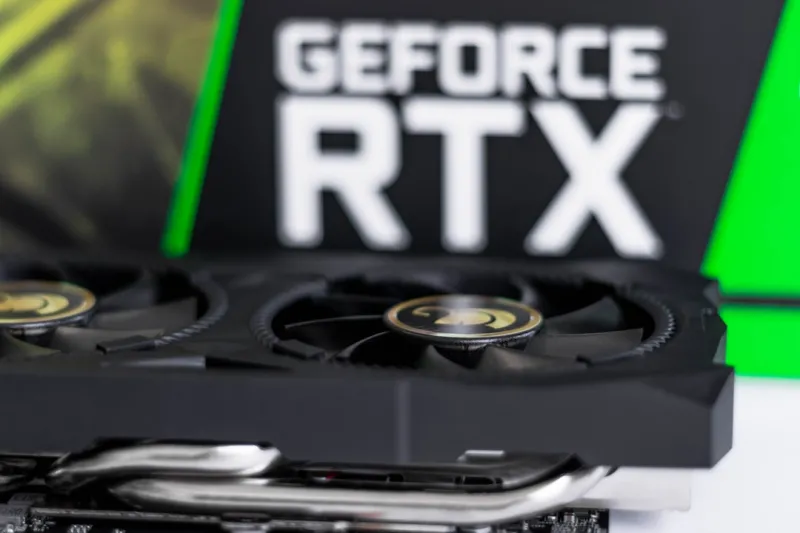
Graphics cards have become the de facto AI accelerators, and in 2026 the line between a “gaming GPU” and a “compute GPU” is practically invisible. Nvidia’s RTX 6000 Ada Lovelace series and AMD’s Radeon RX 9000 Arc Pro models both feature dedicated tensor cores that offload AI‑driven tasks such as DLSS 3.5 upscaling, neural denoising, and even real‑time object recognition for AR applications. When selecting a GPU, look beyond raw teraflops; evaluate the card’s VRAM bandwidth and the availability of driver support for the software you rely on, whether that’s Adobe’s AI‑enhanced suite or the latest game engines that leverage ray‑traced reflections. For a power‑user who wants a single card to handle both 4K gaming at 144 Hz and AI‑heavy workloads, a 24 GB GDDR6X solution with PCIe 5.0 x16 connectivity offers the headroom needed for future software pipelines. Don’t forget to factor in the power draw—some top‑tier cards can exceed 450 W, demanding a PSU that can handle peak loads without compromising stability.
Memory and Storage: The Twin Pillars of Speed and Capacity
Modern workloads demand not just faster RAM, but smarter memory hierarchies. DDR6 is rapidly becoming the new standard for high‑end builds, delivering latency reductions of up to 20 % compared to DDR5 while supporting frequencies beyond 7200 MHz. Pairing 32 GB or 64 GB of DDR6 with a motherboard that offers dual‑channel or quad‑channel configurations ensures that your system can keep up with AI inference engines and large datasets without hitting a bottleneck. On the storage front, PCIe 5.0 NVMe SSDs now regularly exceed 14 GB/s sequential reads, making them indispensable for 8K video editing and massive game installations. For long‑term data integrity, I still recommend a tiered approach: a high‑speed NVMe for OS and active projects, supplemented by a SATA‑based SSD or a high‑capacity HDD for archival storage. If you want to dive deeper into balancing speed, capacity, and longevity, check out the guide on Hard Drive Strategies for Power Users.
Motherboard Selection: Future‑Proofing the Backbone
The motherboard is the silent workhorse that dictates expansion possibilities for years to come. In 2026, look for boards built around the latest chipsets that support PCIe 5.0 across all slots, as well as integrated Thunderbolt 5 ports for ultra‑fast peripheral connections. A robust VRM design with at least a 14‑phase power delivery system ensures stable performance when you push the CPU to its limits, especially during sustained AI workloads or prolonged gaming marathons. Additionally, consider boards that offer multiple M.2 slots with heatsinks, as thermal throttling on storage devices can become a real issue under heavy write loads. Integrated Wi‑Fi 7 and 10 GbE Ethernet are becoming standard, providing the bandwidth needed for cloud‑based rendering farms or high‑resolution streaming. When evaluating BIOS features, prioritize boards that support instant memory overclocking profiles and have a clear, user‑friendly interface for tweaking power settings—a crucial factor for any power user who likes to squeeze every ounce of performance out of their rig.
Power Delivery and Cooling: Keeping the Beast Tamed
Power supplies in 2026 have finally caught up with the appetite of modern GPUs and CPUs, offering efficiencies above 94 % thanks to the widespread adoption of 80 PLUS Titanium certification. For a high‑end build, aim for a PSU in the 1000‑1200 W range with fully modular cabling; this not only improves airflow but also simplifies cable management—a small detail that dramatically enhances overall cooling performance. Speaking of cooling, liquid cooling loops have become more accessible, with all‑in‑one (AIO) solutions now supporting up to 360 mm radiators that can handle the heat output of both a top‑tier CPU and GPU. If you prefer custom loops, ensure you select high‑flow pumps and coolant that resists microbial growth, especially if the system will run 24/7. Effective thermal management not only sustains boost clocks but also extends component lifespan, reducing the frequency of costly upgrades.
Case Design and Ergonomics: Form Meets Function
While aesthetics are often the first thing people notice, the case’s internal architecture is what truly matters for a power‑user build. Look for chassis that provide ample clearance for 360 mm radiators, multiple fan mounts, and cable routing channels that keep airflow unimpeded. Mesh front panels combined with dust filters are essential for maintaining low temperatures in environments where the system runs continuously. Ergonomic considerations, such as tool‑less drive bays and modular I/O panels, can save you hours during upgrades and maintenance. Additionally, many manufacturers now integrate smart lighting that syncs with system metrics via software APIs, allowing you to visualize temperatures, load, and fan speeds in real time. A well‑planned case not only improves performance but also reduces noise, making it easier to work or game without distraction.
Integrating a Future‑Proof Home Network
Even the most powerful PC can be bottlenecked by a weak network connection, especially as 8K streaming, cloud‑gaming, and AI‑driven backup solutions become everyday expectations. Building a robust home network starts with a high‑performance router that supports Wi‑Fi 7 and 10 GbE LAN ports, allowing you to connect your rig via a wired link that can handle multi‑gigabit transfer rates. Consider adding a dedicated network‑attached storage (NAS) device with dual‑PCIe 5.0 NVMe bays for rapid backup and media serving. If you’re into smart home automation, a subnet for IoT devices can keep traffic segregated, preserving bandwidth for your PC’s demanding tasks. For a deeper dive into networking best practices, read Future‑Proof Your Home Network, which outlines the exact hardware and configuration steps to keep your digital ecosystem humming.
Security and Maintenance: The Unbreakable Foundation
Power‑users often focus on raw performance, but neglecting security can quickly turn a dream rig into a nightmare. In 2026, ransomware attacks have grown more sophisticated, leveraging AI to bypass traditional defenses. A layered security approach—starting with a hardware‑based TPM, BIOS password protection, and a reputable UEFI secure boot implementation—creates a strong first line of defense. Pair this with a reputable endpoint protection suite that offers real‑time AI threat detection and regular firmware updates. Don’t forget to isolate your primary workstation from the internet when performing sensitive tasks, using a virtual LAN or a dedicated firewall appliance. Routine maintenance, such as cleaning dust filters, updating driver stacks, and monitoring system logs, ensures that performance stays consistent and that vulnerabilities are patched before they can be exploited. For a comprehensive security playbook, explore Unbreakable Security Strategies for Power Users, which provides actionable steps to harden every layer of your setup.