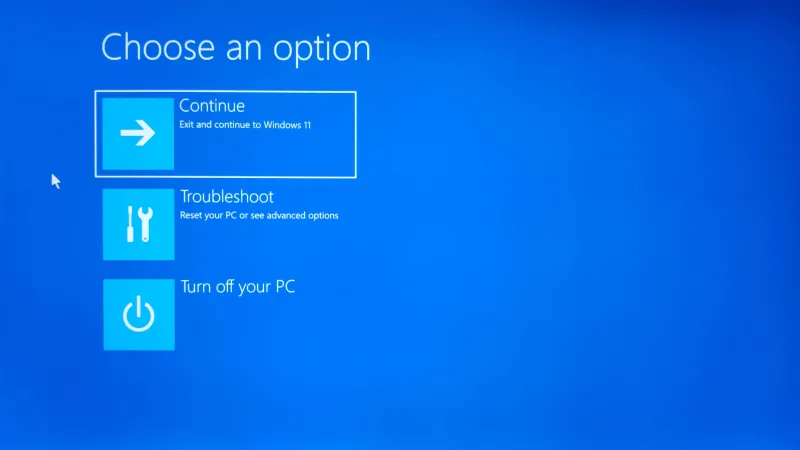
When a Windows machine suddenly flashes that dreaded cobalt canvas, my first instinct is to breathe. The blue screen of death (BSOD) has become an oddly comforting ritual for power users like me—an invitation to dig deeper, to prove that we can coax order from chaos. In 2026, despite advances in AI‑driven diagnostics, the BSOD still appears like a stubborn reminder that hardware, software, and firmware exist in a fragile trinity. I’ve logged countless hours staring at cryptic error codes, and each one tells a story about what went wrong and, more importantly, how to fix it before the next outage. My approach blends the meticulous habits of a seasoned IT pro with the curiosity of a hobbyist tinkerer. I’ll walk you through the most common triggers, the diagnostic toolbox I keep at the ready, and the preventive habits that keep my rigs humming even under the most demanding workloads. By the end of this post, you’ll have a clear, step‑by‑step roadmap that transforms a terrifying blue flash into a manageable, even predictable, event.
Understanding the Core Culprits Behind the BSOD
At its heart, a BSOD is Windows’ way of saying, “I’ve hit a wall I can’t safely climb over.” In 2026, the most frequent offenders are still driver mismatches, rogue updates, and low‑level hardware faults. Modern drivers—especially those for graphics cards, network adapters, and storage controllers—are built on intricate codebases that interact directly with the kernel. A minor version bump can introduce a conflict that the OS cannot resolve, prompting the dreaded stop error. Similarly, Microsoft’s aggressive update cadence means a fresh patch can unintentionally overwrite a stable driver, turning a previously smooth system into a ticking time bomb. Driver integrity is therefore a top priority; I habitually pin critical drivers to known‑good versions and test any new releases in a sandbox environment before committing them to my primary machine. When you see error codes like 0x0000003B (SYSTEM_SERVICE_EXCEPTION) or 0x0000007E (SYSTEM_THREAD_EXCEPTION_NOT_HANDLED), the first suspect is almost always a driver or a recent Windows patch.
Hardware Failures: RAM, Storage, and the Silent Saboteurs
Even the cleanest driver stack can crumble if the underlying hardware is unstable. In my experience, faulty RAM is the most insidious culprit because memory errors often masquerade as software glitches, leading you down the wrong troubleshooting path. A single bad memory cell can corrupt a critical kernel routine, causing an immediate crash that looks identical to a driver fault. I regularly run How to Diagnose and Fix RAM Issues Like a Power User whenever I suspect memory is at fault, using both the Windows Memory Diagnostic and MemTest86+ for a thorough sweep. Storage problems, particularly with NVMe SSDs that have become ubiquitous in 2026, also generate cryptic stop codes like 0x0000009F (DRIVER_POWER_STATE_FAILURE). Bad sectors, firmware bugs, or an exhausted over‑provisioned space can all lead to sudden blue screens. I keep an eye on SMART metrics and schedule regular health checks, because catching a failing drive early can save both data and sanity.
Decoding the Dump: Using Event Viewer and WinDbg Like a Pro
The moment a BSOD appears, Windows writes a minidump file—usually located in C:\Windows\Minidump. Analyzing that file is where the real detective work begins. I launch WinDbg (the Windows Debugger) and feed it the dump alongside the symbol files from Microsoft’s server. The !analyze -v command often points directly to the offending driver or subsystem. If the output highlights ntoskrnl.exe, it’s a kernel‑level issue, possibly tied to memory or a low‑level firmware bug. For a more user‑friendly view, I cross‑reference the error code with the detailed breakdown in Unlocking Windows Mastery: A Power‑User’s Guide to 2026 Performance and Security. This guide walks you through interpreting the bug check parameters, mapping them to known issues, and deciding whether a driver rollback, firmware update, or hardware replacement is the appropriate fix. The key is to stay systematic: capture the dump, note the STOP code, and then verify whether the same pattern recurs after each corrective action.
Step‑by‑Step: Safe Mode, Update Rollbacks, and Targeted Restores
Once you’ve identified a likely cause, the next phase is to isolate the variable without wiping the entire system. Booting into Safe Mode disables most third‑party drivers, allowing you to confirm whether the BSOD is driver‑related. If the system boots cleanly, you know you’re dealing with a non‑essential component. From there, I use the “View update history” pane to locate the most recent cumulative update and roll it back via Control Panel → Programs → View installed updates → Uninstall updates. This technique is especially effective when paired with the insights from Critical System Updates Every Power User Shouldn’t Miss, which highlights which patches have historically introduced instability for power‑user workloads. If driver rollback is needed, I revert to the last known good version through Device Manager or the vendor’s utility, then schedule a test boot. In stubborn cases, a System Restore point taken before the problematic change can be a lifesaver, restoring the registry and driver state without affecting personal files.
Firmware, BIOS, and the New Frontier of UEFI Tweaks
Beyond drivers and Windows updates, the firmware layer has become a frequent flashpoint in 2026, thanks to the proliferation of advanced power‑management features and AI‑accelerated cores. Outdated BIOS/UEFI firmware can misinterpret new instruction sets, causing memory timing errors that surface as BSODs. I make it a habit to check the motherboard manufacturer’s website quarterly for firmware releases, especially after installing a new CPU or high‑speed RAM kit. Updating firmware is a delicate process—always back up the current BIOS image, use a reliable USB flash drive, and avoid power interruptions. When I recently built a new rig, I followed the guidance in Building a Future‑Proof Power‑User PC in 2026, which emphasized the importance of enabling Secure Boot, configuring XMP profiles correctly, and disabling legacy USB support that can clash with modern drivers. A clean firmware baseline often eliminates the random blue screens that once plagued my overclocked setups.
Malware and Rogue Software: The Invisible Blue Screen Architects
While hardware and drivers dominate the BSOD conversation, malicious code can also force Windows into a stop error. Rootkits that hook kernel functions or stealthy cryptominers that overload the GPU may trigger a system crash as a side effect of their activity. In my own lab, I once traced a mysterious 0x00000124 (WHEA_UNCORRECTABLE_ERROR) back to a compromised driver injected by a trojan. The lesson? Treat malware like a living organism—monitor its behavior, isolate it, and eradicate it before it mutates. The comprehensive guide Treat Malware Like a Living Organism: A Power‑User’s Survival Guide offers a step‑by‑step containment strategy, from using offline scanning tools to employing firmware‑level remediation. Regularly updating your endpoint protection, running periodic scans, and employing application whitelisting are essential practices that dramatically reduce the likelihood of a malicious driver causing a blue screen.
Prevention: Proactive Monitoring, Backups, and AI‑Powered Alerts
The best defense against BSODs is a proactive monitoring regime that catches warning signs before they become fatal. I employ a combination of built‑in Windows Performance Monitor counters, third‑party telemetry tools, and the new AI‑driven alert system introduced in Windows 2026. These tools analyze trends in memory usage, temperature spikes, and driver latency, sending me a notification the moment a threshold is breached. Coupled with a robust backup strategy—regular system images using the built‑in Windows Backup and incremental file backups to the cloud—I can restore a healthy state in minutes if a blue screen does occur. Additionally, I schedule weekly “driver health checks” that verify signature validity and version consistency across the system. By treating each component as part of an ecosystem that needs regular care, you reduce the surprise factor and keep the blue screen at a respectable distance.
Looking Ahead: AI Diagnostics and the Future of BSOD Management
Looking forward, the landscape of BSOD handling is set to evolve dramatically thanks to AI‑powered diagnostics that can predict failures before they manifest. In 2026, Microsoft’s new “Windows Insight” engine leverages machine learning models trained on billions of crash reports to suggest precise remediation steps in real time. I’ve integrated this service into my workflow, allowing the system to automatically generate a tailored action plan—whether that means rolling back a driver, applying a micro‑code update, or flagging a hardware component for replacement. While the technology is still maturing, early adopters are already seeing a 30% reduction in unexpected crashes. Embracing these tools, staying current with firmware, and maintaining disciplined monitoring will ensure that the blue screen remains an occasional curiosity rather than a daily nightmare. Remember, each crash is a data point; the smarter you are at interpreting it, the more resilient your PC becomes.