The Motherboard Landscape in 2026
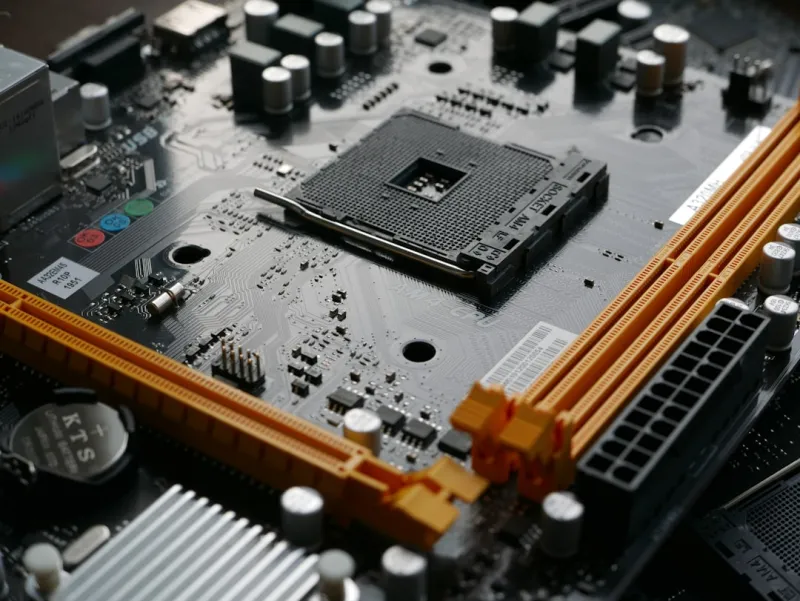
When I first built a rig back in the early 2020s, the motherboard was the quiet, unassuming workhorse that most people never thought about. Fast‑forward to 2026, and that quiet hero has become a sophisticated command center, a platform where AI‑driven firmware, ultra‑fast connectivity, and next‑gen power delivery converge. As a power‑user who spends more time in the BIOS than in any GUI, I’ve learned that the board you choose determines not just raw performance but also how gracefully your system adapts to the rapid software changes we see every quarter. A modern motherboard now talks to the CPU, GPU, storage, and even the operating system in a language that evolves on‑the‑fly, thanks to continuous firmware updates. This article is my deep‑dive into why the right board is the secret weapon for anyone who refuses to settle for “good enough” and how you can future‑proof your build without breaking the bank.
AI‑Enabled Chipsets and Smarter BIOS
Chipset manufacturers have taken a bold step this year, integrating on‑board AI cores that can predict thermal spikes, balance power loads, and even suggest optimal memory timings in real time. The result is a BIOS that feels more like a personal assistant than a static configuration menu. When you launch the UEFI, you’ll notice a new “Intelligent Tuning” tab that learns from your usage patterns—gaming, 3D rendering, or heavy data crunching—and automatically adjusts voltage curves for the best efficiency‑performance balance. This level of dynamism is only possible because the chipset now runs a lightweight machine‑learning model directly on the board, eliminating the need for third‑party overclocking utilities. For those who love to tweak, the AI can be disabled, but the default behavior already gives you a head‑start on stability and power savings. If you’re looking for a comprehensive guide on building a system that thrives on this kind of hardware, check out Future‑Ready Hardware: Building a Power‑User PC That Thrives in 2026.
Connectivity That Won’t Quit
One of the most visible upgrades on today’s motherboards is the explosion of bandwidth‑heavy interfaces. PCIe 5.0 has become the baseline, and a growing number of premium boards are already shipping with PCIe 6.0 lanes for the newest GPUs and high‑speed storage adapters. On the peripheral side, USB4 now dominates the front panel, delivering up to 40 Gbps while supporting Thunderbolt 4 compatibility for external docks and eGPUs. Wireless connectivity has also taken a leap forward: Wi‑Fi 7, with its 30 Gbps theoretical ceiling and multi‑link operation, ensures that your network latency stays in single‑digit milliseconds, even under heavy traffic. Coupled with 2.5 GbE and the emerging 10 GbE Ethernet ports, you’ll rarely need a separate network card. To master the nuances of these connections and squeeze every last megabit from your setup, I recommend reading Network Mastery in 2026: Strategies Power Users Need Now. Understanding how these lanes interact can mean the difference between a bottleneck‑free workflow and a frustrating lag that wastes hours.
Power Delivery and VRM Design for the Modern Beast
High‑performance CPUs and GPUs demand not just raw wattage but clean, stable power across every core. This is where the VRM (Voltage Regulator Module) architecture becomes a make‑or‑break factor. In 2026, we’re seeing boards equipped with 18‑plus phase VRM designs, using premium components like gallium nitride (GaN) MOSFETs that operate at higher frequencies with lower losses. The result? Faster transient response, lower temperatures, and a quieter cooling solution. Many manufacturers now pair these VRMs with hybrid cooling—liquid‑cooled MOSFETs and heatsinks that double as VRM heat spreaders—so you can push an 8‑core Ryzen or an Intel Xeon to its limits without fearing thermal throttling. As a power‑user, I pay close attention to the VRM’s thermal rating and the board’s overall power budget. A board that can deliver 250 W on the CPU side while still leaving headroom for a power‑hungry GPU is the sweet spot for a workstation that does heavy AI inference or 4K‑plus gaming. The extra cost of a robust VRM is quickly offset by the stability gains during long rendering sessions or marathon benchmarking runs.
Security Built Into the Silicon
Security is no longer an afterthought; it’s baked directly into the motherboard’s silicon. TPM 2.2 modules are now standard on most consumer boards, providing hardware‑rooted encryption keys that protect everything from disk encryption to credential storage. Firmware signing has become mandatory, meaning any BIOS update must be cryptographically verified before the board will accept it. This mitigates the risk of supply‑chain attacks that plagued earlier generations. For power users who handle sensitive data—whether it’s proprietary code, client information, or personal finances—these safeguards are indispensable. Moreover, many boards now support secure boot extensions that verify the integrity of the bootloader and OS kernel before handing over control. If you haven’t yet enabled these features, you’re leaving a glaring hole in your defense. For a deeper dive into why encryption matters for power users, see Why Encryption Is the New Power‑User Imperative. Pairing hardware encryption with a strong BIOS password creates a layered defense that’s hard for even sophisticated malware to breach.
Storage Options: From NVMe Lightning to Classic Hard Drives
The storage landscape on a 2026 motherboard is a blend of speed and reliability. M.2 slots now support PCIe 5.0 x4, delivering sequential read speeds north of 14 GB/s, which is ideal for large AI model loading and real‑time video editing. Some high‑end boards also include U.2 connectors for enterprise‑grade NVMe drives that offer better thermal management and hot‑swap capability. Yet, despite the flash frenzy, traditional 3.5‑inch SATA drives remain relevant, especially for bulk archival or media libraries that don’t need instant access. The durability and cost‑per‑gigabyte of modern hard drives still outshine SSDs when you’re talking terabytes of raw footage. Many enthusiasts adopt a tiered storage strategy: a lightning‑fast NVMe boot drive for OS and applications, a secondary PCIe SSD for active projects, and a large‑capacity HDD for backup and long‑term storage. This approach maximizes performance while keeping the overall budget reasonable. If you want to understand why hard drives continue to be a backbone for power‑user builds, check out Why Hard Drives Remain the Backbone of Modern Power‑User Builds.
Troubleshooting and BIOS Tuning: A Power‑User’s Playbook
Even with the smartest boards, things can go sideways—especially when you push the envelope with extreme overclocks or unconventional memory kits. The first line of defense is a clean BIOS profile: reset to defaults, then enable XMP or DOCP for memory, and let the AI‑assisted tuner handle voltage curves. If you encounter instability, my go‑to method is to isolate the variable. Start by disabling any non‑essential PCIe lanes, revert to stock CPU multiplier, and run a memory stress test like MemTest86+. When RAM starts acting up, I reference the guide When RAM Acts Up: A Power‑User’s Guide to Diagnosing and Fixing Memory Issues for quick diagnostics. Firmware logs in the UEFI can reveal voltage spikes or temperature excursions that the AI may have missed. Don’t forget to monitor the VRM temperatures via hardware monitoring tools; overheating VRMs often masquerade as random BSODs. By methodically narrowing down the culprit—whether it’s a faulty DIMM, a misbehaving PCIe device, or a BIOS bug—you’ll spend less time on forums and more time on productive work.
Choosing the Right Motherboard for Your 2026 Build
With all these advancements, picking a motherboard can feel overwhelming, but it boils down to three core questions: What CPU platform am I targeting? How much bandwidth do my peripherals truly need? And what level of security and power delivery am I comfortable with? If you’re on the AMD side, look for X670E or B650E chipsets that support PCIe 6.0 and have robust VRM designs; Intel users should gravitate toward Z790 or the upcoming Z890 boards that pair AI‑enhanced BIOS with native DDR5 5600+ support. Next, audit your connectivity requirements: a single PCIe 6.0 slot for a next‑gen GPU, multiple M.2 slots for fast storage, and at least two 2.5 GbE ports if you rely on wired networking. Finally, verify that the board includes a TPM, firmware signing, and secure boot support out of the box. By aligning these criteria with your workflow—whether it’s AI research, 8K video production, or high‑frequency trading—you’ll end up with a motherboard that not only meets today’s demands but scales gracefully into the next generation of hardware. Happy building, and remember: the motherboard is the foundation; treat it with the respect it deserves.