When I first cut my teeth on Ethernet hubs and dial‑up modems, networking felt like a backstage crew – essential but invisible. Fast‑forward to 2026, and the network is the main stage, dictating everything from AI‑driven workloads to immersive VR meetings. As a power‑user who lives at the intersection of hardware tinkering and software wizardry, I’ve learned that staying ahead isn’t just about buying the latest router; it’s about mastering the layers that make data glide seamlessly across devices. In this post I’ll walk you through the most impactful trends shaping computer networking right now, unpack the security mindset that keeps our traffic safe, and hand you a practical playbook you can start using today. Whether you’re configuring a home lab, scaling a small business, or just curious about why your Wi‑Fi sometimes feels like a hamster on a wheel, the insights below will help you turn networking from a nuisance into a competitive advantage.
The Rise of Edge‑Centric Mesh Networks
Traditional “router‑to‑device” topologies are giving way to mesh architectures that push compute and storage to the edge of the home or office. In 2026, mesh Wi‑Fi 7 nodes are no longer a premium add‑on; they’re the default for anyone who streams 8K video, runs real‑time AI inference, or hosts multiplayer game servers. What makes mesh truly powerful is its ability to self‑optimise – each node constantly measures latency, interference, and bandwidth, then reroutes traffic in milliseconds to avoid bottlenecks. For the power‑user, this means you can strategically place nodes near high‑intensity devices (like a dedicated AI inference box) and let the mesh handle load balancing without manual tweaking. Pairing mesh with a gigabit fiber feed and a 10 Gbps Ethernet backhaul creates a hybrid network that feels like a single, unified pipe, erasing the old “Wi‑Fi vs. wired” debate and delivering consistent performance even as your device count explodes.
Security by Design: Encryption and Zero‑Trust Everywhere
Network security in 2026 is no longer an afterthought; it’s baked into every packet. With the proliferation of remote work and the explosion of IoT devices, the old perimeter‑based model has crumbled, making zero‑trust architectures the new norm. Every device, whether it’s a laptop or a smart thermostat, must authenticate and encrypt its traffic before it can join the network. This shift has turned encryption from a “nice‑to‑have” feature into a power‑user imperative. I recently dove into the details of why that matters in my piece Why Encryption Is the New Power‑User Imperative, where I explored how hardware‑accelerated AES‑256 on modern NICs not only secures data but also offloads CPU cycles for other tasks. Implementing a zero‑trust framework means deploying a robust identity provider, segmenting traffic with VLANs or software‑defined networking, and enforcing mutual TLS for every service. The payoff is a network that can automatically quarantine compromised devices without manual intervention, keeping your data safe even when the threat landscape evolves faster than you can patch.
AI‑Driven Network Orchestration
Artificial intelligence has moved from the lab to the living room, and networking is its newest playground. AI‑enhanced controllers now analyze telemetry from every switch, router, and endpoint to predict congestion, automatically adjust QoS policies, and even recommend hardware upgrades before you notice a slowdown. This proactive approach mirrors the mindset I described in How AI‑Enhanced Power Users Are Redefining Software Development, where we saw developers letting models handle routine code reviews. In networking, AI does the heavy lifting of pattern recognition – spotting a subtle shift in packet loss that precedes a firmware bug, or reallocating bandwidth when a video conference spikes. For the power‑user, the key is to integrate these AI engines with open APIs, allowing you to script custom alerts or feed data into existing monitoring dashboards. By trusting AI to manage the mundane, you free up mental bandwidth for strategic projects like designing a multi‑cloud hybrid network or experimenting with low‑latency edge compute clusters.
Home Lab Evolution: From Hobbyist to Production‑Ready
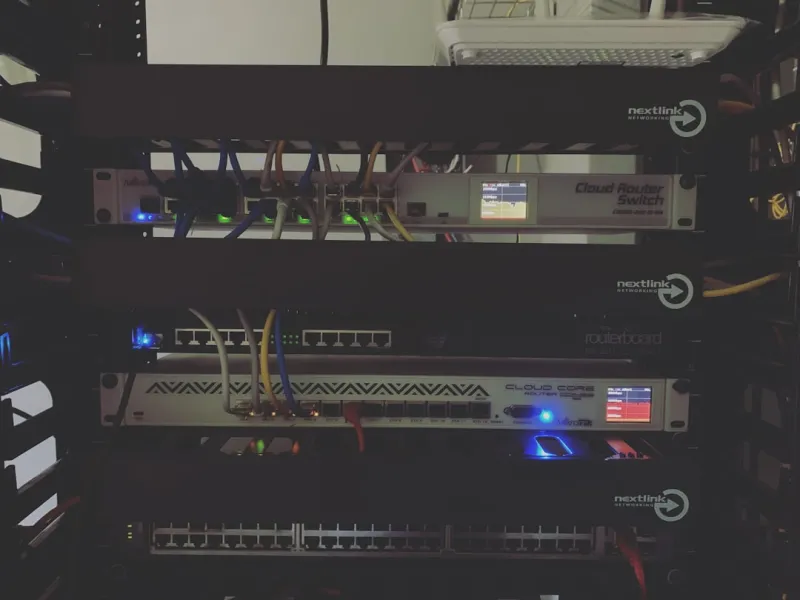
My home lab used to be a collection of repurposed routers and a handful of Raspberry Pis. Today, it resembles a miniature data center, complete with redundant power supplies, 10 GbE uplinks, and purpose‑built network appliances. The secret sauce? Treating the lab with the same rigor as a corporate environment: regular firmware updates, systematic logging, and meticulous change control. When building a lab that can double as a testbed for real‑world deployments, start with a core switch that supports stacking, so you can add or remove modules without downtime. Pair this with a managed firewall that offers deep packet inspection and integrated IDS/IPS – essential for evaluating the security posture of any new service. Don’t forget to provision a separate VLAN for IoT devices; this isolation mirrors best‑practice segmentation and prevents a compromised smart plug from reaching your development servers. By applying these production‑grade practices at home, you not only future‑proof your setup but also gain hands‑on experience that translates directly to enterprise roles.
Hybrid Cloud and SD‑WAN: The Backbone of Modern Connectivity
Enterprises are no longer anchored to a single data center; they’re sprawling across public clouds, edge locations, and on‑premise servers. Software‑Defined WAN (SD‑WAN) has become the glue that stitches these disparate environments together, offering centralized policy control, dynamic path selection, and built‑in encryption. For a power‑user looking to experiment with multi‑cloud architectures, an SD‑WAN appliance provides an affordable entry point – many vendors now offer virtual appliances that run on a single VM, letting you simulate complex routing scenarios without hefty hardware investments. In my deep‑dive on building future‑ready rigs, I highlighted the importance of hardware choices Future‑Ready PC Building: Hardware Trends That Power the Modern Power‑User. The same principle applies to networking: choose NICs that support RDMA and offload TLS, and you’ll see tangible gains when moving data between your on‑premise storage and a cloud bucket. The result is a seamless, low‑latency experience for users no matter where the application resides.
IoT Proliferation and the Need for Network Segmentation
The Internet of Things has exploded beyond smart speakers and thermostats; today we’re seeing AI‑enabled cameras, autonomous drones, and even blockchain‑based sensors communicating over the same LAN. While this connectivity fuels innovation, it also widens the attack surface dramatically. The antidote is granular network segmentation, which isolates each class of device into its own broadcast domain. By enforcing strict ACLs and leveraging VLANs or micro‑segmentation tools, you can ensure that a compromised IoT gadget cannot pivot to your critical workstations or servers. Additionally, employing a dedicated IoT gateway that performs protocol translation and deep inspection adds another layer of defense. For power‑users, the fun part is configuring policy‑as‑code scripts that automatically provision new segments as devices are added, turning what could be a security nightmare into a streamlined, auditable process.
Advanced Troubleshooting: From Packet Captures to AI‑Assisted Diagnostics
When network performance hiccups, the old “restart router” reflex rarely solves the problem. Modern troubleshooting blends traditional packet capture tools like Wireshark with AI‑driven analytics that flag anomalies in real time. For example, by feeding flow logs into a machine‑learning model, you can instantly see deviations in latency patterns that indicate a failing switch port or a misbehaving driver – similar to the methodology I covered in When RAM Acts Up: A Power‑User’s Guide to Diagnosing and Fixing Memory Issues. Start by establishing a baseline of normal traffic using sFlow or NetFlow, then set thresholds that trigger alerts. When an alert fires, drill down with a targeted capture on the affected interface, filter for the offending protocol, and correlate with system logs. This systematic approach reduces mean‑time‑to‑resolution from hours to minutes, keeping your workflow smooth and your network resilient.
Actionable Checklist for the 2026 Power‑User Network
To wrap things up, here’s a concise checklist you can run through this week:
- Upgrade to a Wi‑Fi 7 mesh system with gigabit backhaul and enable automatic band steering.
- Implement zero‑trust policies: enforce mutual TLS, use a centralized identity provider, and segment all IoT devices.
- Deploy an AI‑enhanced network controller or open‑source alternative that ingests telemetry for predictive analytics.
- Build a home lab with a stackable 10 GbE core switch, redundant power, and a virtual SD‑WAN appliance.
- Configure VLANs for each device class and apply micro‑segmentation rules via policy‑as‑code.
- Set up continuous packet‑capture baselines and integrate them with an AI alerting system.
- Regularly audit firmware, apply patches, and rotate encryption keys on all network appliances.
By ticking these items off, you’ll transform your network from a passive conduit into an intelligent, secure, and high‑performance platform that scales with your ambitions. Stay curious, keep testing, and let the network work for you, not the other way around.