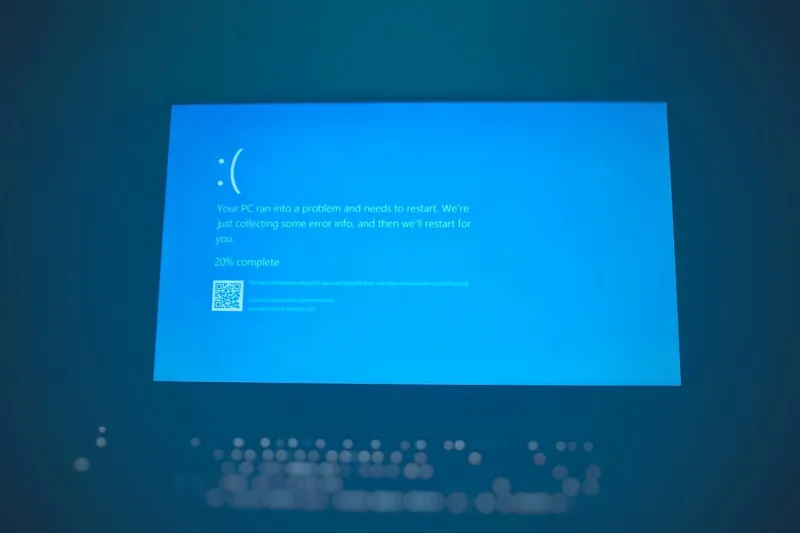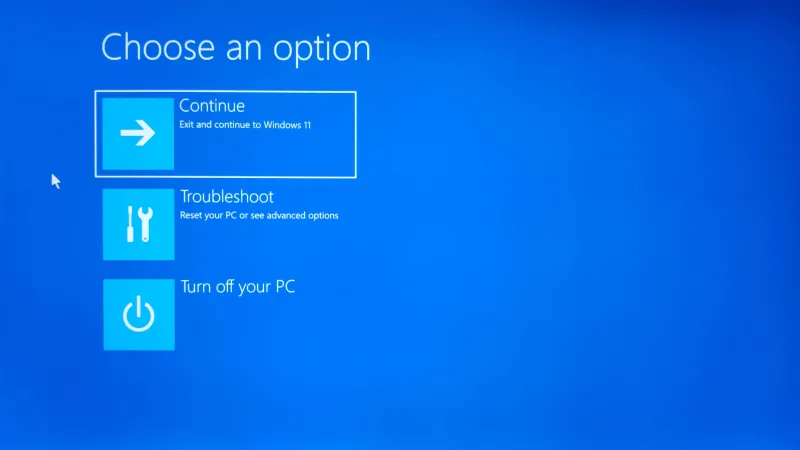
When I first saw the infamous blue screen flicker across my monitor in the middle of a client demo, my heart did a quick double‑take. It wasn’t just the shock of an unexpected halt; it was the realization that, even in 2026, the Blue Screen of Death (BSOD) remains the ultimate equalizer for power users who think they’ve mastered every nuance of their rigs. I’ve spent the last decade fine‑tuning BIOS settings, overclocking CPUs, and automating AI‑driven workflows, yet a single kernel panic can bring the whole operation to a grinding halt. In this post, I’ll walk you through why the blue screen is still trending, how to diagnose it with modern tools, and what proactive steps you can take to keep your machine humming. Expect a mix of gritty troubleshooting anecdotes, references to the latest driver ecosystems, and a few strategic links to help you stay ahead of the curve.
Why the Blue Screen Still Haunts Power Users
The BSOD has evolved from the clunky Windows 95 error screens to the sleek, code‑dense alerts we see on Windows 11 and the upcoming Windows 2026 builds. What hasn’t changed is its role as a symptom of deeper system instability—often rooted in low‑level interactions between hardware, firmware, and the operating system. In 2026, we’re seeing a surge in AI‑accelerated workloads that push GPUs and CPUs to their limits, and that pressure can expose subtle timing bugs in drivers that were previously hidden under lighter loads. Moreover, the rise of mixed‑architecture systems—where ARM‑based co‑processors handle encryption tasks while the main x86 core runs the OS—adds a new layer of complexity. When any piece of that intricate puzzle falters, Windows throws a blue screen to protect data integrity. As a power user, you’ve probably already built a custom cooling loop or a high‑performance SSD array, but without vigilant monitoring, those investments can become the very triggers for a crash.
Common Triggers in 2026: AI Drivers, Firmware, and Updates
One of the most frequent culprits behind today’s BSODs is the rapid rollout of AI‑optimized drivers. Vendors are pushing updates that enable real‑time neural inference on the GPU, which sounds fantastic—until a mismatch with the system’s firmware creates a memory leak that the kernel can’t reconcile. In my own setup, a seemingly innocuous driver update for a new AI accelerator caused a cascade of “CRITICAL_PROCESS_DIED” errors within minutes. The lesson? Treat every driver update as a potential system‑wide change, not just a peripheral tweak. Pair this mindset with regular firmware checks—especially for NVMe drives that now include built‑in AI compression engines. And don’t forget the operating system itself; Microsoft’s 2026 feature packs introduce AI‑driven memory management that can clash with third‑party security modules. To stay on top of these rapid changes, I recommend reading Critical Updates Power Users Must Embrace in 2026, which breaks down which patches are truly optional and which you need to schedule for off‑hours.
Decoding the Crash Dump with Modern Tools
When a blue screen appears, the system generates a minidump—a compact snapshot of memory, register states, and the offending driver. In 2026, Microsoft has refined the Windows Debugger (WinDbg) UI, adding AI‑assisted symbol resolution that can suggest likely root causes based on millions of crowdsourced crash reports. To start, enable full memory dumps in System Settings and keep a separate high‑capacity SSD for storing them; you’ll thank yourself when a 12‑GB dump reveals a hidden conflict that a 256‑MB mini‑dump would have missed. Open the dump in WinDbg, and look for the “BugCheck” code—common ones like 0x3B (SYSTEM_SERVICE_EXCEPTION) often point to driver issues, while 0x7E (SYSTEM_THREAD_EXCEPTION_NOT_HANDLED) can indicate faulty firmware. The new AI suggestions can highlight that a specific AI‑accelerated driver version is a recurring offender. Use the “!analyze -v” command, then cross‑reference the driver’s version with the release notes on the vendor’s site. If you’re still stuck, the community forum now integrates a one‑click “Export to AI Debugger” feature that aggregates similar dumps for faster pattern recognition.
Preventive Maintenance: Drivers, Firmware, and System Health
Proactive maintenance is the most reliable antidote to recurring BSODs. Start with a driver audit: list every installed driver using PowerShell’s Get‑Driver cmdlet, then compare versions against the manufacturers’ release logs. If a driver is older than six months, schedule a test install on a non‑critical workstation before deploying it system‑wide. Firmware updates deserve equal scrutiny—NVMe, BIOS, and even peripheral firmware now receive AI‑enhanced patches that can improve power efficiency but also introduce new timing constraints. Use the manufacturer’s flashing utility in “safe mode” to avoid conflicts. Additionally, monitor system temperatures and power delivery; the new generation of AI GPUs can spike power draw dramatically, and insufficient PSU headroom often manifests as a blue screen under load. Finally, keep a baseline performance profile using Windows Performance Recorder; any deviation from the baseline during routine tasks is a red flag that warrants deeper investigation before it escalates to a crash.
The Security Angle: Encryption and Crash Prevention
Security and stability are tightly intertwined in modern PCs. When you enable full‑disk encryption—especially hardware‑based solutions that offload cryptographic work to a dedicated TPM—the system gains resilience against data theft, but it also adds an extra layer of complexity to the boot process. A misconfigured encryption policy can cause the kernel to reject critical drivers, resulting in a BSOD that looks like a hardware fault. To avoid this, make sure your encryption keys are stored in a TPM that supports the latest AI‑driven attestation protocols. I found this insight invaluable after a recent incident where a Windows update attempted to re‑encrypt the system partition, triggering a cascade of “PAGE_FAULT_IN_NONPAGED_AREA” errors. For a deeper dive into why encryption should be your first line of defense, see Why Modern Power Users Must Make Encryption Their First Line of Defense. Align your security policies with your stability goals, and you’ll reduce the likelihood of a blue screen caused by authentication failures.
AI‑Driven Malware: A New Frontier for Crashes
Modern malware has learned to weaponize the very AI tools we rely on for productivity. In 2026, ransomware families are embedding malicious inference models that overload the GPU, causing intentional memory exhaustion and, consequently, blue screens that mask the underlying breach. These attacks are subtle—they don’t just encrypt files; they destabilize the OS to force a reboot, wiping volatile forensic evidence. To counter this, adopt a power‑user mindset that treats every anomaly as a potential security event. Deploy AI‑based endpoint detection that monitors GPU utilization patterns for spikes that don’t match known workloads. If you notice a sudden surge during idle periods, isolate the machine and run a full malware scan. For more context on how modern malware is outpacing traditional defenses, check out Why Modern Malware Is Outpacing Traditional Defenses and What Power Users Can Do. By integrating security monitoring with stability checks, you’ll catch malicious attempts before they force a blue screen.
Future‑Proofing Your Hardware to Reduce BSODs
Investing in forward‑compatible hardware is another pillar of BSOD avoidance. The 2026 hardware landscape emphasizes modularity and AI‑ready components—think CPUs with built‑in neural cores, GPUs that support tensor operations out of the box, and SSDs that incorporate on‑the‑fly compression via machine learning. While these advancements boost performance, they also introduce new firmware interfaces that can be fragile if not kept current. I recommend consulting Future‑Proof Your PC: 2026 Hardware Trends for Power Users to select components that have robust driver ecosystems and long‑term vendor support. Prioritize motherboards with dual BIOS and integrated AI health monitors, and choose power supplies that can handle the sudden spikes associated with AI inference tasks. By building a system with redundancy—such as an auxiliary GPU for fallback compute—you can prevent a single point of failure from triggering a system‑wide crash.
Conclusion: Turning the Blue Screen Into a Learning Opportunity
At the end of the day, the blue screen isn’t just a nuisance; it’s a diagnostic goldmine that tells you precisely where the system’s balance has been disturbed. My approach has shifted from treating BSODs as catastrophic events to seeing them as feedback loops that guide my hardware choices, driver management, and security posture. By staying on top of AI‑centric driver updates, maintaining rigorous firmware hygiene, and integrating security monitoring with stability checks, you can turn each crash into a data point that strengthens your overall setup. Keep a detailed log of every blue screen—code, driver version, workload at the time—and feed that into your AI‑driven analytics platform. Over time, patterns will emerge, allowing you to preemptively address the root causes before they manifest as a full‑screen halt. So the next time that electric blue glare appears, remember: it’s not the end of the world, it’s the beginning of a deeper understanding of your machine.