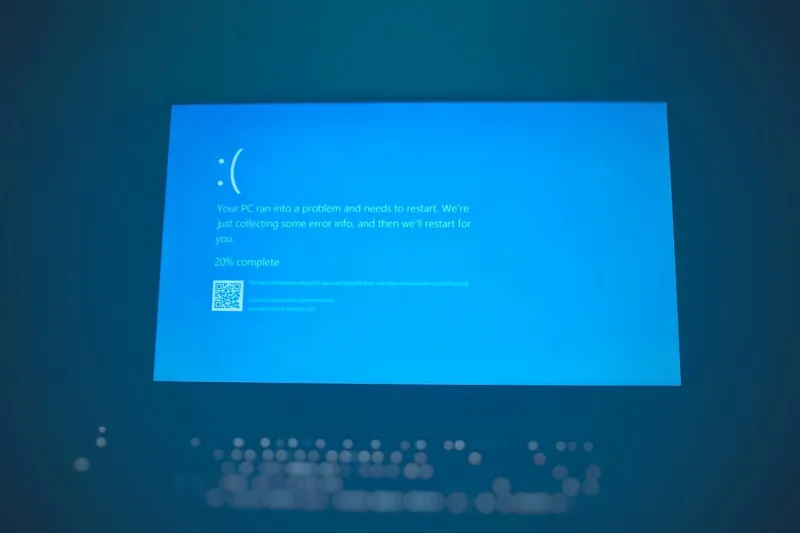
When the dreaded blue screen flashes across my monitor, I swear I hear the collective gasp of a thousand IT forums echoing through the room. As someone who’s spent a decade knee‑deep in Windows internals, I’ve watched the BSOD evolve from a cryptic error dump into a surprisingly nuanced diagnostic tool. In 2026, the blue screen is no longer just a sign of a failing driver—it’s a symptom of an ecosystem where AI‑driven drivers, self‑optimizing hardware, and quantum‑enhanced security layers intersect in ways our grandparents could never have imagined. I still remember the first time I saw a “CRITICAL_PROCESS_DIED” on a vintage machine, and today I’m navigating “SYSTEM_SERVICE_EXCEPTION” on a laptop that claims to be self‑healing. This article is my personal roadmap through the modern blue‑screen maze, blending hard‑won lessons with the latest tech trends, so you can turn that ominous cobalt glare into a stepping stone rather than a dead end.
Why the Blue Screen Still Matters in 2026
Even as Windows 2026 rolls out AI‑enhanced diagnostics that can automatically roll back problematic updates, the blue screen remains the OS’s most direct line of communication about fatal failures. It’s not just a relic; it’s a real‑time snapshot of the kernel’s last breath, offering clues that even the smartest telemetry can miss. Modern systems now leverage machine‑learning models to predict instability, yet those models rely on the same low‑level data the BSOD provides. The blue screen acts as a safety valve, preventing corrupted processes from taking over critical memory. In an era where cloud‑backed AI assistants can suggest a driver rollback before you even notice a slowdown, ignoring the BSOD is akin to dismissing a fire alarm because you trust the sprinkler system to handle it. Understanding the why behind each error code empowers you to intervene before the AI does, keeping you in the driver’s seat of your own machine.
Common Culprits: Drivers, Firmware, and Hardware
At the heart of most blue‑screen events in 2026 are three intertwined villains: outdated drivers, mismatched firmware, and hardware that refuses to speak the same language as the OS. AI‑augmented drivers now adapt on the fly, but they still need a solid baseline. A graphics driver that’s been tweaked by an experimental AI can clash with a BIOS that hasn’t been updated to recognize new power‑state commands, leading to the classic “VIDEO_TDR_FAILURE.” Likewise, SSD controllers that boast self‑optimizing algorithms sometimes expose race conditions when paired with legacy storage stacks. Even the most robust RAM can betray you if its timing profiles aren’t aligned with the motherboard’s smart voltage regulator. The takeaway? A blue screen is rarely a random glitch; it’s usually the result of a misaligned handshake between software and hardware components that were never meant to operate together without a translator.
Self‑Optimizing Hardware: A Double‑Edged Sword
Enter the era of self‑optimizing hardware. Modern CPUs and GPUs now monitor thermal, power, and workload patterns in real time, adjusting frequencies and voltages without human input. While this dynamic scaling improves performance and efficiency, it also introduces new variables that can trigger a blue screen if the AI’s predictions miss a edge case. For instance, a CPU that automatically overclocks to meet a sudden AI workload may push memory timings beyond what the DIMMs can safely handle, resulting in a “MEMORY_MANAGEMENT” error. The key is to maintain visibility into these autonomous adjustments. Most motherboards now expose a “Smart Optimizer” log in the BIOS, and Windows 2026 includes a “Hardware Insight” panel that shows real‑time scaling decisions. By reviewing these logs after a crash, you can pinpoint whether the AI’s self‑tuning was a hero or a villain in that particular scenario.
RAM Instability: The Silent BSOD Trigger
RAM has always been a frequent suspect in blue‑screen cases, and 2026 is no exception. With higher‑density modules and tighter latency specifications, even a single defective chip can cause a cascade of exceptions. The AI‑driven memory manager now attempts to redistribute loads across channels to avoid hot spots, but if the underlying silicon is flaky, those migrations can produce “PAGE_FAULT_IN_NONPAGED_AREA.” I’ve spent countless nights watching the “Why Your RAM Is Acting Up in 2026 and How to Fix It” guide, only to discover that a seemingly stable stick was failing under the stress of a new AI‑enhanced game engine. The best practice today is to run the built‑in Windows Memory Diagnostic after each major driver update, and to complement it with third‑party tools that stress test at the voltage levels the AI may push. Proactive memory health checks can catch errors before they manifest as a blue screen, saving you hours of debugging and possibly preventing data loss.
AI‑Driven Malware: An Unexpected BSOD Catalyst
Cyber threats have evolved alongside legitimate AI, and the line between benign optimization and malicious exploitation is blurring. The AI‑driven malware arms race has introduced ransomware that deliberately corrupts kernel drivers to force a BSOD, coercing users into paying for a “fix.” These malicious actors manipulate the same self‑optimizing mechanisms that manufacturers tout, inserting rogue code into driver update pipelines. When the OS detects an integrity breach, it often responds with a blue screen to protect the core system. Detecting such attacks requires more than traditional antivirus; you need behavior‑based monitoring that can flag abnormal driver signatures and unexpected firmware changes. In many cases, the blue screen is the first line of defense, isolating the compromised component before it can spread. Staying vigilant about driver sources and employing AI‑enhanced endpoint protection can dramatically reduce the risk of a maliciously induced crash.
Step‑by‑Step Troubleshooting in the AI Age
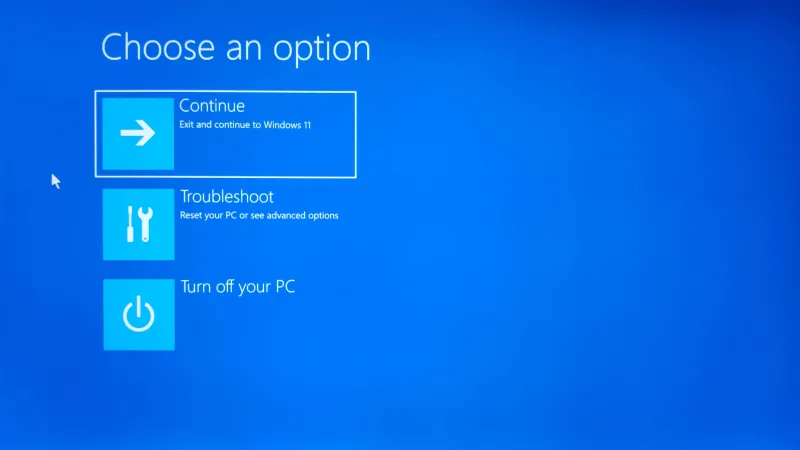
When you finally stare at that cobalt expanse, resist the urge to reboot blindly. First, note the error code and any file names listed—these are your breadcrumbs. Next, open the Windows Event Viewer and filter for “Critical” events around the timestamp; modern logs often include a “Diagnostic AI Recommendation” that suggests a specific driver rollback. If the recommendation points to a recent update, use the “View Update History” pane to uninstall it. Should the crash involve memory, run the built‑in Memory Diagnostic and then the RAM health guide for deeper analysis. For driver conflicts, the Device Manager now shows an “AI Confidence Score” indicating how well the driver aligns with your hardware’s current profile; low scores are prime suspects. Finally, if the BSOD persists, create a full system restore point and consider flashing the BIOS to the latest firmware—always check the manufacturer’s release notes for any mention of “self‑optimizing” compatibility fixes. This systematic approach turns a panic‑inducing event into a manageable diagnostic workflow.
Preventative Maintenance with Smart Hardware
Prevention is far more satisfying than reaction, especially when your PC can think for itself. Modern motherboards equipped with smart hardware continuously audit driver signatures, firmware versions, and power delivery health. Enabling “Proactive Stability Mode” in the BIOS lets the system temporarily throttle aggressive AI optimizations during critical tasks like OS updates or driver installations, reducing the chance of a sudden BSOD. Additionally, schedule weekly “AI Health Checks” through the Windows Security Center, which will scan for anomalous driver behavior and suggest corrective actions. Keep your system’s firmware updated, but do so judiciously—read the changelog for any mention of AI‑related features before applying. Lastly, maintain a habit of creating monthly system images; should a blue screen strike at an inopportune moment, you’ll have a clean restore point that captures all the latest AI and smart‑hardware configurations.
Turning the Blue Screen into a Learning Moment
At the end of the day, the blue screen is not just an error; it’s an invitation to understand the deeper symbiosis between software, hardware, and the AI layers that now bind them. My own journey from a frantic “Ctrl+Alt+Del” to a confident “Let’s check the driver logs” has taught me that embracing the diagnostic tools Windows 2026 offers—and staying informed about the AI‑driven innovations shaping our PCs—makes every crash a stepping stone toward a more resilient system. So the next time that familiar cobalt glow appears, remember: you have the power to decode, troubleshoot, and ultimately prevent future incidents. Keep your drivers fresh, your firmware smarter, and your curiosity sharper, and the blue screen will become a rare, almost nostalgic footnote rather than a daily disruption.