When I first cracked open a tower back in the early 2000s, the hum of a single fan was enough to make a power‑user feel alive. Fast‑forward to 2026, and the landscape has morphed into a symphony of high‑speed lanes, AI‑enhanced controllers, and storage solutions that would have seemed like sci‑fi a decade ago. Yet, despite the flash, the core philosophy remains unchanged: hardware must serve your workflow, not dictate it. This is why I spend as much time debating DDR5 versus DDR6 latency as I do testing the latest GPU ray‑tracing cores. The key is to understand the bottlenecks that affect real‑world performance—whether it’s memory bandwidth throttling a massive video render, or a storage subsystem that can’t keep up with AI‑driven data pipelines. In this article, I’ll walk you through the most critical upgrades for a power‑user’s rig, how to future‑proof your build for the next wave of AI workloads, and why some “old‑school” components still hold a secret advantage.
Memory Matters: Beyond Capacity to Latency and ECC
Most of us chase the biggest gig count on RAM, assuming bigger automatically means better. In 2026, the reality is more nuanced. DDR6 modules now boast speeds upwards of 7200 MT/s, but the true performance gain comes from tighter latency timings and, for critical workloads, error‑correcting code (ECC). When I built my last workstation, I prioritized a balanced mix: 64 GB of DDR6‑5600 with CL30 timings, paired with a modest ECC module for the AI inference cores that demand flawless data integrity. If you’ve ever seen the dreaded “memory fails” error, you know how costly a single bit flip can be. That’s why I recommend reading Why Your PC’s Memory Fails and How to Fix It Fast to spot early signs and prevent catastrophic crashes. By selecting memory that matches your CPU’s Infinity Fabric or AMD’s Infinity Fabric architecture, you cut down on unnecessary latency, translating to smoother multitasking, faster compile times, and more reliable AI model training.
CPU Choices: The Rise of Hybrid Architectures
The era of monolithic cores is fading, replaced by hybrid designs that blend performance and efficiency cores on a single die. Intel’s 13th‑Gen “Meteor Lake” and AMD’s Zen 5+ processors dominate the market in 2026, offering up to 32 cores with a dynamic scheduler that directs heavy tasks—like 3D rendering or deep‑learning inference—to performance cores while delegating background services to efficiency cores. This architecture not only boosts raw throughput but also dramatically improves power efficiency, a critical factor for those who run rigs 24/7. When selecting a CPU, look beyond clock speed; examine the cache hierarchy, PCIe lane count, and support for DDR6 or even upcoming DDR7. A well‑chosen processor will future‑proof your system for AI‑accelerated applications, allowing you to add GPU compute nodes without hitting a PCIe bottleneck. Remember, a CPU that can handle 12‑lane PCIe 5.0 from the get‑go will keep you ahead of the curve as GPUs evolve.
GPU Evolution: From Raster to Real‑Time Ray Tracing and AI
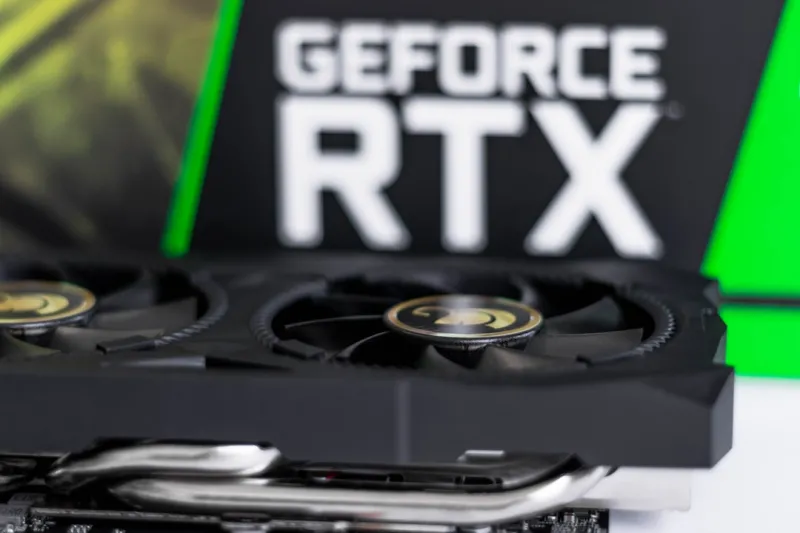
Graphics cards have become the Swiss army knives of modern workstations. In 2026, the distinction between “gaming” and “compute” GPUs blurs, as manufacturers embed dedicated AI tensor cores alongside traditional rasterization pipelines. Nvidia’s RTX 6000 Ada and AMD’s Radeon RX 8900 XT both deliver teraflops of ray‑tracing performance while simultaneously accelerating machine‑learning workloads. For a power‑user, the sweet spot lies in a GPU that can handle both high‑resolution video editing and AI model inference without swapping cards. Pair your GPU with a motherboard that supports PCIe 5.0 x16 to unleash its full bandwidth, and ensure your power supply can deliver a clean 1000 W+ to maintain stability under sustained loads. The real trick, however, is leveraging the GPU’s software stack—CUDA, ROCm, and DirectML—to integrate acceleration directly into your creative or development pipelines, turning what used to be hours of CPU‑bound processing into minutes.
Storage Strategies: Why Hard Drives Still Rule for Massive Archives
SSD adoption is at an all‑time high, but the myth that hard drives are obsolete is far from the truth. When dealing with petabyte‑scale datasets—think training large language models or storing 8K video libraries—the cost per gigabyte of a 14 TB 7200 RPM SATA drive remains unbeatable. In my own workflow, I allocate a tiered storage system: NVMe PCIe 4.0 drives for OS, applications, and active project files; SATA SSDs for fast‑access caches; and high‑capacity 14 TB HDDs for archival data that I rarely touch but must retain. This approach not only optimizes performance but also keeps the budget in check. For a deep dive into why HDDs remain a secret weapon, check out Hard Drives Still Rule: The Power‑User’s Guide to Massive, Affordable Storage. By segmenting data across these tiers, you minimize wear on your SSDs, extend their lifespan, and maintain lightning‑fast access where it counts most.
Motherboard Selection: The Unsung Hero of Future‑Ready Builds
Choosing a motherboard is akin to laying the foundation for a skyscraper; a weak base can crumble under the weight of future upgrades. In 2026, the “Motherboard Revolution” brings boards equipped with dual PCIe 5.0 x16 slots, integrated Wi‑Fi 7, and robust VRM designs that can sustain 250 W+ on a single rail. Look for motherboards that support DDR6 DIMM slots with a minimum of 32 GB per module, and feature ample M.2 slots with heatsinks for NVMe drives. I personally favor boards that include an onboard micro‑controller for BIOS flash‑back—a lifesaver if a failed BIOS update leaves the system bricked. Also, consider the USB4/Thunderbolt 4 ports for high‑speed peripheral connectivity; they become essential when moving massive video files between workstations. A well‑chosen motherboard not only accommodates today’s hardware but also offers the flexibility to adopt next‑gen components without a full rebuild.
Power Delivery and Cooling: Keeping the Beast Stable
Power and cooling are the twin pillars that keep a high‑performance rig humming. With CPUs and GPUs now pulling upwards of 500 W under load, a 1000 W+ platinum‑rated PSU with a fully modular cable set is non‑negotiable. I recommend units that feature a digital control plane, allowing you to fine‑tune voltage curves via firmware updates—essential for extracting extra performance without sacrificing stability. On the cooling side, hybrid liquid‑air solutions dominate: a 360 mm AIO for the CPU paired with high‑static‑pressure fans on the GPU and case. Don’t overlook the importance of positive pressure within the chassis; it reduces dust accumulation, which can degrade thermal performance over time. Monitoring tools built into the motherboard’s BIOS can now provide real‑time analytics on temperature, power draw, and fan curves, empowering you to make data‑driven adjustments before a thermal throttle hits.
Building for the AI‑Ready Future: Software and Firmware Alignment
The hardware you install is only half the equation; aligning it with the right software stack ensures you truly harness its potential. In 2026, operating systems have deepened integration with AI accelerators, offering native drivers for tensor cores and dynamic scheduling that offloads appropriate tasks. I encourage power‑users to follow the guidelines in The 2026 Power‑User’s Blueprint for Building a Future‑Ready PC, which outlines essential firmware updates, driver installations, and security patches to keep your machine both fast and safe. Regularly updating BIOS, GPU firmware, and OS kernels can unlock hidden performance boosts and close security gaps that modern malware exploits. Pair this with a disciplined backup strategy—using the HDD tier for immutable snapshots—and you’ll have a workstation that not only meets today’s demands but also scales gracefully as AI workloads become more pervasive.