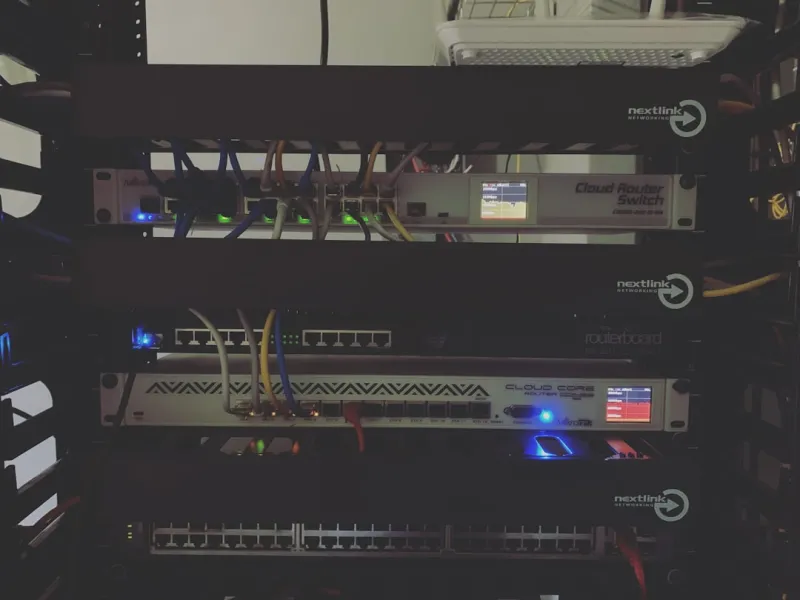
When you walk into a coffee shop in 2026 and pull out your laptop, the invisible web that powers your connection feels almost magical. Yet behind that sleek experience lies a tangled forest of routers, switches, and firewalls that have been forced to evolve at breakneck speed. As a network engineer who’s spent a decade wrestling with legacy protocols, I’ve watched the industry pivot from static, hardware‑centric designs to fluid, software‑defined ecosystems powered by artificial intelligence. This shift isn’t just hype; it’s a survival mechanism against exploding bandwidth demands, ever‑more sophisticated threats, and the rise of edge‑centric workloads. In this post, I’ll unpack the three pillars reshaping networking today—AI‑driven automation, edge computing, and zero‑trust security—while sharing the practical steps you can take right now to keep your home or small‑business network future‑proof.
AI‑Driven Automation: The Brain Behind the Network
Artificial intelligence has moved from the lab into the routing table, and it’s doing more than just suggesting optimal paths. Modern network operating systems now embed machine‑learning models that predict congestion, automatically re‑route traffic, and even anticipate hardware failures before they happen. By analyzing terabytes of telemetry in real time, AI can spot anomalies that would take a human operator hours to detect, reducing mean‑time‑to‑repair (MTTR) dramatically. For example, an AI engine can notice a subtle increase in packet loss on a particular uplink, trigger a pre‑emptive failover, and alert you with a concise report—all without human intervention. This level of autonomy is critical as we embrace higher‑frequency Wi‑Fi 7, 5G backhaul, and multi‑gigabit fiber links that demand split‑second decisions. If you’re still managing routing policies manually, you’re already falling behind the curve.
Edge Computing Meets Zero‑Trust: A New Security Paradigm
Edge devices—from smart cameras to industrial IoT sensors—are now processing data locally to shave milliseconds off latency. While this brings performance gains, it also expands the attack surface, making traditional perimeter defenses obsolete. Zero‑trust architecture answers this challenge by assuming every device, user, and connection could be compromised, and then verifying each request based on context, identity, and device posture. In practice, that means deploying micro‑segmentation policies that isolate workloads, encrypting traffic end‑to‑end, and constantly re‑authenticating users as they move between the office, home, and public hotspots. The synergy between edge and zero‑trust is profound: AI can enforce policies dynamically, adjusting access controls as threat intel evolves. To see a deeper dive into how these concepts intertwine, check out The Intelligent Network Revolution, where we explore real‑world case studies from manufacturing and retail.
Home Networking: From Couch to Command Center
Most of us treat our home routers like kitchen appliances—plug them in and hope they work. But in 2026, the home network is a critical hub for remote work, streaming, gaming, and even telehealth. Upgrading to an AI‑aware router can transform that humble box into a proactive guardian. These devices constantly analyze traffic patterns, flagging unusual outbound connections that might signal ransomware or botnet activity. They also balance bandwidth between Wi‑Fi 6E devices and wired Ethernet, ensuring that a 4K conference call never drops because a neighbor starts a torrent. For a hands‑on guide to building a resilient home network, I recommend reading AI‑Powered Networking, which walks you through selecting the right hardware, configuring VLANs, and enabling automatic firmware updates without lifting a finger.
Small Business Networks: Scaling Without Breaking the Bank
Small and medium‑sized enterprises (SMBs) face a paradox: they need enterprise‑grade performance and security, but they lack the budgets of Fortune 500s. The answer lies in leveraging cloud‑managed switches and AI‑driven network‑as‑a‑service (NaaS) platforms that offload heavy lifting to the provider’s data center. These solutions deliver centralized policy control, real‑time analytics, and zero‑trust segmentation without the need for a full‑time network team. Moreover, they integrate seamlessly with existing on‑prem hardware, allowing you to extend the network’s reach as you grow. When you combine this with edge compute nodes that process local data—say, point‑of‑sale transactions—you reduce latency and keep sensitive customer information within your premises, satisfying compliance requirements. Remember, the goal isn’t just to add more devices; it’s to orchestrate them intelligently, and AI gives you that orchestration layer.
Defending Against AI‑Driven Threats
Just as AI fortifies networks, cybercriminals are weaponizing the same technology. AI‑generated phishing emails, deep‑fake voice attacks, and autonomous scanning bots are now commonplace. To stay ahead, you must adopt a defense‑in‑depth strategy that includes AI‑enhanced threat detection, continuous credential hygiene, and rapid incident response playbooks. One practical step is to enable behavioral analytics on your authentication servers, which can flag impossible logins—like a user logging in from two continents within minutes. Pair that with a zero‑trust policy that requires multi‑factor authentication for every session, not just the initial login. For a more detailed roadmap, explore How to Stay One Step Ahead of AI‑Driven Cyber Threats, where I outline the tools and processes that have saved my clients from costly breaches.
Hardware Choices That Complement AI and Edge
Even the smartest software can’t compensate for outdated hardware. When selecting switches or routers, prioritize devices that support open APIs, programmable pipelines, and native AI acceleration—think ASICs built for inference workloads. These platforms let you run custom models at line rate, enabling real‑time anomaly detection directly on the device. Additionally, invest in PoE+ or PoE++ switches to power edge devices like security cameras and IoT gateways without additional cabling. Don’t overlook the importance of firmware hygiene; automated patch management, often bundled with AI‑driven NaaS, ensures that vulnerabilities are closed before they can be exploited. In short, treat your network hardware as a foundation for AI, not a barrier.
Future‑Proofing: Scaling for the Next Wave of Innovation
The network you build today should be ready for the demands of tomorrow—whether that means supporting AR/VR collaboration tools, autonomous vehicle telemetry, or quantum‑ready encryption. To achieve this, design with modularity in mind: use spine‑leaf architectures that can be expanded horizontally, and adopt software‑defined WAN (SD‑WAN) solutions that automatically reroute traffic based on real‑time performance metrics. Keep an eye on emerging standards like Wi‑Fi 7 and 400 Gbps Ethernet, and plan capacity upgrades in phases to avoid disruptive overhauls. Remember, future‑proofing isn’t about buying the most expensive gear now; it’s about creating a flexible, AI‑enabled fabric that can adapt as new protocols and workloads appear.
Monitoring, Analytics, and the Human Touch
Even the most sophisticated AI needs human oversight. Dashboards that surface key performance indicators—latency, jitter, packet loss, and security alerts—provide the situational awareness you need to make informed decisions. Pair these visualizations with automated remediation scripts that execute only after a human operator reviews the suggested action, maintaining a balance between speed and accountability. Regularly review anomaly logs to refine your AI models, ensuring they stay aligned with your unique traffic patterns. By treating AI as an assistant rather than a replacement, you empower your IT team to focus on strategic initiatives, like designing new services, instead of drowning in repetitive troubleshooting.
Conclusion: Embrace the Intelligent Network Now
The convergence of AI, edge computing, and zero‑trust is not a distant vision—it’s the reality of 2026 networking. By adopting AI‑driven automation, reinforcing security with zero‑trust principles, and building hardware that can scale with edge workloads, you position your home or small business network for resilience and growth. The journey may feel daunting, but the tools and resources are more accessible than ever. Start with a single AI‑enabled router, expand to a cloud‑managed switch fleet, and continuously refine your security posture. In doing so, you’ll not only keep pace with the rapid evolution of network technology but also set the stage for the innovations that lie ahead. Let’s build networks that think, adapt, and protect—together.