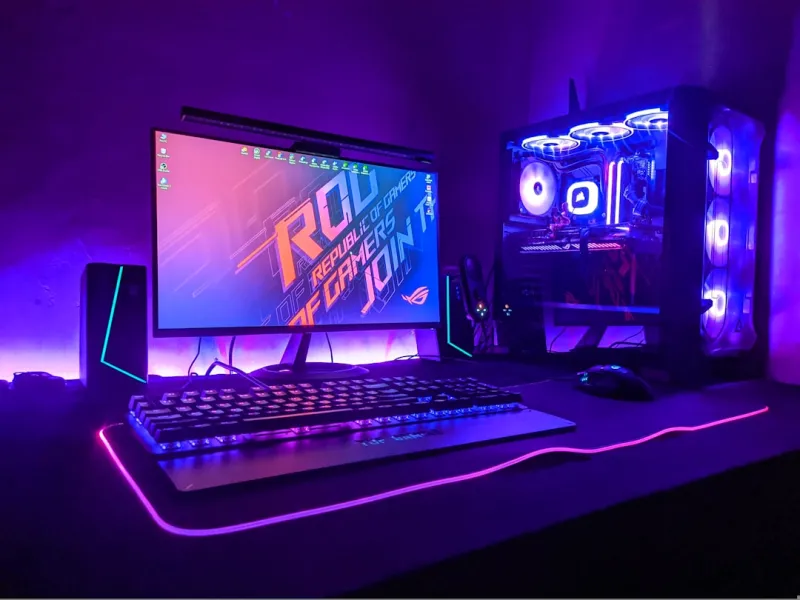
When I first opened my 2019 build for a quick upgrade, I was reminded of why I fell in love with PCs: the endless ability to tweak, replace, and reinvent. In 2026, that romance has only deepened, with component performance curves that look like rocket launches and standards that would have seemed sci‑fi a few years ago. This guide captures the pulse of what’s truly worth swapping out now, whether you’re chasing 4K frame‑rates, lightning‑fast content creation, or simply a smoother, quieter workstation. I’ll walk you through the most impactful upgrades, the pitfalls to avoid, and how to future‑proof your rig without breaking the bank. Think of it as a roadmap that blends my hands‑on experience with the latest industry data, so you can make confident, cost‑effective decisions that pay off for years to come.
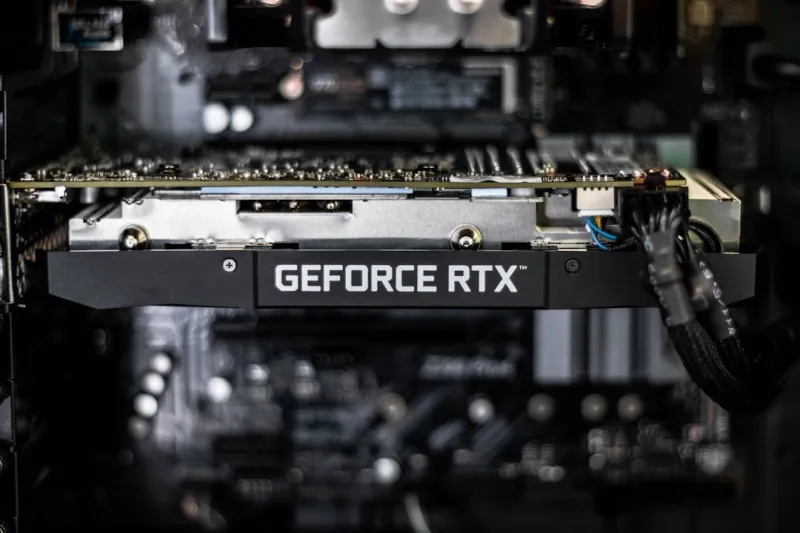
Let’s start with the crown jewel of any modern build: the graphics card. In 2026, the GPU market has settled into a new equilibrium where performance per watt is no longer a luxury but a baseline expectation. The latest RTX 7000‑series and AMD Radeon 8000‑series cards leverage refined 5nm processes and hardware‑accelerated ray tracing cores that deliver up to 35 % more rasterization performance than their predecessors, while consuming roughly the same power. If you’re still on a 10‑series or a 6000‑series, you’ll notice a tangible jump in both gaming smoothness and professional workloads like AI‑assisted video rendering. Pairing a high‑refresh 144 Hz monitor with a GPU that can sustain 120 fps at 1440p is the sweet spot for most gamers, but if you aim for 4K, consider the top‑tier RTX 7080 or Radeon 8700. Remember to check your case clearance and PSU capacity before committing; a cramped fit can lead to thermal throttling, which defeats the purpose of any upgrade.
The CPU is the brain that determines how well your GPU’s raw horsepower can be utilized. Thanks to the latest Zen 5 architecture from AMD and Intel’s 14th‑gen Raptor Lake‑Refresh, we’ve finally entered an era where single‑core performance and multi‑thread scalability coexist harmoniously. For gamers, a six‑core, twelve‑thread processor like the AMD Ryzen 7 7800X offers an excellent balance of price and performance, delivering frame‑rate gains of up to 12 % over previous generations in CPU‑bound titles. Creators, on the other hand, will appreciate the 24‑core Ryzen 9 7950X or Intel’s Core i9‑14900K, which dramatically cut render times in Premiere Pro and DaVinci Resolve. When selecting a CPU, also factor in the motherboard chipset compatibility and the availability of DDR5 memory, as both will affect your ability to leverage the full capabilities of the silicon.
Choosing the Right Motherboard
While the CPU often steals the spotlight, the motherboard is the unsung hero that dictates expansion potential, connectivity, and overall system stability. In 2026, we’re seeing a surge in boards that support PCIe 5.0, USB4, and integrated Wi‑Fi 7, turning even mid‑range platforms into feature‑rich powerhouses. The Motherboard Mastery: Trends and Picks That Define 2026 guide breaks down the top contenders, but as a rule of thumb, aim for a board with at least eight SATA ports, dual M.2 slots (preferably one supporting PCIe 5.0 x4), and robust VRM cooling. A well‑designed VRM not only ensures stable overclocks but also prolongs component lifespan. Don’t overlook BIOS update policies; manufacturers that provide regular firmware upgrades will keep your system compatible with future CPU releases and security patches, a crucial factor for longevity.
Storage has become a decisive factor in perceived system speed, and the gap between SSDs and traditional HDDs is now a chasm. PCIe 5.0 NVMe drives have hit mainstream pricing, offering sequential read speeds north of 14 GB/s, which translates to near‑instant game load times and rapid project file access. If you’re on a tighter budget, a PCIe 4.0 2 TB drive still offers excellent performance, but pairing it with a secondary SATA SSD for bulk storage can be a cost‑effective hybrid solution. Additionally, consider the endurance rating (TBW) of your drives; high‑write workloads like video editing demand drives with higher endurance to avoid premature wear. Don’t forget to enable the “Windows Fast Startup” and “AHCI/NVMe” settings in BIOS to squeeze out every millisecond of performance.
Thermal Management and Power Delivery
Effective cooling is no longer optional; it’s a prerequisite for extracting consistent performance, especially with high‑end GPUs and CPUs that can push 300 W or more under load. The market now offers AIO coolers with 360 mm radiators that feature low‑profile fans optimized for high static pressure, reducing noise while maintaining sub‑70 °C temperatures under heavy workloads. For the DIY enthusiast, custom water loops have become more affordable, but a well‑designed air cooler with a large heatsink and dual fans can still hold its own, particularly in smaller cases. Pay attention to case airflow—intake and exhaust fan placement, dust filters, and cable management all influence thermal efficiency. A hot system not only throttles performance but also accelerates component aging, a hidden cost that can negate any upfront upgrade savings.
Power supplies have evolved alongside efficiency standards, with 80 PLUS Gold and Platinum models now commonplace. When sizing your PSU, apply the 20 % headroom rule: total system draw multiplied by 1.2 gives you a safe margin for future upgrades. For a build featuring a RTX 7080 and a high‑end CPU, a 850 W Platinum unit is a prudent choice, ensuring stable voltage rails and better ripple suppression. Look for modular designs to simplify cable routing and improve airflow. Some newer models even incorporate digital monitoring via USB‑C, allowing real‑time power consumption tracking, which can be integrated into performance dashboards for a holistic view of your system’s health.
Software, OS, and Security Considerations
Hardware upgrades are only half the battle; the software environment must be tuned to extract maximum performance. Windows 11 has continued to integrate AI‑driven optimizations in 2026, such as dynamic resource allocation and predictive caching, which can make a tangible difference in both gaming and productivity tasks. However, an outdated OS or misconfigured drivers can bottleneck even the most powerful hardware. I recommend revisiting the essential PC upgrades to dominate gaming and productivity article for a checklist on driver updates, BIOS tweaks, and power plan settings. Moreover, security cannot be ignored—new AI‑enhanced malware strains are targeting high‑performance rigs to harvest computational resources for illicit mining. A quick read of why the blue screen still gives me nightmares will remind you why keeping firmware and OS patches current is essential to avoid catastrophic crashes that undo all your upgrade efforts.
Looking ahead, the concept of “future‑ready” builds hinges on modularity and adaptability. Investing in a motherboard with an extra M.2 slot, a PSU with higher wattage than currently needed, and a case that supports larger radiators will give you the breathing room to adopt emerging technologies—think DDR6 memory or integrated AI accelerators—without a full overhaul. Keep an eye on industry roadmaps; the next wave of GPUs will likely push PCIe 6.0, and having a platform that can accommodate such standards will pay dividends. Finally, remember that the most satisfying upgrades are those that align with your actual usage patterns. Don’t chase specs for the sake of bragging rights; instead, target the components that will directly enhance the tasks you care about most, whether that’s crushing frame‑rates in the latest AAA titles or shaving minutes off massive video renders.