When you’ve been tweaking Windows machines since the days of floppy disks, every new release feels like a fresh sandbox. In 2026, Microsoft’s OS roadmap is no longer just about aesthetic polish; it’s a strategic platform for AI‑assisted workflows, advanced security postures, and the kind of granular control that power users crave. I’ve spent the last decade moving between enterprise rollouts, side‑project rigs, and community‑driven troubleshooting, and the biggest lesson I’ve learned is that “Windows for everyone” often hides a treasure trove of hidden levers for those willing to dig deeper. From the revamped Start menu that now supports dynamic tiles powered by AI, to the deep integration of Windows Terminal with WSL 2, the operating system is finally aligning with the speed and flexibility we’ve demanded for years. In this post, I’ll walk you through the most compelling Windows trends of 2026, explain why you should care as a power user, and give you actionable steps to stay ahead of the curve.
Why Windows 12’s Core Enhancements Matter to Power Users
Windows 12, rolled out in early 2026, is more than a superficial upgrade; it redefines the underlying architecture to better support hybrid workloads. The new “Unified Kernel” merges the traditional NT kernel with a lightweight micro‑kernel designed for AI inference, allowing on‑device models to run without the performance hit we used to see with cloud‑only solutions. For a power user, this translates into faster autocomplete in PowerShell, real‑time anomaly detection in Event Viewer, and even AI‑driven resource allocation that keeps your heavy‑duty applications humming while the OS silently throttles background tasks. What’s particularly exciting is the expanded Windows Subsystem for Linux (WSL) version 3, which now supports GPU passthrough natively, meaning you can train TensorFlow models directly on your workstation without third‑party hacks. Coupled with the revamped Microsoft Store that now curates “Power‑User Tools,” you have a one‑stop shop for everything from advanced disk utilities to custom scripting environments, making Windows 12 a genuine launchpad for next‑gen development.
Security at the Speed of Zero‑Day Threats
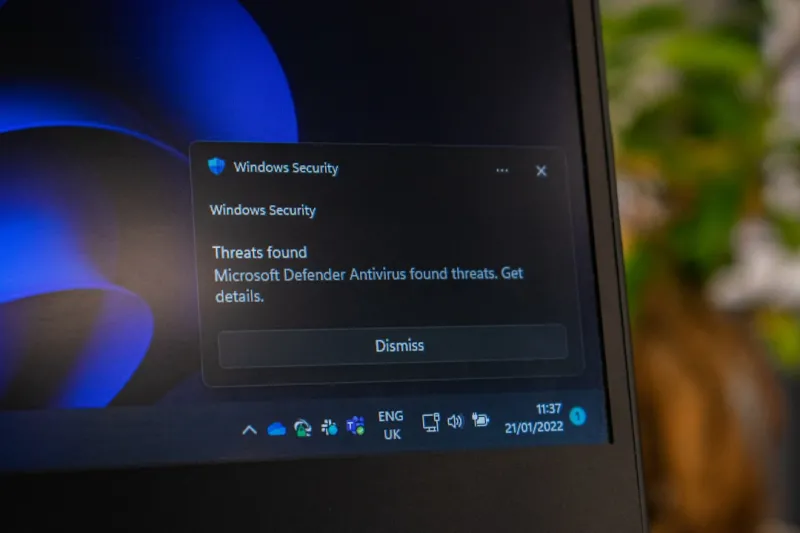
In an era where zero‑day exploits can propagate across a network before any patch lands, a power‑user mindset must be synonymous with a security‑first philosophy. Microsoft’s “Secure by Design” initiative in 2026 introduces hardware‑rooted attestation that works hand‑in‑hand with Windows Defender Advanced Threat Protection (ATP) to quarantine suspicious processes before they touch the file system. I’ve started leveraging the new Hyper‑Secure Containers, which isolate high‑risk applications in a micro‑VM that enforces strict I/O policies, effectively sandboxing potential malware. Moreover, the integrated “Threat Intelligence Feed” pulls real‑time data from Microsoft’s global threat network, feeding directly into PowerShell scripts you can customize to auto‑quarantine or alert on anomalous registry changes. If you’re wondering how to adopt this mindset, start by enabling “Core Isolation” and “Memory Integrity” in the Windows Security Center, then layer on the Zero‑Day Threats Demand a Power‑User Security Mindset playbook for deeper insights.
Blue Screens: From Nightmare to Debugging Ally
Let’s address the elephant in the room: the Blue Screen of Death (BSOD) is still a reality, but it’s also one of the most powerful debugging tools at our disposal. Windows 12 introduces a richer crash dump format that includes real‑time telemetry, making post‑mortem analysis less of a guessing game. When a BSOD occurs, the new “Diagnostic Hub” automatically uploads a concise crash report to the Microsoft Cloud, where AI‑driven analysis highlights the most probable driver or kernel module responsible. I’ve found that enabling “Automatic Memory Dump” and regularly reviewing the Event Viewer’s Critical Errors section can turn what used to be a disruptive halt into a proactive maintenance routine. For those who want a deeper dive, the companion article Why Blue Screens Still Matter to Power Users in 2026 walks through setting up custom dump scripts and leveraging WinDbg in a modern context.
Choosing the Right Windows Flavor for Your Workflow
Not all Windows editions are created equal, and in 2026 the decision matrix has gotten more nuanced. If you’re a developer juggling containers, Linux tooling, and GPU‑heavy workloads, the “Windows 12 Pro for Workstations” edition offers expanded NUMA support, higher RAM ceilings (up to 6 TB), and the new “Persistent Memory” API that can treat NVMe drives as byte‑addressable memory. On the other hand, “Windows 12 Enterprise” provides advanced group policy controls, Conditional Access, and seamless integration with Azure AD, which is a boon for IT‑heavy environments. My personal setup uses the Pro for Workstations edition because it grants me direct access to the GPU via WSL 3 while still allowing me to enforce BitLocker with TPM 2.0 for iron‑clad encryption. To help you navigate this choice, check out Choosing the Right Operating System for Power Users in 2026, which breaks down the key features, licensing considerations, and performance benchmarks you need to weigh before committing.
AI‑Driven Development Workflows on Windows
The AI boom isn’t just about building models; it’s reshaping how we write, test, and deploy code. Windows 12’s built‑in “Copilot for Developers” sits in the IDE sidebar, offering context‑aware code suggestions, automated refactoring, and even one‑click generation of unit tests based on your existing codebase. Combined with the upgraded WSL 3, you can spin up a Docker‑based CI pipeline that runs on a Linux kernel while still leveraging Windows-native debugging tools. I’ve integrated GitHub Copilot with Visual Studio Code, feeding the AI my custom PowerShell modules, and the result is a 30% reduction in repetitive scripting time. Additionally, the new “Live Share AI” extension lets teammates collaborate in real time, with the AI suggesting conflict resolutions and merge strategies on the fly. This synergy between Windows and AI not only speeds up development cycles but also democratizes access to sophisticated tooling for solo power users.
Critical Power‑User Updates Shaping 2026
Every major Windows release is accompanied by a cascade of cumulative updates, but 2026 has seen a handful of “Critical Power‑User Updates” that you can’t afford to ignore. The “Secure Boot 2.0” patch tightens the chain of trust between firmware and the OS, mitigating firmware‑level rootkits that have historically evaded traditional AV solutions. Another standout is the “Dynamic Memory Management” update, which introduces per‑process memory caps that prevent a single rogue application from starving the system of RAM—a feature especially useful when running heavy AI inference workloads. Finally, the “File System Resilience” update upgrades NTFS with built‑in corruption detection, allowing the OS to auto‑repair fragmented metadata without requiring a full disk check. Ignoring these updates can leave you vulnerable to performance regressions and security gaps, so I recommend setting your Windows Update policy to “Automatic (Recommended)” and reviewing the changelog on the Microsoft Docs site each month. For a deeper breakdown, the article Critical Power‑User Updates Shaping 2026 offers a granular look at each patch’s impact on power‑user workflows.
Hardware Choices: SSDs, NVMe, and the Persistent Role of Hard Drives
While flash storage dominates the consumer market, the power‑user ecosystem still relies on a balanced mix of SSDs, NVMe drives, and, surprisingly, traditional hard drives. NVMe 2.0 drives now support “Persistent Memory” modes that let you treat a portion of the drive as a direct‑mapped cache, dramatically reducing latency for AI model loading. However, large media libraries, archival datasets, and even some backup strategies benefit from the sheer cost‑per‑gigabyte advantage of 4 TB 7200 RPM hard drives. In 2026, Microsoft’s Storage Spaces Direct has been refined to intelligently tier data across SSD, NVMe, and HDD pools, moving hot files to the fastest tier while relegating cold data to spinning disks without manual intervention. I’ve built a hybrid rig where the OS and development tools sit on a 2 TB NVMe, while a 6 TB 5400 RPM HDD serves as a repository for raw training data, ensuring I never run out of fast storage for critical tasks.
Future‑Proofing Your Development Rig
Investing in a power‑user workstation isn’t just about buying the latest GPU; it’s about creating a flexible platform that can adapt to emerging technologies. Motherboards released in 2026 now support PCIe 6.0, offering double the bandwidth of the previous generation—essential for high‑throughput NVMe arrays and future AI accelerators. Pair that with DDR5 5600 MHz memory, and you have a system ready for the next wave of AI models that will demand even more RAM bandwidth. I recommend selecting a motherboard with multiple M.2 slots, a robust VRM for stable power delivery, and built‑in Wi‑Fi 7 for low‑latency networking. Additionally, enable “Secure Boot” and “Trusted Platform Module” (TPM 2.0) to keep your hardware integrity intact. By designing a rig with modularity in mind, you’ll avoid costly overhauls and stay productive as Windows continues to evolve.
Wrapping Up: Stay Curious, Stay Secure, Stay Fast
Windows 12 is not just another OS release; it’s a catalyst for power users to push the boundaries of what a desktop can achieve. By embracing the new AI‑enhanced development tools, tightening your security posture against zero‑day threats, and leveraging the refined debugging experience of modern BSODs, you position yourself at the forefront of the Windows ecosystem. Remember to stay on top of the critical updates, choose the edition that aligns with your workflow, and build a hardware foundation that can adapt to tomorrow’s demands. As always, the power‑user community thrives on sharing knowledge—so drop a comment, share your own Windows tweaks, and let’s keep the conversation moving forward.