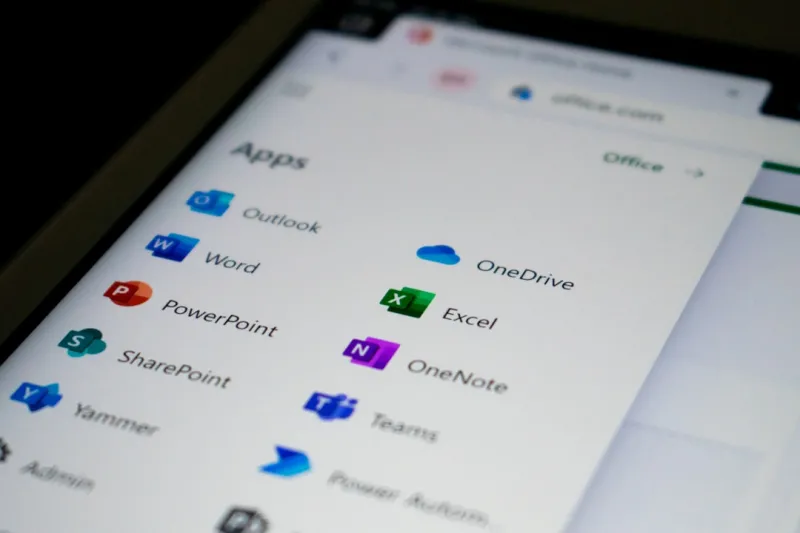
When I first opened a spreadsheet in Office 2026, I felt the same thrill I get when I boot a freshly built rig—everything is humming, but the real excitement lies in the hidden levers that turn a good workflow into a legendary one. Over the years, I’ve watched casual users treat Word and Excel as simple text editors, while power users sculpt macros, dynamic arrays, and integrated AI assistants into their daily grind. The secret sauce? A mindset that refuses to settle for default settings and always asks, “How can this be faster, cleaner, smarter?” In 2026, Microsoft has layered AI-driven insights directly into the ribbon, but the true power still comes from mastering the native toolset before the assistants even whisper suggestions. By the end of this post, you’ll have a roadmap to upgrade your Office arsenal, leverage new AI features without sacrificing control, and keep your documents as bulletproof as the hardware that runs them.
Redefining the Ribbon: Customization for the Modern Power User
Most people skim the ribbon, but a seasoned power user knows that each tab is a sandbox for customization. Start by right‑clicking any tab and selecting “Customize the Ribbon.” Here, you can create a dedicated “Shawn’s Suite” tab that houses your most‑used commands—quick parts, macro shortcuts, and even third‑party add‑ins like Power Query or Power Automate. In 2026, Microsoft introduced “Dynamic Groups,” which automatically surface tools based on the file type you’re editing. Pair this with the new “Command Pinning” feature, and you can pin a specific macro to the top of the group, making it a single click away. For those who love keyboard shortcuts, the “Keyboard Shortcuts” dialog now lets you assign multi‑step combos that can trigger a macro, launch a template, or even open a Teams chat. This level of tailoring not only slashes the time you spend hunting menus, it also reduces mental load, allowing you to stay in the flow—exactly what a power user craves.
AI‑Assisted Writing and Data Analysis—Don’t Let It Do All the Work
Office 2026’s Copilot integration is a game‑changer, but the temptation to let AI write whole reports or crunch numbers for you can be a productivity trap. The trick is to treat Copilot as a collaborative partner rather than a replacement. In Word, invoke Copilot with a simple “@Summarize” command on a selected paragraph, then edit the output to match your brand voice. In Excel, use the “Generate Formula” prompt to get a starting point, then fine‑tune the logic—especially when dealing with complex nested IFs or XLOOKUPs across multiple sheets. Remember, AI can misinterpret context, so always verify the result. A practical workflow I use involves setting up a “Review” column next to AI‑generated content, where I place a quick TRUE/FALSE validation check. This habit keeps the AI’s creativity in check while ensuring the final product meets professional standards. When you blend AI’s speed with your expertise, the result is a document that’s both polished and precise.
Power‑User Macros: From Legacy VBA to JavaScript Automation
VBA has been the backbone of Office automation for decades, but 2026 marks the maturation of Office Scripts—a JavaScript‑based automation engine that runs both locally and in the cloud. If you’ve built a library of VBA macros, consider porting the most critical ones to Office Scripts to future‑proof your workflows. The new “Script Recorder” captures actions in real time, translating them into clean, editable JavaScript. This opens doors to integrate with Microsoft Graph, enabling you to pull data from Teams, SharePoint, or even Azure directly into Excel. For instance, a script can pull the latest sales numbers from a Power BI dataset, transform them with native JavaScript functions, and push the results into a pre‑formatted dashboard—all with a single click. While VBA still works, the cloud‑ready nature of Office Scripts ensures your automations survive platform updates and scale across the organization. If you’re new to JavaScript, the built‑in “Learn Script” tutorials walk you through the syntax, making the transition smoother than you might expect.
Document Security: Encryption and Zero‑Trust for Office Files
Security isn’t just about firewalls; it’s also about protecting the files you create. In 2026, Microsoft rolled out a new “Encrypt with OneDrive” option that applies AES‑256 encryption to Word, Excel, and PowerPoint files before they leave your device. Pair this with the “Zero‑Trust Power‑User Strategies for Unbreakable Computer Security” mindset—essentially, treat every document as a potential attack surface. Enable “Information Rights Management” (IRM) to restrict copying, printing, or forwarding of sensitive files, and set expiration dates for shared links. For extra assurance, embed a digital signature using your Azure AD certificate; this not only verifies authorship but also ensures any tampering is instantly flagged. As a power user, you’ll appreciate that these settings can be baked into templates, so every new document inherits the same protection without extra steps. This proactive approach means you’re not reacting to breaches; you’re preventing them at the source.
Collaboration at the Speed of Thought
Real‑time co‑authoring has matured beyond simple typing in the same document. In 2026, Microsoft Teams now embeds a “Live Sync” pane inside Office apps, letting you see exactly who is editing which cell in Excel or which paragraph in Word, complete with version timestamps. Use the new “Change Summary” sidebar to review all edits since the last save, and accept or reject them in bulk—perfect for large teams that need a quick sign‑off. Additionally, the “Comment Thread Enhancer” allows you to attach code snippets, screenshots, or even short video notes directly to a comment, turning feedback cycles into a multimedia experience. For power users juggling multiple projects, the “Workspace Switcher” lets you hop between related Office files with a single dropdown, preserving context and minimizing window clutter. These collaboration upgrades mean you can maintain the rigor of a solo workflow while benefiting from the collective intelligence of your team.
Data Hygiene: Keeping Your Excel Kingdom Clean
One of the biggest productivity drains for any power user is dealing with messy data. In 2026, Excel’s “Data Cleanser” AI can automatically detect duplicate rows, inconsistent date formats, and outlier values with a single click. However, true data hygiene requires a structured approach. Start by defining a “Data Dictionary” sheet that outlines expected column types, valid ranges, and lookup tables. Use the new “Dynamic Validation” feature to enforce these rules as users enter data—invalid entries are instantly flagged with a red border and a tooltip explaining the issue. Pair this with the “Power Query” refresh schedule, which now supports incremental loading, reducing the time it takes to pull in new data sources. Finally, set up an automated “Data Quality Dashboard” using Power BI that pulls key metrics from your Excel files, alerting you to spikes in error rates. By embedding these safeguards, you turn Excel from a chaotic data swamp into a well‑ordered lake, ready for analysis at a moment’s notice.
Integrating Office with a Future‑Proof Power‑User Rig
Even the most polished Office workflow can be bottlenecked by hardware limitations. If you haven’t yet read the Future‑Proof Your Rig: The PC Upgrades Every Power User Needs in 2026 guide, it’s time to do so. A fast NVMe SSD dramatically reduces the time to open large PowerPoint decks and Excel workbooks, while a high‑core‑count CPU accelerates macro execution and Office Script runs. Don’t overlook the benefits of a multi‑monitor setup: a primary 4K display for design work in PowerPoint, a secondary ultrawide for simultaneous Excel dashboards, and a third dedicated to Teams chat and email. Pair these with a reliable UPS to protect against power spikes that could corrupt open Office files. When your hardware is as refined as your Office skills, you’ll notice the difference immediately—tasks that once took minutes now complete in seconds, freeing mental bandwidth for creative problem‑solving.
Staying Ahead of Critical Updates Without Losing Your Workflow
Office updates are frequent, and each brings new features, security patches, and occasionally, breaking changes. As a power user, you need a strategy that keeps you secure without derailing your customizations. The Critical Update Playbook for Power Users in 2026 recommends a three‑tier approach: (1) Subscribe to the “Office Insider Fast” channel on a secondary machine to test new builds; (2) Document any macro or script failures in a “Update Impact Log”; and (3) Deploy the update to your primary workstation only after you’ve verified that core workflows remain intact. Use the built‑in “Version History” feature to roll back to a previous document state if a new feature unexpectedly alters formatting. By treating updates as a controlled experiment rather than a forced upgrade, you maintain both security compliance and the stability of your finely tuned Office environment.
Wrapping Up: The Power‑User’s Roadmap for Office Mastery
Mastering Microsoft Office in 2026 isn’t about learning every new feature; it’s about building a resilient, adaptable workflow that leverages customization, AI assistance, automation, and security in harmony. Start by reshaping the ribbon to match your personal command center, then integrate Copilot as a collaborative partner rather than a crutch. Transition legacy VBA macros to Office Scripts for cloud‑ready automation, and lock down your files with encryption and IRM. Keep your data pristine with dynamic validation and AI‑driven cleansing, and ensure your hardware can keep pace with these advanced tasks. Finally, adopt a disciplined update strategy using the playbook linked above, so you stay ahead of critical patches without sacrificing productivity. Follow these principles, and you’ll not only survive the fast‑moving world of Office 2026—you’ll dominate it, delivering documents, analyses, and presentations that set the standard for every power user in the field.