Why RAM Issues Sneak Up on Power Users
When you’ve spent years fine‑tuning every component in your rig, the last thing you expect is a memory hiccup to derail a project. In 2026, the sheer bandwidth of DDR5‑5600 and the emerging LPDDR5X modules mean that even a tiny mismatch can cascade into system‑wide instability. I’ve watched colleagues lose hours of rendering work because a single faulty stick threw off timing on a high‑end motherboard. The problem isn’t just “bad RAM” – it’s often a symptom of deeper ecosystem friction: BIOS firmware that hasn’t caught up with the latest memory specs, power delivery quirks on overclocked platforms, and even subtle temperature gradients that cause occasional bit flips. Understanding that RAM is the nervous system of your PC helps you diagnose issues before they become catastrophes. In this post I’ll walk through the mental checklist I use, the tools that actually give reliable data, and the proactive steps that keep your machine humming even when you push it to the edge of what today’s hardware can do.
Step One: Confirm the Basics Before You Panic
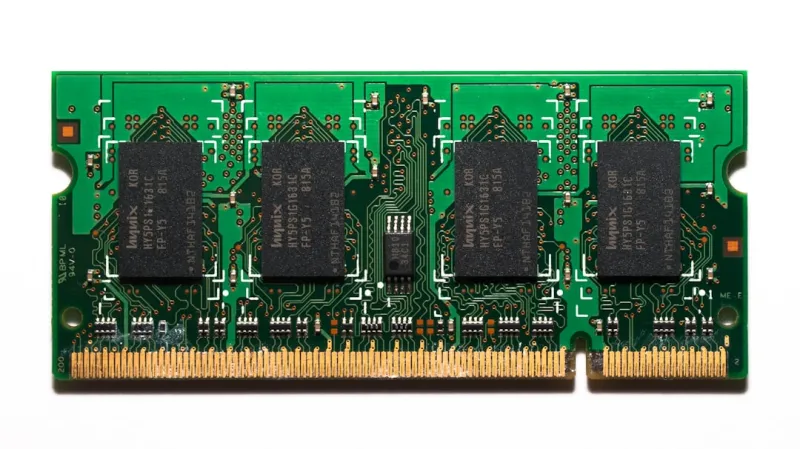
The most common mistake is diving straight into software diagnostics without first checking the obvious. Start by reseating each module – a loose DIMM can mimic a “blue screen of death” with error codes that point to everything from driver conflicts to corrupted system files. While you’re at it, verify that your BIOS is set to the correct voltage and timing profiles. In 2026, many motherboards ship with “XMP 3.0” profiles that promise auto‑tuning, but the reality is they often default to a conservative setting that can cause under‑performance or, paradoxically, instability when you manually push the clocks. A quick visual inspection of the motherboard for dust or corrosion, and a sanity check of your power supply’s 12 V rail stability, can rule out hardware noise. I’ve saved countless support tickets by simply powering down, unplugging, and re‑installing the sticks with a fresh application of thermal paste on the CPU to ensure the memory controller stays within spec.
Toolbox Essentials: From MemTest86 to Windows Diagnostic Suites
Once the physical layer is cleared, it’s time to let software do the heavy lifting. MemTest86 remains the gold standard for stress‑testing RAM; its 2026 release includes a UEFI boot option that bypasses the OS, eliminating background noise that could mask errors. Run at least three full passes; if you see any “address parity error” or “ECC correction” messages, you’ve identified a faulty cell. For Windows users, the built‑in Windows Memory Diagnostic tool has improved its detection algorithms, but it still lacks the granularity of MemTest86’s pattern library. I also recommend the How to Diagnose and Fix Memory Issues in 2026: A Power‑User’s Playbook guide, which walks you through interpreting the log files and correlating error codes with specific DIMM slots. Pair this with a hardware monitoring suite like HWInfo64 to watch real‑time voltage and temperature spikes during the test – any outlier can point to a power delivery problem rather than a defective chip.
Understanding Timing and Latency in Modern DDR5
Modern DDR5 modules advertise mind‑boggling speeds, but the true performance driver is latency. The CL (CAS latency) number may look higher on paper (e.g., CL40), yet when you factor in the clock speed (5600 MT/s), the actual nanosecond delay can be lower than a “faster” CL30 DDR4. In my own builds, I’ve seen cases where a lower‑latency module caused instability because the memory controller on the CPU was still calibrated for older timings. The key is to calculate the true latency: (CL / Clock Frequency) × 2000. If the result deviates significantly from the CPU’s spec sheet, you may need to manually adjust the timings in the BIOS. This is where a solid understanding of your platform’s memory controller comes into play – for example, AMD’s Zen 4 architecture handles high‑speed DDR5 with more tolerance than Intel’s 13th‑gen chips, but both benefit from a clean, low‑noise power rail. Don’t forget to disable “auto‑overclock” features that can force aggressive subtimings without proper cooling.
When Software and Firmware Collide: BIOS Updates and Compatibility
One of the most overlooked sources of RAM headaches is outdated firmware. Motherboard manufacturers are racing to release BIOS updates that support the newest memory densities and speeds, especially as 2026 sees the rollout of 32 GB per‑module DIMMs. I keep a habit of checking the vendor’s release notes each quarter; a single line like “Added support for 64 GB DDR5 modules” can be the difference between a smooth upgrade and a system that refuses to POST. However, flashing the BIOS is not without risk – a power loss mid‑flash can brick your board. Use a UPS and follow the manufacturer’s dual‑image backup procedure. After updating, re‑run your MemTest86 suite to confirm that the new firmware resolves any timing issues. If you still see errors, cross‑reference your module’s SPD (Serial Presence Detect) data with the motherboard’s QVL (Qualified Vendor List) – mismatches here often explain why a theoretically compatible stick refuses to run at its rated speed.
Power Delivery: The Unsung Hero of Stable Memory
Even the most robust RAM will falter if the power rails wobble under load. Modern high‑performance kits draw significantly more current during burst writes, and a marginally weak VRM (Voltage Regulator Module) can cause voltage droop, leading to occasional “random reboot” or “BSOD” events that are mistakenly blamed on software. I recommend measuring the +1.2 V and +1.35 V rails with a digital multimeter or, better yet, an oscilloscope while running a memory‑intensive benchmark like AIDA64’s memory stress test. Look for spikes beyond ±5 % of the nominal voltage. If you see it, consider upgrading to a motherboard with a stronger VRM or adding a dedicated memory controller power filter. Some enthusiasts even employ a separate power supply rail for the memory subsystem, a technique that used to be reserved for overclocking competitions but is now viable for any power user who values uptime above all else.
Thermal Management: Keeping RAM Cool Under Load
Heat is the silent assassin of memory stability. While DDR5 modules come with integrated heat spreaders, sustained high‑frequency operation can still push temperatures above 80 °C, especially in compact builds with limited airflow. In my recent workstation, I installed low‑profile heatsinks and directed a dedicated fan toward the DIMM slots, dropping the temperature by 12 °C during a prolonged AI model training session. Monitoring tools now let you set temperature alerts; when the RAM approaches its JEDEC‑specified maximum, the system can throttle or trigger a graceful shutdown. Pair this with a case that supports vertical GPU mounting – this opens up the rear airflow path for the RAM, reducing heat buildup. Remember that ambient room temperature plays a role too; a 5 °C rise in the room can translate to a 10 °C rise on the modules under load.
Diagnosing Intermittent Crashes: Correlating Logs and Real‑World Symptoms
Intermittent crashes are the most frustrating because they often leave no clear trace. In 2026, Windows logs have become more descriptive, tagging memory errors with Event ID 1001 and a “Memory Management” source. However, these entries can be vague. My approach is to cross‑reference the timestamps with the output from HWInfo64’s sensor logs and the MemTest86 log files. If you notice a pattern – for example, crashes occurring exactly after a large file transfer or during a GPU‑accelerated rendering task – you can isolate the memory channel that’s under stress. The Future‑Proof Your PC: The 2026 Hardware Playbook for Power Users article provides a matrix for matching workload types to optimal memory configurations, helping you decide whether to enable dual‑channel, quad‑channel, or even a mixed‑speed setup. Once you have the data, you can either replace the suspect DIMM or adjust the workload distribution to keep the problematic channel idle.
When All Else Fails: Replacing or Upgrading Your Memory
If you’ve exhausted diagnostics and the errors persist, it’s time to consider a replacement. In 2026, the market offers a spectrum from budget 4800 MT/s kits to premium 7200 MT/s modules with on‑die ECC (Error‑Correcting Code) for added reliability. For power users who run mission‑critical workloads – such as real‑time AI inference or large‑scale video encoding – investing in ECC‑enabled DDR5 can save hours of downtime. When selecting a new kit, prioritize modules that are listed on your motherboard’s QVL and have a proven track record in community forums. Before installing, wipe the CMOS to reset any lingering timing settings that could interfere with the new hardware. After the install, run a fresh suite of MemTest86 passes and verify that the system boots cleanly into Windows. Finally, update your system image backup to capture the newly stable configuration – this is a habit that has saved me from having to redo weeks of configuration after a memory failure.
Future‑Proofing Your RAM Strategy: Planning for the Next Generation
Looking ahead, the next wave of memory technology – DDR6 and HBM3 – is already on the horizon, promising terabytes per second of bandwidth. While most power users won’t need to jump ship immediately, it pays to design a platform that can accommodate future upgrades without a full rebuild. Choose a motherboard with ample DIMM slots and a robust VRM design, and keep an eye on BIOS roadmaps that indicate support for upcoming memory standards. Additionally, consider a modular power supply that can handle the extra draw from higher‑speed modules, and maintain an organized cable management system to ensure airflow remains optimal as you add new components. By treating RAM not just as a performance booster but as a long‑term stability foundation, you position your workstation to stay ahead of the curve, whether you’re training the latest transformer models or rendering photorealistic scenes in record time.