When I first started tinkering with high‑end rigs a decade ago, the biggest headache was guessing which component would become obsolete first. Fast‑forward to 2026, and the landscape feels both more complex and more exhilarating. Today’s power‑users demand machines that juggle AI workloads, 8K gaming, and iron‑clad security without breaking a sweat. The trick isn’t just buying the newest parts; it’s about constructing a balanced ecosystem that can evolve as software and threats change. In this playbook I’ll walk you through every major decision point—CPU, GPU, memory, motherboard, and beyond—while sprinkling in lessons from my own build‑and‑break cycles. You’ll also see why pairing the right hardware with a resilient network and security strategy can turn a simple workstation into a future‑proof powerhouse. For those hungry for deeper AI hardware tactics, check out AI Computing Mastery, which dives into the software side of the equation.
Choosing the Right CPU: Performance Meets Efficiency
The central processing unit remains the heart of any serious build, but the definition of “heart‑strong” has shifted. In 2026 the flagship chips from both AMD and Intel now pack up to 64 cores, but raw core count isn’t the only metric that matters for power‑users. Look for architectures that blend high single‑thread performance—essential for legacy apps and games—with robust multi‑thread scalability for AI inference and virtualization. The latest 7nm and 5nm processes deliver impressive thermal efficiency, meaning you can push higher boost clocks without drowning in heat. Don’t overlook the integrated AI accelerators now baked into many CPUs; they offload repetitive matrix math, freeing up your GPU for graphics‑intensive tasks. Pair your chosen processor with a motherboard that supports DDR5‑5600 or higher, ensuring the memory subsystem can keep up with those rapid instruction streams. Finally, consider future‑proofing with a socket that’s likely to see a generational refresh within the next two to three years—this saves you a costly motherboard swap later.
Graphics Cards: The New Dual‑Role Powerhouse
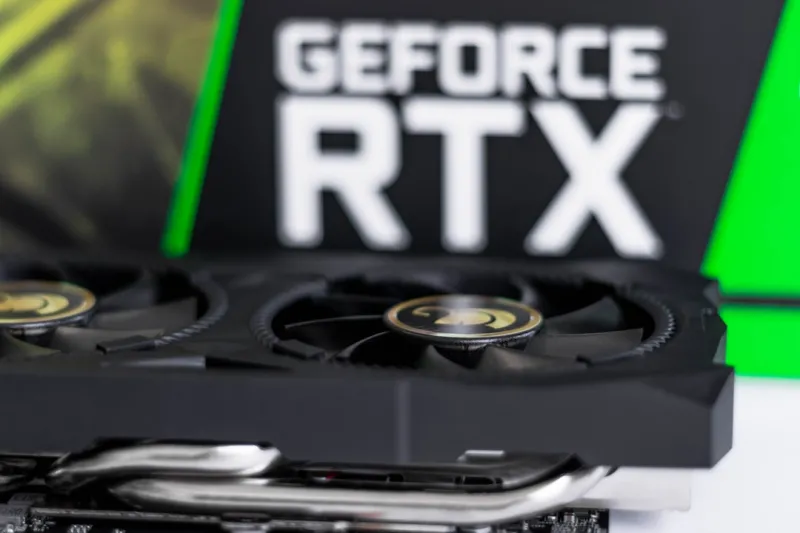
Graphics processing units have transcended their original role of rendering frames. Modern GPUs double as AI engines, cryptocurrency miners, and even video transcoding workhorses. In 2026 the leading models from NVIDIA’s Ada Lovelace line and AMD’s RDNA 3 series offer upwards of 30 TFLOPs of FP32 performance, with dedicated tensor cores that accelerate deep‑learning inference by an order of magnitude. If your workflow leans heavily on AI—think large language model fine‑tuning or real‑time image generation—prioritize cards with ample VRAM (24 GB or more) and a strong Tensor‑Core count. For gamers, ray‑tracing performance and DLSS 3.0 support remain top criteria, ensuring buttery‑smooth frames at 4K or even 8K. Keep an eye on power draw; the most capable GPUs can exceed 500 W, so your PSU and cooling solution must be ready. When you combine a high‑end GPU with a CPU that has an integrated AI accelerator, you create a synergistic pipeline where each chip handles the tasks it does best, maximizing overall throughput.
Memory and Storage: Speed Is No Longer Optional
Memory bandwidth and storage latency have become decisive factors in how fluid a system feels under heavy multitasking. DDR5 is the default in 2026, with kits ranging from 4800 MT/s to a staggering 7200 MT/s. For power‑users, I recommend a baseline of 64 GB of DDR5‑6000 or faster, especially if you run multiple virtual machines, large datasets, or intensive video editing suites. When it comes to storage, NVMe PCIe 5.0 SSDs now deliver sequential reads well over 14 GB/s, slashing boot times and file transfer bottlenecks. Pair a high‑capacity PCIe 5.0 drive (2 TB or more) for your OS and primary applications with a secondary, larger PCIe 4.0 or SATA SSD for archival data. Don’t forget to enable Windows 2026’s Storage Spaces Direct for tiered caching—this blends the speed of NVMe with the capacity of slower drives, creating a seamless storage hierarchy that adap‑ts to workload demands.
Motherboards and Chipsets: The Unsung Backbone
A motherboard is more than a collection of slots; it’s the communication hub that dictates how efficiently your components talk to each other. In 2026, the most forward‑looking chipsets support PCIe 5.0 across multiple slots, USB4/Thunderbolt 4, and integrated Wi‑Fi 7. Look for boards that offer at least three full‑length PCIe 5.0 x16 slots if you plan to dual‑GPU or add accelerator cards in the future. Robust VRM designs—preferably 12‑phase or higher—ensure stable power delivery when you push CPUs to their limits. Features like BIOS flashback and dual BIOS can be lifesavers during overclocking or firmware updates. Additionally, native support for TPM 2.0 and hardware‑based secure boot helps you align with the latest security best practices, something I’ll elaborate on later. Remember, a well‑chosen motherboard can accommodate upgrades for several years, sparing you from premature rebuilds.
Power Supply and Cooling: The Foundations of Stability
Power delivery and thermal management are often overlooked until the moment something fails. In a 2026 build that may draw 800 W or more under full load, a high‑quality 80+ Platinum PSU with a minimum 1000 W rating provides headroom for future GPU upgrades and overclocking. Opt for modular cables to improve airflow and cable management, which also reduces clutter inside the case. Cooling has evolved beyond bulky air coolers; hybrid liquid‑cooling loops now combine a 360 mm AIO radiator with a low‑profile pump, delivering sub‑30 °C temperatures under sustained 100 % CPU and GPU utilization. Don’t forget to incorporate case fans with a positive pressure configuration—this helps keep dust out while ensuring cool air reaches every component. Proper thermal paste application and regular maintenance (cleaning filters, checking pump RPM) can extend the life of both your PSU and cooling system, keeping your rig humming for years.
Connectivity: Building a Lightning‑Fast, Secure Home Network
Even the most powerful workstation is bottlenecked if it can’t talk to the rest of your digital ecosystem quickly and securely. In 2026, Wi‑Fi 7 routers promise multi‑gigabit wireless speeds, but a wired backbone still reigns supreme for latency‑critical tasks like real‑time AI inference or high‑frequency trading simulations. I recommend a 10 GbE Ethernet switch with PoE ++ ports to power any future access points or IoT devices. When laying out cables, use Cat 8 twisted‑pair for maximum bandwidth and future‑proofing. For those who need both speed and flexibility, consider a dual‑NIC motherboard that supports both 10 GbE and 2.5 GbE, letting you segregate traffic between local storage networks and internet‑facing services. To keep your network resilient against the ever‑growing threat landscape, read How Power Users Can Build a Lightning‑Fast, Secure Home Network, which offers practical steps for hardening your perimeter without sacrificing performance.
Hardware Security: From TPM to Physical Isolation
Security is no longer a software afterthought; it starts at the silicon level. All mainstream motherboards now ship with TPM 2.0 chips, providing hardware‑rooted key storage for BitLocker and Windows 2026’s Secure Boot. If you handle sensitive data, consider adding a dedicated hardware security module (HSM) that can offload cryptographic operations, reducing the attack surface on your main CPU. Physical isolation—using separate drives or even separate machines for high‑risk tasks—can mitigate the impact of a breach. For an in‑depth guide on securing a power‑user setup, see Mastering Modern Computer Security. Implementing BIOS password protection, disabling legacy ports, and enabling runtime integrity checks are also vital. By layering these hardware measures with software defenses, you construct a digital fortress that can withstand the sophisticated malware onslaughts we see year after year.
Putting It All Together: A Cohesive Upgrade Path
Now that we’ve dissected each component, the real art lies in weaving them into a coherent, upgrade‑friendly system. Start by anchoring your build around a CPU‑motherboard combo that supports both PCIe 5.0 and DDR5‑6000+, then select a GPU that matches your primary workload—AI‑focused or gaming‑centric. Pair these with a balanced memory configuration (64 GB minimum) and a tiered storage solution that leverages PCIe 5.0 speeds for active projects. Ensure your power supply and cooling are sized for peak loads, and don’t forget the network backbone that ties everything together. Finally, lock down the hardware security features from the get‑go, so you’re not retrofitting protection later. By planning upgrades—such as swapping in a newer GPU or expanding storage via additional M.2 slots—you keep the system relevant without a full rebuild. In the ever‑shifting tech climate of 2026, this holistic, forward‑thinking approach is the key to staying ahead of both performance demands and emerging threats.