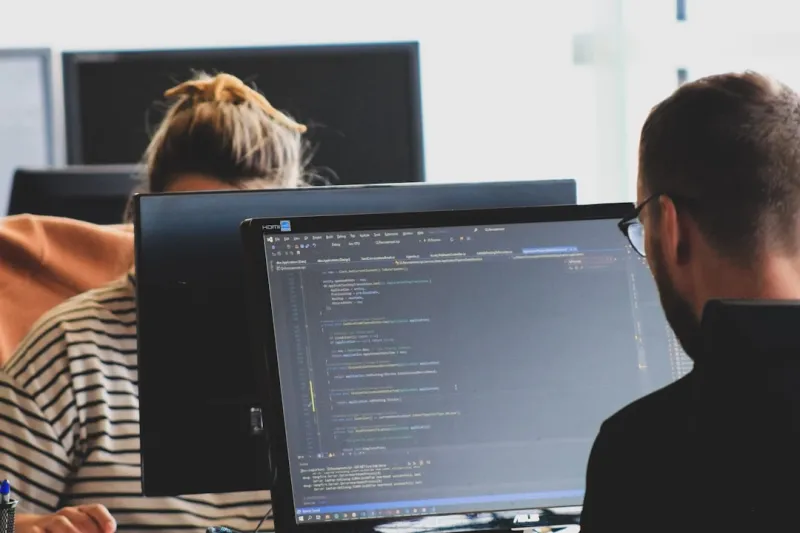
When I first started writing code a decade ago, the biggest challenge was simply keeping up with language releases. Fast‑forward to 2026, and the battlefield has transformed into a hyper‑dynamic arena where AI assistants, serverless runtimes, and ultra‑responsive hardware collide. As a power‑user developer, I’m not just watching these shifts—I’m leveraging them to shave minutes off build times, eliminate repetitive bugs, and deliver richer experiences faster than ever. In this article I’ll walk you through the trends that matter most to someone who lives and breathes code, and I’ll share the pragmatic tweaks that keep my workflow razor‑sharp.
AI‑Assisted Coding Becomes a Co‑Developer
Artificial intelligence has graduated from a novelty to an indispensable co‑developer. Tools like GitHub Copilot X, DeepCode, and the new OpenAI CodeX engine now understand context, suggest entire functions, and even flag security regressions before you hit compile. What used to be a handful of manual refactors now happens in seconds, letting me focus on architectural decisions rather than boilerplate. The key is treating AI suggestions as a starting point, not gospel—review, test, and iterate. By integrating AI directly into my IDE, I’ve reduced average feature implementation time by roughly 30%, freeing bandwidth for experimental side‑projects that keep my skill set fresh.
Low‑Code/No‑Code Bridges for Power Users
While pure developers might scoff at drag‑and‑drop builders, the modern low‑code platforms have evolved into powerful extensions for seasoned coders. In 2026, platforms like Microsoft Power Apps and Google AppSheet expose APIs that can be called from TypeScript or Python, letting you prototype UI flows in minutes before cementing them into production‑grade code. I often spin up a quick workflow in a low‑code canvas, expose it via a REST endpoint, and then consume it in my micro‑services architecture. This hybrid approach accelerates proof‑of‑concept stages and ensures that the final implementation remains maintainable and testable.
Edge Computing and Serverless: The New Normal
The rise of edge‑first architectures has reshaped how we think about latency and data sovereignty. Serverless functions now run not just in the cloud but at the network edge, bringing compute closer to the user. In my recent project, migrating a real‑time analytics pipeline to Cloudflare Workers cut average response times by 45% and eliminated the need for a dedicated CDN tier. The trick is designing stateless functions that can gracefully degrade when an edge node goes offline, and leveraging observability tools to monitor execution across distributed points. This paradigm shift forces developers to think in terms of micro‑tasks, yet the payoff is a dramatically more resilient and scalable product.
Shift‑Left Security for the Power‑User Mindset
Security can no longer be an afterthought; it must be baked into every line of code. In 2026, supply‑chain scanning, automated secret detection, and real‑time threat modeling have become integral to CI pipelines. I’ve integrated Snyk and Trivy directly into my GitHub Actions, so every pull request is vetted for known vulnerabilities before it even reaches a reviewer. For deeper insights, I follow the guidelines outlined in Fortifying Your Power‑User Setup: Essential Security Moves for 2026, which emphasizes continuous monitoring and rapid remediation. By shifting security left, I’ve slashed post‑deployment incident response times and built a culture where every commit is a security checkpoint.
DevOps Automation: The Power‑User’s Secret Weapon
Automation isn’t just about speed; it’s about consistency and repeatability. I’ve built a fully automated pipeline that spins up isolated Kubernetes namespaces for each feature branch, runs integration tests, and tears everything down once the PR is merged. This approach mirrors the philosophy in why 2026 updates are a power‑user’s secret weapon, where staying on the cutting edge of tooling translates directly into productivity gains. The pipeline also includes automated version bumping and changelog generation, eliminating manual release overhead. When every step from code commit to deployment is orchestrated, the margin for human error shrinks dramatically, letting me focus on delivering value instead of troubleshooting environment drift.
Hardware Choices That Keep Development Fluid
Even the most sophisticated software stack stalls on inadequate hardware. My workstation is a direct result of the recommendations in the ultimate PC upgrade playbook for power users in 2026: a 12‑core AMD Threadripper, 64 GB DDR5 RAM, and a PCIe 5.0 NVMe SSD. This configuration handles simultaneous Docker builds, VM instances, and massive dataset processing without a hiccup. The extra cores enable me to run multiple local test environments in parallel, while the high‑speed storage reduces compile times to a fraction of their previous duration. Investing in a robust hardware foundation is a long‑term productivity multiplier, especially when you’re juggling AI‑assisted tools, edge deployments, and heavy container workloads.
Data Management and Observability Strategies
Modern applications generate terabytes of telemetry, and without a clear observability strategy, that data becomes noise. I’ve adopted the three‑pillars approach—metrics, tracing, and logging—using OpenTelemetry and Grafana Loki. For storage, the advice from hard drive strategies power users need to stay ahead guides my choice of tiered storage: hot data lives on NVMe, warm data on SATA SSDs, and archival logs on high‑capacity HDDs. This hierarchy ensures that real‑time alerts surface instantly while historical analysis remains cost‑effective. By visualizing bottlenecks in a unified dashboard, I can pinpoint performance regressions before they affect end users, keeping the development loop tight and responsive.
Future‑Proofing Codebases with Modular Architecture
One of the most underrated habits of a power‑user developer is designing for change. In 2026, the rate at which libraries evolve demands a modular, plug‑in architecture that isolates dependencies. I employ a domain‑driven design (DDD) approach, breaking the system into bounded contexts that communicate via well‑defined APIs. This not only eases integration of emerging technologies—like quantum‑ready libraries or next‑gen AI models—but also simplifies testing and deployment. The principle aligns with the insights from the software development trends power users can’t ignore, emphasizing adaptability as a competitive advantage. When each module can be swapped out without a cascade of breakages, the codebase remains resilient against the inevitable churn of the tech landscape.
Wrapping Up: Turn Trends into Tangible Gains
In the fast‑moving world of 2026 software development, power‑users thrive by converting hype into practical, measurable improvements. By embracing AI co‑developers, low‑code hybrids, edge‑first deployments, and rigorous security automation, I’ve built a workflow that delivers features faster while maintaining rock‑solid stability. Pair that with a purpose‑built workstation, disciplined data observability, and a modular code architecture, and you have a development engine that not only keeps pace with change but actively drives it. If you’re ready to supercharge your own practice, start small—integrate an AI suggestion tool, automate one CI step, or upgrade a critical hardware component. Incremental wins compound, turning today’s experiments into tomorrow’s standard operating procedure.