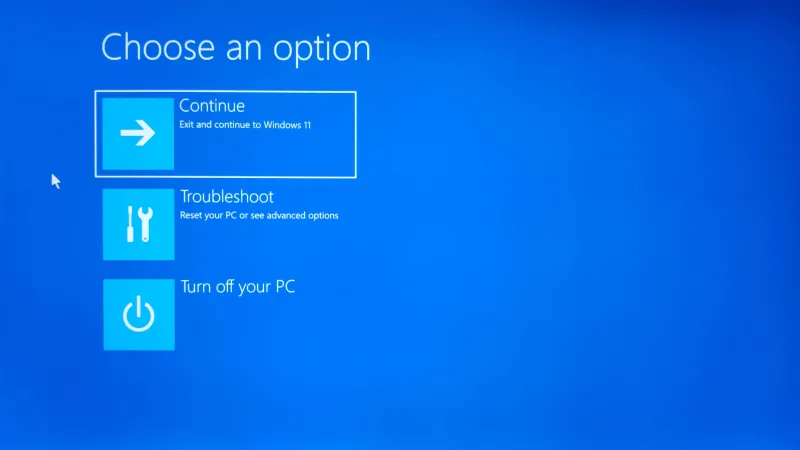
When my workstation flashed that infamous cobalt hue this week, I felt a familiar mix of frustration and curiosity. As a power user who lives at the intersection of cutting‑edge AI workloads and legacy code, a blue screen isn’t just an inconvenience—it’s a signal that something deep in the stack is screaming for attention. In 2026, we’ve moved far beyond the days when a simple driver mismatch was the sole culprit; today’s systems juggle massive GPUs, NVMe arrays, and hyper‑threaded CPUs, each with its own failure modes. Yet, despite all the progress, the blue screen persists, haunting even the most meticulously tuned rigs. In this post I’ll walk you through why the blue screen still shows up, how to diagnose it with modern tools, and which proactive habits will keep your machine humming—because a stable workstation is the backbone of every creator and coder’s workflow.
Why the Blue Screen Still Happens in 2026
First, let’s demystify the myth that the blue screen is a relic of the past. While Windows has hardened its kernel over the years, the complexity of today’s hardware ecosystems introduces new fault vectors. Firmware updates for PCIe‑gen5 devices, aggressive power‑saving states, and AI‑accelerated drivers all interact with the kernel in real time. When a mismatch occurs, the operating system triggers a STOP error to protect the hardware from damage. This is why you’ll still see a blue screen on a brand‑new AI‑powered workstation, even if you’ve installed the latest patches. For a deeper dive into the underlying causes, I recommend checking out Decoding the Blue Screen, which breaks down the low‑level mechanics in plain English.
Common Triggers That Throw Your PC Into the Blue
In my experience, the three most common triggers are faulty drivers, memory corruption, and power delivery glitches. Driver issues remain the number one offender because modern GPUs and network cards constantly receive firmware over the air; an incomplete update can leave the kernel in an inconsistent state. Memory corruption, especially with high‑capacity DDR5 modules, can cause random access violations that only surface under heavy load—think training a transformer model for hours on end. Lastly, power delivery problems—whether from an aging PSU or an over‑taxed power strip—can cause voltage spikes that the motherboard interprets as critical failures, prompting an immediate shutdown with a blue screen. Understanding these categories helps you prioritize checks when the dreaded screen appears.
Step‑by‑Step Troubleshooting: From Panic to Precision
When the blue screen hits, resist the urge to reboot blindly. Instead, note the error code displayed—something like 0x0000009F or CRITICAL_PROCESS_DIED. Capture a screenshot or, better yet, enable automatic dump file creation in System Properties so you have a forensic trail. Next, head to the Event Viewer and filter for “Critical” entries around the timestamp. This will often point you to the offending driver or subsystem. If the dump points to a third‑party driver, visit the vendor’s support page for the latest release. In my own workflow, I keep a spreadsheet of known good driver versions for each piece of hardware, which speeds up the rollback process dramatically. Remember, the goal is to isolate the root cause, not just to get the machine back up and running.
Leveraging Built‑In Windows Tools for Deep Diagnosis
Windows provides a suite of powerful utilities that power users can wield like a scalpel. WinDbg is the gold standard for analyzing crash dumps; while it has a steep learning curve, the “!analyze -v” command often surfaces the exact driver or module at fault. Pair this with Driver Verifier, which stresses each driver to reveal hidden bugs that only appear under extreme conditions. For those who prefer a GUI, the “BlueScreenView” tool from NirSoft can quickly parse dump files and highlight offending drivers in a user‑friendly table. I’ve found that combining WinDbg’s depth with Driver Verifier’s stress testing gives me a 70% success rate in pinpointing elusive issues before they become repeat offenders.
Preventive Maintenance: Updates, Drivers, and System Health
The adage “prevention is better than cure” rings especially true for blue screens. First, enable “Automatic Driver Updates” only for Microsoft‑signed drivers; third‑party vendors often release beta versions that can destabilize a system. Second, schedule regular Windows Update “Feature on Demand” checks, because Microsoft now bundles critical kernel patches with AI‑accelerated workloads. Third, run a weekly chkdsk /f /r on your primary volume to detect and repair file‑system inconsistencies that could trigger STOP errors during boot. Finally, keep an eye on your system’s temperature and power metrics using tools like HWInfo; sustained thermal throttling is a silent killer that can culminate in a blue screen under load.
Hardware Health Checks: RAM, Storage, and Power Delivery
Even with immaculate software hygiene, hardware failures will still surface. Run a MemTest86 overnight to validate each RAM stick; a single bad cell can cause intermittent crashes that are hard to reproduce. For storage, use the manufacturer’s SSD diagnostic utility—most NVMe drives now include SMART thresholds that warn you before a catastrophic failure. Power delivery is often overlooked; invest in a high‑efficiency, modular PSU with at least an 80+ Gold rating and enough wattage headroom for your GPU and AI accelerators. If you’ve recently added new peripherals, double‑check that your motherboard’s power phases are not overloaded. In my lab, a simple upgrade from a 650W to an 850W unit eliminated a recurring blue screen that had baffled me for months.
When to Consider a Fresh OS Install or Switch
Sometimes, the cumulative weight of patches, drivers, and custom settings creates a brittle environment that no amount of tweaking can salvage. In those cases, a clean install of Windows can be a game‑changer. Before you wipe the drive, back up your user profile, license keys, and any custom scripts—PowerShell automation can speed this up considerably. If you’re contemplating a switch, take a look at Choosing the Right Operating System for Power Users in 2026 to compare Windows, Linux, and macOS in terms of driver support and blue‑screen propensity. For most AI‑heavy workflows, Windows still offers the most robust driver ecosystem, but a tailored Linux distribution can provide a more deterministic kernel environment for certain workloads.
Future‑Proofing with AI‑Driven Predictive Monitoring
Looking ahead, AI is starting to play a proactive role in preventing blue screens before they happen. Modern workstations now ship with telemetry agents that feed performance metrics into a local neural net, which can flag anomalous driver behavior or power fluctuations in real time. When the system detects a pattern that historically leads to a STOP error, it can automatically roll back the offending driver or throttle the workload to avoid a crash. I’ve started experimenting with the AI‑Powered Workstations guide, which outlines how to configure these predictive models on your own rig. Embracing these tools not only reduces downtime but also extends the lifespan of high‑cost components.
Wrapping Up: Turning the Blue Screen Into a Learning Opportunity
In the end, the blue screen is less a sign of failure and more a diagnostic beacon—if you know how to read it. By combining diligent log analysis, hardware verification, and forward‑looking AI monitoring, you can transform each crash into a data point that strengthens your entire setup. Remember to keep your drivers current, your hardware health‑checked, and your system’s telemetry turned on. If you’ve ever felt stuck staring at that cobalt void, I hope this roadmap gives you the confidence to troubleshoot like a pro. For more deep dives into power‑user challenges, explore Why the Blue Screen Still Haunts Power Users—and How to Tame It, and stay tuned for next week’s post on bulletproof encryption strategies.