Why the Blue Screen Still Haunts Power Users
Ever since I cracked open my first tower in the early 2000s, the dreaded blue screen has been a silent partner in my workflow. In 2026, despite AI‑powered diagnostics and ultra‑stable silicon, that stark cerulean warning still flickers across high‑end workstations when the system decides to pull the plug. The root cause isn’t mystical—it’s a cascade of hardware‑software miscommunications that modern power users often overlook. For instance, a mismatched driver version paired with a newly released firmware can trigger a kernel panic that Windows translates into a blue screen. Add to that the rise of complex PCIe 5.0 GPUs and the sheer bandwidth they demand, and you have a recipe for memory allocation errors that even the most seasoned sysadmins can miss. I’ve learned to treat the BSOD as a diagnostic log, not a fatal flaw, and to approach it with the same curiosity I use when troubleshooting a rogue AI workload. Understanding the “why” behind the blue screen is the first step toward taming it, and that mindset is what separates a frustrated user from a resilient power user.
Common Triggers in Modern Workstations
One of the most frequent triggers in today’s high‑performance rigs is an outdated or corrupted graphics driver. When you pair a bleeding‑edge RTX 6000 series GPU with a custom AI‑accelerated workload, the driver stack must handle a torrent of parallel processes. If the driver hasn’t been patched for the latest kernel updates, a simple memory leak can cascade into a full system crash. Another hidden culprit is the emerging class of NVMe SSDs that leverage PCIe 5.0 lanes. While these drives deliver blistering read/write speeds, they also expose timing windows where the storage controller can misreport sectors, leading to file system corruption that the OS flags as a fatal error. RAM timing profiles pushed to the extreme for overclocking also play a sneaky role; a single unstable DIMM can cause sporadic page faults that only surface under heavy load. And let’s not forget the subtle impact of power delivery: an under‑spec’d PSU or a failing MOSFET can cause voltage drops that the motherboard interprets as a critical hardware failure, instantly throwing a blue screen. Recognizing these patterns helps you pre‑empt the crash before it derails a project deadline.
Proactive Steps to Prevent the BSOD
The most effective defense is a disciplined update regimen. Subscribe to the Windows Insider channel for early driver builds, but test them on a non‑critical machine first. Pair that with a regular why your GPU keeps crashing—and how to fix it for good checklist, and you’ll catch incompatibilities before they hit production. Next, implement a layered backup strategy: a fast NVMe snapshot for day‑to‑day changes, complemented by a nightly clone to a SATA or external SSD. This ensures that if the file system does become corrupted, you can roll back without losing hours of work. Memory diagnostics should be part of your weekly routine—run MemTest86 or Windows Memory Diagnostic after any BIOS tweak. Finally, consider a hardware health monitoring suite that logs voltage, temperature, and fan curves in real time; set alerts for any deviation beyond manufacturer specs. By treating each component as a potential failure point and addressing it proactively, you turn the blue screen from a surprise into a predictable, manageable event.
Leveraging Built‑In Windows Tools
Windows 11 in 2026 has evolved its debugging toolkit considerably. The Event Viewer now surfaces BSOD codes with direct links to Microsoft’s knowledge base, reducing the time spent hunting cryptic error strings. The new “Memory Dump Analyzer” can automatically correlate a crash dump with recent driver installations, pointing you to the exact module that caused the fault. I’ve made a habit of enabling “Automatic Memory Dump” on all my machines, which creates a compact .dmp file that uploads to the cloud for AI‑driven analysis. The system then suggests a corrective action—often a driver rollback or a firmware update. Coupled with the why the blue screen still haunts power users article, these tools give you a roadmap that’s both granular and actionable. Remember to enable “Driver Verifier” when testing new hardware; it deliberately stresses drivers to expose hidden bugs before they manifest in a real‑world scenario. This proactive approach transforms the BSOD from a symptom into a data point you can act upon.
Balancing AI Workloads and System Stability
AI‑driven workloads are the new norm for power users, and they demand a delicate balance between raw compute and system resilience. When you launch a large language model inference on a workstation that’s also handling video rendering, you’re essentially running two high‑intensity pipelines on the same memory bus. The result can be a race condition that triggers a kernel panic, especially if the OS scheduler isn’t aware of the resource contention. My strategy is to compartmentalize: allocate dedicated GPU slices via NVIDIA’s Multi‑Process Service (MPS) and reserve a fixed amount of system RAM for AI tasks using Windows’ Resource Monitor. This segregation prevents a runaway AI thread from monopolizing resources needed for core OS functions. Additionally, keep the AI framework (like PyTorch or TensorFlow) up to date, because newer releases often include bug fixes that address memory leaks—a common source of blue screens. By designing your workflow with clear boundaries, you keep the AI engine humming without sacrificing the stability of the underlying OS.
Hardware Choices That Reduce Crash Frequency
Choosing the right components can dramatically lower your BSOD incidence. First, prioritize motherboards with robust power phases and high‑quality VRM cooling; they provide steadier voltage to the CPU and GPU, mitigating the risk of sudden power drops. Second, opt for SSDs that support end‑to‑end data protection—a feature that validates data integrity on the fly and can prevent the file system from seeing corrupted sectors. When it comes to RAM, low‑latency kits that have been validated by the manufacturer for your specific CPU generation are worth the premium. I’ve also found that a modular PSU with a high efficiency rating (80 Plus Gold or Platinum) not only saves electricity but also delivers cleaner power, reducing the chance of voltage spikes that can trigger a blue screen. Finally, don’t underestimate the value of a reliable cooling solution; thermal throttling can cause unexpected resets, which the OS interprets as a critical failure. Investing in quality hardware is a form of insurance against the unpredictable nature of modern computing.
When All Else Fails: The Recovery Playbook
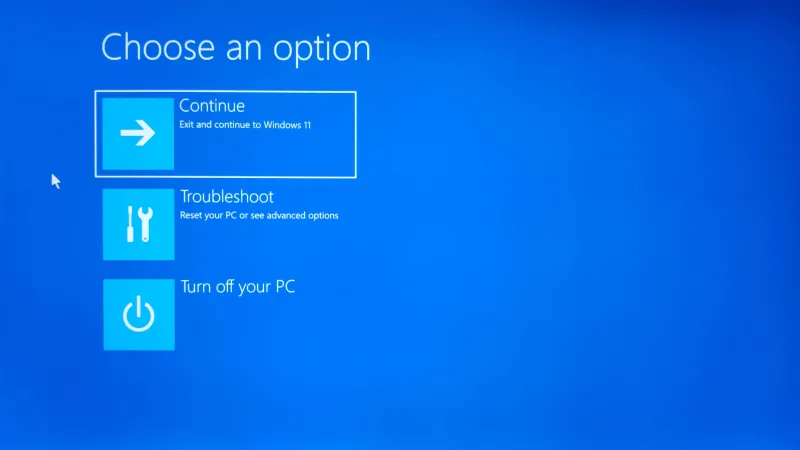
If you’ve exhausted diagnostics and the blue screen persists, it’s time to enact a systematic recovery playbook. Start by booting into Safe Mode to isolate third‑party drivers; if the system stays stable, you can gradually re‑enable services until the culprit surfaces. Next, use the “System Reset” option with the “Keep my files” setting—this reinstalls Windows while preserving your data, often clearing deep‑seated registry corruption. For a more thorough cleanse, a clean install on a freshly partitioned drive eliminates lingering boot‑loader issues that can masquerade as BSODs. Before you wipe, export your user profile, application settings, and any custom scripts to an external drive; this speeds up the post‑reinstall migration. Once the OS is fresh, reinstall drivers in the order of chipset, GPU, then peripherals, verifying each step with a brief stress test. Finally, document the entire process in a personal knowledge base—future you will thank you when the next blue screen appears. This methodical approach turns a panic‑inducing crash into a controlled, repeatable procedure.
Future Outlook: Blue Screens in an AI‑First World
Looking ahead, the blue screen is unlikely to disappear entirely, but its role will evolve. As AI becomes more embedded in the OS layer—think predictive memory management and autonomous driver updates—the system will gain self‑healing capabilities that can preempt many crashes. However, this also means new failure vectors: an AI model misclassifying a benign driver as malicious could trigger a forced shutdown, surfacing as a BSOD. Power users will need to stay vigilant, balancing the convenience of AI automation with manual oversight. I foresee a future where the blue screen is supplemented by a “soft‑stop” mode, allowing the OS to gracefully pause offending processes instead of a hard reboot. Until then, mastering the current tools, maintaining disciplined update habits, and selecting resilient hardware remain the best defense. By embracing both the human and machine aspects of troubleshooting, you’ll keep your workstation humming—blue screens and all.