When I first cracked open a custom rig back in the early 2020s, the thrill of hearing that fresh‑out‑the‑box fan whine was almost as intoxicating as the benchmark scores. Fast forward to 2026, and the landscape has morphed into a delicate ballet of silicon, firmware, and power delivery. As a longtime power‑user, I’ve learned that the real edge doesn’t come from splurging on the flashiest GPU alone; it’s about harmonizing every component so they sing in unison. In this deep dive, I’ll walk you through the hardware trends that are reshaping our builds, why certain legacy parts still matter, and the strategic decisions that separate a “good” PC from a truly future‑proofed workstation. Expect a blend of technical specifics, practical anecdotes, and a few hard‑won lessons that I’ve gathered from countless upgrade cycles. Let’s peel back the layers and see what truly fuels performance in today’s high‑demand environment.
The GPU Evolution: More Than Just Raw Power
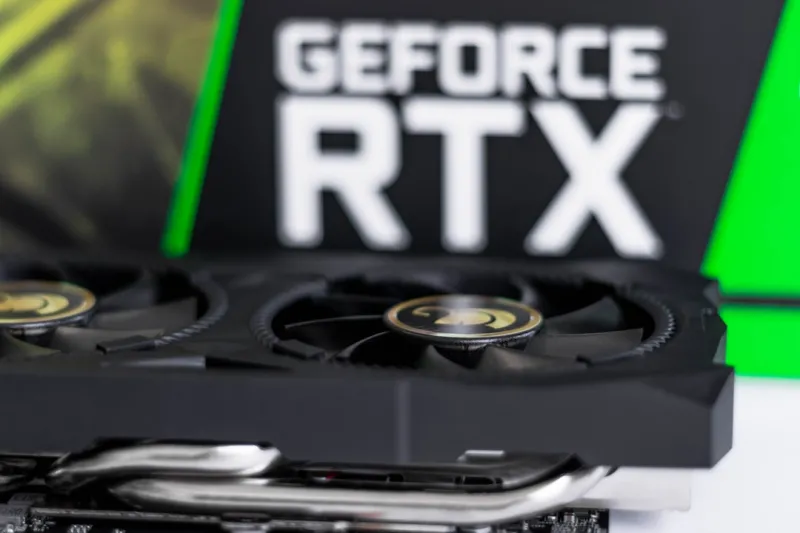
The graphics card market in 2026 feels like a chess match between raw rasterization horsepower and AI‑driven rendering pipelines. While the newest RTX‑9 series boasts teraflops that can render 8K frames at 120 fps, the real game‑changer is the dedicated Tensor cores that accelerate DLSS 3.5 and real‑time ray tracing denoising. However, these advances come with a hidden cost: increased power draw and thermal density. A typical high‑end card now pulls upwards of 550 W under load, demanding not just a beefy PSU but also a meticulously designed airflow strategy. If you’ve ever been haunted by sudden frame drops or driver crashes, you’ll recognize the symptoms of insufficient VRM cooling—a problem I tackled head‑on while troubleshooting a recent build. For a step‑by‑step guide on diagnosing those exact issues, see Why Video Card Glitches Still Crash Power Users (And How to Fix Them). Understanding how to balance raw GPU performance with system stability is the cornerstone of any serious upgrade plan.
CPU Choices: Balancing Core Count, IPC, and Efficiency
The central processing unit landscape this year is dominated by a dichotomy: massive core counts for parallel workloads versus high instructions‑per‑cycle (IPC) for single‑threaded tasks. AMD’s Zen 5 architecture pushes 48 cores on a single die, while Intel’s 13th‑gen Raptor Lake refresh refines its hybrid design, pairing efficiency cores with performance cores for a more nuanced power envelope. For power‑users who juggle video editing, AI model training, and gaming, the sweet spot often lies in a hybrid approach—leveraging performance cores for latency‑sensitive tasks and spilling the heavy lifting to efficiency cores during background rendering. However, it’s not just about raw numbers; the motherboard’s VRM quality and BIOS support for fine‑grained power scaling can dramatically influence real‑world performance. In my recent build, a modest 16‑core hybrid chip outperformed a 32‑core monolithic counterpart in mixed workloads, thanks to better power management and lower thermal throttling. Pair your CPU with a motherboard that offers at least a 12‑phase VRM and you’ll unlock its full potential.
RAM Realities: Speed, Capacity, and Latency in 2026
Memory has become the silent workhorse that can make or break a system’s responsiveness, especially as applications lean heavily on AI inference and large datasets. DDR5‑6000 is now the baseline for high‑performance rigs, yet the real secret sauce is in CAS latency and sub‑timing optimization. Lower latency modules can shave milliseconds off frame times and improve compile speeds—a difference you’ll feel when running heavy IDEs or 3D simulations. Many power‑users mistakenly chase capacity alone, overlooking that a mismatched kit can introduce subtle instability, especially under overclock. If you’re unsure whether your current memory setup is the bottleneck, my deep dive on this exact issue can help you pinpoint the problem: Why RAM Problems Slip Past Power Users and How to Fix Them. Remember, the ideal configuration often pairs 32 GB of DDR5‑6000 CL30 in a dual‑channel layout, leaving room for future expansion without sacrificing latency.
Storage Strategies: SSDs, NVMe, and the Enduring Role of HDDs
When SSDs first arrived, many proclaimed the death of hard drives. Yet in 2026, the HDD still holds a niche—particularly for archival storage and massive media libraries where cost per terabyte remains unbeatable. Modern NVMe drives, especially those using PCIe 5.0, can deliver sequential read speeds beyond 14 GB/s, dramatically cutting load times for large game worlds and dataset processing. However, the real performance gain often comes from a tiered storage approach: a lightning‑fast NVMe boot drive paired with a high‑capacity SATA SSD for active projects, and a massive 10 TB 7200 RPM HDD for long‑term archives. This hierarchy not only optimizes speed but also extends the lifespan of your flash storage by offloading write‑heavy workloads. I’ve found that a 2 TB PCIe 5.0 drive combined with a 12 TB HDD strikes the perfect balance for a creative workstation, delivering both blistering responsiveness and ample storage for raw footage.
Power Delivery and Efficiency: The PSU as the Unsung Hero
Power supplies are often the most overlooked component, yet they dictate the ceiling of what your hardware can achieve. In 2026, 80+ Platinum efficiency has become the de‑facto standard for high‑end builds, offering up to 96% conversion rates and reduced heat output. When selecting a PSU, look beyond wattage; consider rail stability, modularity, and the presence of a high‑quality VRM on the motherboard. A common pitfall is under‑estimating the combined draw of a top‑tier GPU, a hybrid CPU, and multiple NVMe drives—this can easily exceed 850 W under peak load. I recommend a 1000 W Platinum unit with a robust 12‑V rail distribution, especially if you plan to overclock or run multiple GPUs. Additionally, leveraging the newer ATX 3.0 connector standards ensures better communication between the PSU and motherboard, allowing for dynamic power adjustments that keep the system stable during sudden spikes.
Thermal Management: From Air Cooling to Hybrid Solutions
Thermal design has become an art form, with liquid cooling solutions evolving from simple AIOs to custom loops featuring radiators up to 480 mm. While air coolers remain viable for mid‑range builds, the thermal envelope of modern CPUs and GPUs often exceeds what a single tower can dissipate efficiently. In my latest rig, I deployed a 360 mm AIO for the CPU, complemented by a dual‑radiator setup for the GPU, achieving sub‑70 °C load temperatures even during intensive AI model training. Moreover, case airflow remains critical; high‑static pressure fans placed strategically can prevent hot spots, especially when dealing with dense component layouts. Don’t forget to monitor your system’s thermal performance using tools like HWInfo, and aim for a delta of at least 15 °C between CPU and VRM temperatures for optimal longevity.
Future‑Proofing: Modular Upgrades and the Road Ahead
One of the biggest lessons I’ve learned over the years is to design with the future in mind. This means choosing a motherboard with ample M.2 slots, PCIe 5.0 lanes, and robust BIOS support for upcoming firmware updates. Investing in a chassis that can accommodate larger radiators and additional drive bays saves you from costly swaps down the line. In 2026, we’re also seeing the rise of AI accelerators—PCIe add‑in cards that offload specific machine‑learning tasks. By ensuring your platform has free PCIe 5.0 slots and sufficient power headroom, you can integrate these accelerators without a full rebuild. For a comprehensive roadmap on upgrading without starting from scratch, check out Mastering the 2026 PC Upgrade: A Power‑User’s Playbook. A forward‑thinking approach not only protects your investment but also keeps you ahead of the performance curve.
Security Considerations: Hardware‑Level Protections
As hardware becomes more powerful, it also becomes a more attractive target for sophisticated threats. Modern CPUs now embed hardware‑based security features like Intel’s SGX 2.0 and AMD’s SEV‑ES, which provide isolated execution environments for sensitive workloads. Coupled with firmware‑level TPM 2.0 modules, you can create a chain of trust that starts at boot and extends to the OS. For power‑users handling proprietary code or client data, enabling these features in BIOS and ensuring your OS leverages them can thwart a range of attack vectors. Additionally, consider using a hardware firewall or a dedicated network interface card with built‑in packet inspection to safeguard against rogue traffic. Keeping firmware up to date—especially for the motherboard, SSD, and GPU—closes known vulnerabilities and ensures you’re benefiting from the latest performance optimizations.
Conclusion: Building with Purpose and Precision
Crafting a high‑performance PC in 2026 is less about chasing the highest spec on paper and more about orchestrating a symphony where each component plays its part flawlessly. From selecting a balanced GPU and CPU combo, fine‑tuning RAM latency, designing a tiered storage strategy, to ensuring robust power delivery and cooling, every decision compounds the overall experience. By embracing modular design, staying abreast of emerging security features, and leveraging the wealth of resources available—like the guides linked throughout this article—you can assemble a machine that not only dominates today’s workloads but remains adaptable for tomorrow’s challenges. Remember, the most satisfying rigs are those that feel like an extension of your workflow, delivering reliability, speed, and a dash of future‑proof confidence.