When I first opened the lid on my rig this spring, the hum of the fans felt like a reminder that my workstation was still living in the early‑2020s. By 2026, the hardware landscape has shifted dramatically—AI acceleration, PCIe 5.0 ubiquity, and DDR5‑6000 memory have become baseline expectations for any power‑user. Upgrading isn’t just about chasing higher clock speeds; it’s about aligning every component with the workloads that define our daily grind, whether that’s real‑time ray tracing, massive data set crunching, or running large language models locally. In this guide I’ll walk through the upgrade decisions that make the biggest impact, backed by the hard‑won lessons I’ve collected from countless builds and troubleshooting sessions. Think of this as a living checklist: you’ll see where to pour your budget, how to avoid bottlenecks, and why certain trends—like integrated AI cores—are worth the extra spend. Let’s turn that dusty tower into a future‑ready beast that can handle today’s demands and tomorrow’s surprises.
Choosing the Right CPU for 2026 Workloads
The CPU remains the heart of any high‑performance PC, and in 2026 the options are richer than ever. AMD’s Zen 4+ line now pushes core counts beyond 32 with impressive per‑core efficiency, while Intel’s 14‑nm successor (the Raptor Lake S series) offers hybrid architectures that blend performance and efficiency cores for multitasking dominance. For power users who juggle video encoding, AI inference, and heavy virtualization, the sweet spot is a processor that offers both high single‑thread performance (essential for gaming and certain CAD tasks) and ample multi‑core capacity (critical for parallel workloads). I’ve found that a 24‑core/48‑thread CPU with a base clock around 3.5 GHz strikes a perfect balance; you get the responsiveness you need for interactive tasks without sacrificing throughput on batch jobs. Pair your choice with a motherboard that supports the latest socket (LGA 1851 for Intel, AM5 for AMD) and look for robust VRM designs—this ensures stable power delivery when the cores are pushed to their limits.
GPU Evolution: From Ray Tracing to AI Acceleration
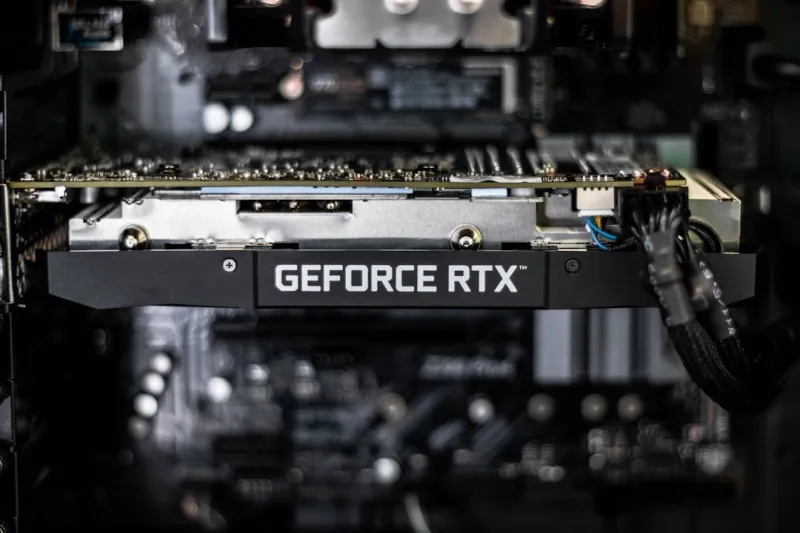
The graphics card market in 2026 is no longer defined solely by rasterization performance. NVIDIA’s RTX 6000 Ada Generation and AMD’s Radeon RX 8900 Ultra both embed dedicated Tensor cores that accelerate AI‑driven denoising, upscaling, and even inference workloads directly on the GPU. If your primary use case is gaming, the RTX 6000’s DLSS 3.5 implementation delivers frame rates that rival a lower‑end CPU upgrade. However, for creators and data scientists, the real win is the expanded AI compute budget—these cards can process thousands of matrix operations per second, shaving hours off model training cycles. When budgeting, consider the total cost of ownership: a high‑end GPU can replace multiple specialized accelerators, reducing system complexity. Make sure your power supply can handle the increased draw (often 400 W+ for the top tier) and that your case accommodates the larger board dimensions that come with enhanced cooling solutions.
Memory Strategies: Speed, Capacity, and ECC Considerations
Memory in 2026 has finally settled into a sweet spot where speed and capacity are both affordable. DDR5‑6000 kits are now commonplace, offering the bandwidth needed for AI workloads and high‑resolution video editing. Yet raw speed isn’t the only metric; latency matters just as much when you’re dealing with large data structures in memory‑intensive applications. I recommend a dual‑channel configuration of at least 64 GB for power users, scaling to 128 GB if you routinely run virtual machines or large language models locally. ECC (Error‑Correcting Code) memory is worth the investment for mission‑critical environments—its ability to detect and correct single‑bit errors can prevent data corruption during prolonged compute sessions. When selecting RAM, verify that your chosen motherboard supports the advertised frequencies out of the box; many boards will require a BIOS update to unlock the full potential of high‑speed kits.
Storage Choices: NVMe, PCIe 5.0, and Tiered Solutions
Storage has become the silent workhorse that dictates how quickly you can spin up VMs, load massive datasets, or edit 8K video footage. PCIe 5.0 NVMe SSDs now deliver sequential read speeds exceeding 14 GB/s, dramatically cutting load times. For most power users, a 2 TB PCIe 5.0 drive as the primary boot and application tier provides ample headroom. However, I still advocate for a tiered approach: keep a high‑capacity SATA‑based SSD or even an HDD for archival data, and reserve the blazing‑fast PCIe 5.0 drive for the OS, frequently accessed projects, and active game libraries. This balances cost and performance without sacrificing reliability. Additionally, many modern motherboards feature multiple M.2 slots with thermal pads; leveraging them can prevent throttling under sustained write loads—something you’ll appreciate when rendering or compiling large codebases.
Motherboard Compatibility and Future‑Proofing
Picking the right motherboard is arguably the most strategic decision you’ll make during an upgrade. In 2026, the focus is on boards that support PCIe 5.0 across all slots, have robust VRM phases (at least 12‑plus for high‑end CPUs), and offer ample connectivity—think USB 4.0, Thunderbolt 4, and dual‑LAN (2.5 GbE plus 10 GbE). I’ve found the Designing a Future‑Proof Motherboard Setup for Power Users guide invaluable for navigating the maze of chipset features. Pay special attention to the BIOS update policy; a board that receives regular firmware upgrades will stay compatible with upcoming CPUs and security patches. Moreover, consider the layout of M.2 slots and PCIe lanes—some boards allocate lanes in a way that can limit simultaneous GPU and NVMe usage. A well‑designed motherboard not only maximizes current performance but also protects your investment as standards evolve.
Power Delivery and Cooling: Keeping the Beast Stable
Power and cooling are the unsung heroes that enable every other component to perform at its peak. With the power demands of modern CPUs and GPUs, a quality 1000 W (or higher) 80+ Platinum PSU is no longer optional; it’s a safety net against voltage droops that can cause instability or even component damage. Look for modular designs to reduce cable clutter and improve airflow. Speaking of airflow, hybrid cooling solutions—combining a high‑static‑pressure AIO liquid cooler for the CPU with strategically placed case fans—provide the thermal headroom needed for sustained turbo frequencies. If you plan to overclock, consider a case with built‑in fan controllers and dust filters to maintain consistent temperatures over long sessions. Remember, thermal throttling not only reduces performance but can also shorten component lifespan, so invest in a robust cooling strategy from the start.
AI Workloads and the Rise of Integrated Compute Cores
One of the most exciting trends in 2026 is the integration of AI acceleration directly into CPUs and motherboards. Many new platforms now feature built‑in neural processing units (NPUs) that can offload inference tasks from the GPU, freeing up graphics resources for rendering or gaming. For power users who experiment with on‑device AI—such as running local voice assistants, image generation, or real‑time data analysis—leveraging these NPUs can yield substantial efficiency gains. Pairing a CPU with an integrated AI core alongside a dedicated GPU creates a heterogeneous compute environment that excels at multitasking. The Power‑User Blueprint: Mastering 2026 Computer Hardware Trends article dives deeper into how to balance these resources for optimal performance. When configuring your system, ensure your OS and driver stack support these new compute APIs (like DirectML and OpenCL‑3), so you can tap into the full potential of both the GPU and the CPU‑based AI engines.
Validation, Benchmarks, and the Final Checklist
After you’ve assembled your upgraded rig, the work isn’t done until you validate every subsystem. Start with a POST and verify that BIOS recognizes all components at their rated specifications—CPU frequency, memory speed, and PCIe lane allocation. Run a suite of benchmarks that reflect your real‑world usage: 3DMark for graphics, Blender’s render test for CPU/GPU synergy, and AI inference workloads using a model like Stable Diffusion to stress the NPU and Tensor cores. Don’t overlook stress tests like Prime95 for CPU stability and MemTest86 for memory integrity. Document any temperature spikes or power draw anomalies; they’re early indicators of cooling or PSU issues. Finally, create a baseline performance profile and compare it to your pre‑upgrade metrics. This data-driven approach ensures you’ve truly extracted the maximum value from your investment and sets a reference point for future upgrades.