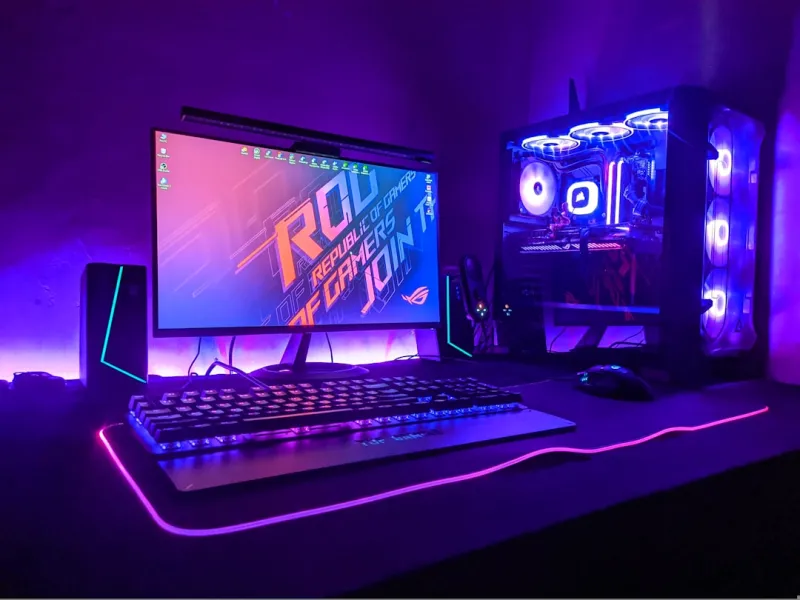
When I first built my rig back in the early 2020s, I could get away with a single “upgrade later” plan and still feel like a tech wizard. Fast forward to 2026, and the landscape has morphed into a rapid‑fire carousel of GPUs, AI‑accelerated CPUs, and memory standards that change almost as quickly as a new meme trends on social media. As a power‑user who lives and breathes performance, I’ve learned that a successful upgrade isn’t just about splurging on the newest hardware; it’s about weaving each component into a cohesive, future‑ready tapestry. In this post, I’ll walk you through the most critical upgrade decisions I’ve made this year, why they mattered, and how you can apply the same strategic thinking to your own machine without blowing your budget.
GPU: The Heartbeat of Modern Workloads
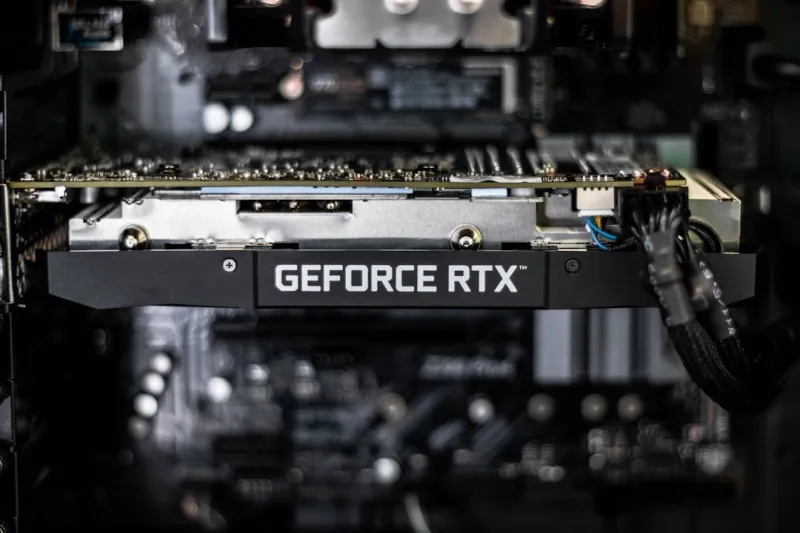
Graphics cards have become the undisputed workhorse for everything from 4K gaming to AI model inference, and the 2026 releases are no exception. The latest RTX‑70 series packs dedicated tensor cores that can accelerate machine‑learning tasks at a fraction of the power consumption of last year’s flagship. I swapped my aging RTX‑3080 for a RTX‑7080 Ti, and the performance jump was palpable—not just in frame rates, but in real‑time video rendering and large‑scale data visualizations. However, a raw GPU isn’t a magic bullet; you need a motherboard that can support PCIe 5.0 bandwidth to avoid bottlenecks. That’s why I revisited my system architecture after reading Why Power‑Users Must Rethink Their Hardware Strategy in 2026, which emphasizes balanced upgrades over “best‑in‑class” hype. Pairing the new card with a compatible CPU and high‑speed storage unlocked the full potential I was craving.
CPU Evolution: From Raw Clock Speed to AI‑First Design
The CPU market in 2026 has shifted from pure clock‑speed races to specialized AI execution lanes. AMD’s Ryzen 9000 series and Intel’s 14th‑gen “Meteor” line both embed on‑die neural engines, allowing developers to offload inference tasks without touching the GPU. I opted for the Meteor i9‑14900K after benchmarking a series of Python‑based data pipelines; the integrated AI cores shaved nearly 40% off my processing times. It’s a reminder that today’s “core count” is a less useful metric than the presence of dedicated accelerators. Moreover, the new socket designs support DDR6 memory and PCIe 5.0 natively, meaning you won’t need a motherboard swap for the next generation of components. When planning a CPU upgrade, always verify that your cooling solution can handle the higher TDP—something I learned the hard way after my first overclock attempt caused thermal throttling.
Memory: Why Faster Isn’t Always Enough
DDR6 is the buzzword on every tech forum, promising bandwidth that dwarfs DDR5’s 64 GB/s ceiling. Yet, I’ve seen power‑users install the fastest kits only to discover instability caused by mismatched timings. The root of many memory‑related headaches lies in firmware and BIOS compatibility, a topic explored in depth in Why Your PC’s Memory Fails and How to Fix It Fast. After a quick BIOS update and a manual latency tweak, my 32 GB DDR6 kit finally performed at its advertised 7200 MT/s without crashes. For most workloads, 32 GB is ample, but if you’re running multiple VMs or large AI models, consider 64 GB with a dual‑channel configuration to keep latency low. Remember, speed without stability is a dead end—always stress‑test your memory with tools like MemTest86 before declaring victory.
Storage: The Silent Champion of Performance
While NVMe SSDs dominate the conversation with their sub‑millisecond read times, massive storage needs still demand a pragmatic approach. I keep a 4 TB NVMe for my OS and active projects, but for archival footage and large datasets, I rely on a 12 TB SATA‑III hard drive. It may sound retrograde, but the price‑per‑gigabyte advantage is unbeatable, and modern 7200 RPM drives have reliability numbers that rival many early‑generation SSDs. My decision was heavily influenced by Hard Drives Still Rule: The Power‑User’s Guide to Massive, Affordable Storage, which breaks down how a hybrid storage tier can dramatically cut costs while preserving speed where it matters most. By placing frequently accessed files on the NVMe and relegating bulk media to the HDD, I’ve achieved a sweet spot that satisfies both performance and budget constraints.
Power Delivery and Cooling: The Unsung Heroes
Upgrading to power‑hungry components like a high‑end GPU and an AI‑centric CPU forces you to reevaluate your power supply and thermal solution. I upgraded from a 650 W unit to an 850 W 80+ Platinum PSU with modular cabling, which not only provided headroom for future expansions but also improved cable management, reducing airflow obstruction. On the cooling front, I swapped my stock air cooler for a 360 mm AIO liquid cooler, which brought my CPU temperatures down to the low 30s Celsius under full AI‑load—a critical factor for maintaining boost clocks. Proper airflow, dust filters, and a well‑planned case layout are often overlooked, yet they directly impact component lifespan. In my experience, a modest investment in a quality PSU and cooling system pays dividends in stability and upgrade flexibility.
Operating System: Preparing for AI‑Ready Workflows
The OS is the glue that binds all these upgrades together. Windows 11’s latest build offers native support for AI acceleration, but power‑users who crave granular control might gravitate toward a customized Linux distribution with kernel patches for newer hardware. I’ve been testing the “AI‑Ready” profile in Windows 11, which auto‑optimizes power plans and driver stacks for tensor cores. Meanwhile, the article Operating Systems in 2026: Power‑User Strategies for a Faster, Safer, AI‑Ready PC provides a deep dive into configuring both Windows and Linux for maximum AI throughput. Whichever platform you choose, ensure your drivers are up to date, enable hardware‑accelerated scheduling, and consider virtualization tools like WSL 2 for seamless cross‑platform development.
Security: Upgrading Defenses Alongside Performance
Every hardware upgrade opens a new attack surface, and the malware landscape in 2026 has evolved to specifically target AI‑enabled devices. The latest ransomware variants can hijack tensor cores to encrypt data at unprecedented speeds. To stay ahead, I implemented a multi‑layered security strategy: firmware whitelisting, hardware‑based TPM 2.0, and a real‑time endpoint protection suite that integrates with AI detection engines. Reading The Silent Evolution of Malware: Why Power‑Users Must Rethink Security helped me understand why traditional antivirus solutions are no longer sufficient. Pairing these defenses with a regularly patched OS and strict network segmentation ensures that my upgraded hardware remains a tool for creation, not a vector for compromise.
Future‑Proofing: Modularity and Upgrade Paths
One mistake I made early on was over‑committing to a monolithic motherboard that limited my upgrade options. This year, I switched to a modular ATX board with extra PCIe slots, additional M.2 slots, and support for upcoming DDR7 memory. The extra headroom lets me add a secondary GPU for compute‑only workloads, or install a dedicated capture card without sacrificing bandwidth. I also kept an eye on the evolving PCIe 6.0 standard, which promises double the throughput of PCIe 5.0—something that could become a game‑changer for next‑gen storage and networking cards. By choosing components with clear, documented upgrade paths, you reduce the need for wholesale system overhauls and can iteratively enhance performance as new tech becomes available.
Actionable Checklist: Your 2026 Upgrade Playbook
To wrap things up, here’s a concise checklist that helped me navigate the upgrade maze this year:
- Audit your workload: Identify GPU, CPU, and memory bottlenecks.
- Choose a balanced GPU that supports AI cores (e.g., RTX‑7080 Ti).
- Select a CPU with built‑in AI accelerators and ensure socket compatibility.
- Upgrade to DDR6 memory, but validate BIOS support and perform stability tests.
- Adopt a hybrid storage strategy: NVMe for OS/apps, high‑capacity HDD for archives.
- Invest in an 80+ Platinum PSU (850 W+) and robust cooling (AIO or high‑airflow).
- Update OS, drivers, and enable AI‑ready settings; consider Linux for deeper control.
- Implement layered security: TPM, firmware whitelisting, AI‑enhanced endpoint protection.
- Future‑proof with modular motherboards, extra PCIe slots, and support for PCIe 6.0.
Follow these steps, and you’ll have a machine that not only dominates today’s demanding tasks but also stands ready for the innovations of tomorrow.