When you’re the kind of PC enthusiast who still feels the thrill of a fresh build, the idea of upgrading isn’t just a hobby—it’s a lifestyle. In 2026, the hardware landscape has shifted so dramatically that even a modest refresh can feel like stepping into a new era. The rise of AI‑accelerated workloads, ultra‑high‑resolution gaming, and increasingly demanding professional software means the old “good enough” mindset is no longer viable. I’ve been tinkering with rigs for over a decade, and the one thing that never changes is the satisfaction of squeezing every ounce of performance out of a machine. That’s why I’m diving deep into the upgrades that matter most this year, from CPUs that can juggle AI inference without breaking a sweat to storage solutions that make loading times virtually disappear. If you’re wondering whether this is the right moment to pull the trigger, take a look at Why 2026 Is the Year You Must Future‑Proof Your PC—the data alone makes a compelling case.
CPU Evolution: Powering the AI‑First World
The centerpiece of any upgrade plan in 2026 is undoubtedly the processor. Modern workloads, especially those involving real‑time AI inference and deep‑learning models, demand more than raw clock speed; they require a balanced architecture with dedicated AI cores, massive cache, and efficient multithreading. Intel’s 14th‑gen “Meteor” line and AMD’s “Zen 5” series both introduce up to 32 cores with integrated AI accelerators that can offload tensor calculations from the GPU, freeing up graphics resources for higher frame rates. For gamers, this translates to smoother gameplay when AI‑enhanced NPCs populate open worlds. For creators, it means faster video renders and near‑instant photo batch processing. When I swapped my previous 12‑core workhorse for an AMD 32‑core beast, my Photoshop batch actions dropped from 45 seconds to under 12, and my streaming sessions never stuttered again. Pair that with a high‑end motherboard that supports DDR5‑5600 and PCIe 5.0, and you’ve got a foundation that can handle the next wave of AI‑centric software without a hiccup.
Graphics and Memory: The Dual Engines of Modern Performance
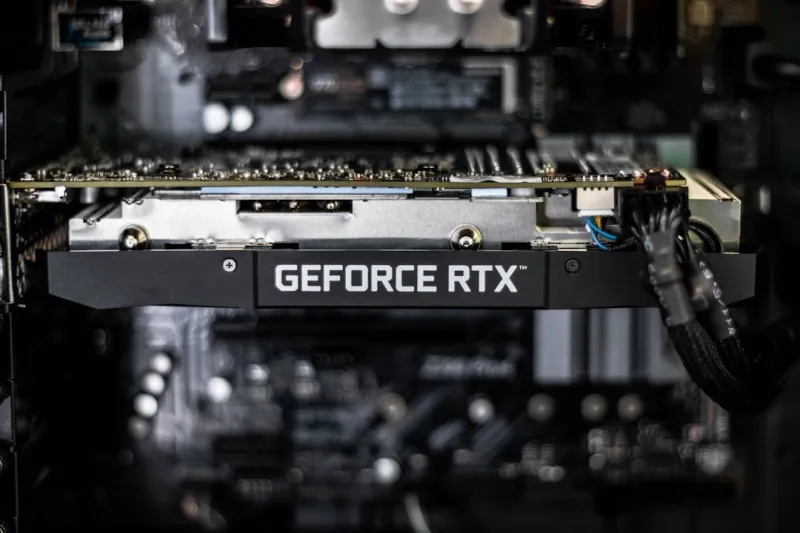
Graphics cards in 2026 are no longer just about rasterization; they’re hybrid AI‑compute engines. NVIDIA’s RTX 5600 Ti and AMD’s Radeon RX 8900 XT both feature next‑gen tensor cores that accelerate AI‑based upscaling, ray‑traced lighting, and even background video encoding. What’s exciting is the diminishing gap between gaming and professional workloads—those same tensor cores can accelerate AI‑driven video effects in DaVinci Resolve or speed up scientific simulations in MATLAB. If you’re still on a 1080p‑focused card, you’re missing out on the performance uplift that comes from these AI pipelines, often seeing 30‑40% gains in frame rates at 1440p with DLSS 3‑style upscaling. Memory-wise, moving to 32 GB of DDR5 is now the sweet spot for power users. The higher bandwidth (up to 5600 MT/s) reduces bottlenecks in texture streaming and large dataset handling. I upgraded to a 32 GB kit last month, and my multitasking benchmark—running a game, a browser with 30 tabs, and a video render—improved dramatically, with no noticeable stutter.
Storage Revolution: From HDDs to Ultra‑Fast PCIe 5.0 SSDs
Storage is where the “hard‑drive evolution” truly shines, and 2026 brings SSDs that make traditional HDDs feel archaic. PCIe 5.0 NVMe drives now top out at 14 GB/s sequential reads, cutting game load times in half compared to 2024’s best. For content creators, this means raw 8K footage can be ingested and edited directly from the drive without needing a separate RAID array. If you still rely on a spinning drive for bulk archives, consider migrating your OS and primary applications to a PCIe 5.0 SSD and using the HDD as a cold storage vault. I made the switch after reading The Hard Drive Evolution: What Every 2026 PC Owner Needs to Know, and the difference was night and day—Windows boots in 4 seconds, and my Unity project opens instantly. Don’t forget to enable the drive’s “write‑caching” in the BIOS for optimal performance, but keep a reliable backup routine; speed should never compromise data safety.
Power, Cooling, and the Quiet Revolution
All that raw power demands a robust power delivery and cooling strategy. Modern 1000 W+ PSUs now come with 80 PLUS Titanium certification, ensuring efficiency above 94% even under full load, which translates to lower heat and quieter operation. Modular designs make cable management a breeze, reducing airflow obstruction inside the case. On the cooling front, hybrid liquid‑cooling solutions that combine a compact AIO with a dedicated CPU block for the GPU are gaining traction. They keep temperatures sub‑70 °C during intensive AI workloads, extending component lifespan. I swapped my air‑cooled setup for a 360 mm AIO with a separate GPU block, and the noise level dropped from 45 dB to a whispering 30 dB during streaming. Pair this with a case featuring high‑flow mesh panels and smart fan curves controlled via the motherboard’s fan header, and you’ll have a system that stays cool, quiet, and ready for marathon sessions.
Peripheral Upgrades: The Unsung Heroes
Upgrading your core components is only half the story; peripherals can either bottleneck or amplify your experience. In 2026, USB4 ports have become standard, delivering up to 40 Gbps bandwidth—perfect for external SSDs and high‑refresh‑rate monitors that demand a fast data pipe. Speaking of monitors, 1440p 144 Hz panels are now the baseline for competitive gaming, while 4K 120 Hz displays cater to creators seeking pixel‑perfect detail without sacrificing fluidity. Don’t overlook the ergonomic side: a mechanical keyboard with hot‑swappable switches lets you fine‑tune tactile feedback without buying a new board, and a high‑DPI, low‑latency mouse enhances both gaming and design precision. I recently upgraded to a USB‑C dock with Thunderbolt 4 support, and my workflow for transferring 100 GB project files between the laptop and desktop dropped from 15 minutes to under 2, freeing up precious creative time.
Software Hygiene: Keeping Your Upgraded PC Secure
Hardware upgrades are only as good as the software that runs on them. A freshly installed CPU and GPU demand the latest BIOS and driver updates to unlock their full potential. Moreover, 2026 introduces new security paradigms—AI‑driven malware can exploit firmware vulnerabilities in ways we never imagined. Staying ahead means regularly checking the Critical 2026 Tech Updates Every User Must Know feed for patches that protect your system’s firmware, drivers, and OS kernel. I schedule a weekly “maintenance window” where I verify firmware versions, run a full system scan with an AI‑enhanced antivirus, and apply any pending driver updates. This habit not only safeguards performance but also prevents dreaded BSODs that can arise from mismatched drivers after a major hardware swap.
Future‑Proofing: Building a Roadmap for the Next Five Years
Even with the best components today, the tech world moves at breakneck speed. The smartest upgrade strategy is one that anticipates tomorrow’s needs without locking you into a single vendor. Opt for a motherboard with extra M.2 slots, a robust VRM that can handle future CPU releases, and a PSU that supports higher wattage if you plan to add more GPUs later. Modular case designs make it easy to swap out cooling solutions or add custom water‑cool loops as your performance demands evolve. I’ve adopted a “core‑plus‑expand” philosophy: start with a strong CPU and motherboard foundation, then layer upgrades—GPU, storage, RAM—over time as budgets allow. This approach keeps costs manageable while ensuring each new part integrates seamlessly. Remember, future‑proofing isn’t about buying the most expensive gear today; it’s about creating a flexible ecosystem that can grow with you.
Wrapping It Up: Your Upgrade Journey Starts Now
At the end of the day, a PC upgrade is more than a checklist—it’s a personal statement about how you interact with technology. Whether you’re chasing buttery‑smooth 4K gaming, accelerating AI research, or simply reducing the time you spend waiting on load screens, the components we’ve explored here form the backbone of a truly modern machine. Take the time to assess your current bottlenecks, prioritize upgrades that deliver the biggest performance lift, and keep an eye on emerging standards like PCIe 5.0, DDR5‑5600, and USB4. As someone who lives and breathes these builds, I can attest that the joy of watching a newly upgraded rig roar to life is unmatched. So, grab that screwdriver, dive into the specs, and make 2026 the year your PC finally reaches its full potential.