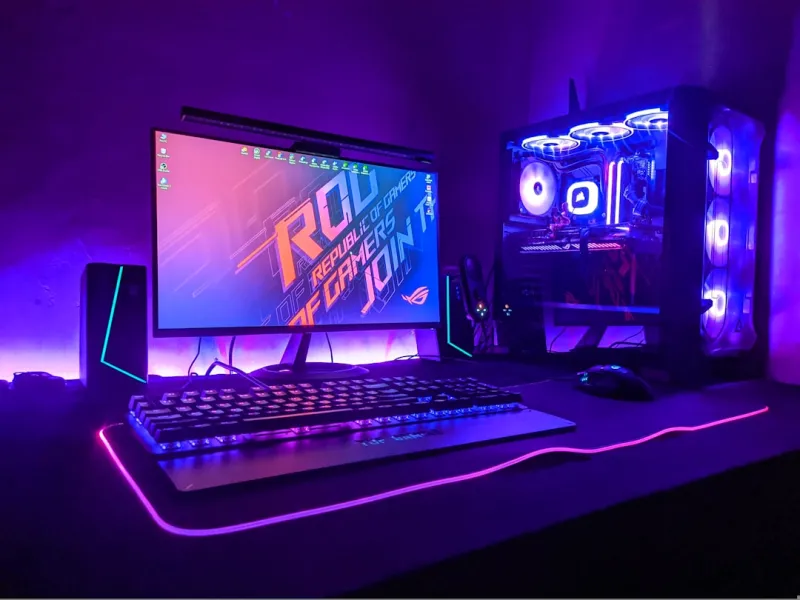
If you’ve been staring at the same rig for a year or more, 2026 is the perfect moment to hit the upgrade button. The convergence of AI‑driven workloads, higher‑resolution gaming, and increasingly aggressive security standards means that yesterday’s “good enough” hardware quickly becomes a bottleneck. I’ve watched countless builds go from “just works” to “just can’t keep up” as generative AI models demand more VRAM and compute cycles. That’s why I always start any upgrade plan by asking three questions: What real‑world tasks are you pushing your PC to perform? Which component is currently throttling those tasks? And how far ahead do you need to look to avoid another upgrade in the next 12‑18 months? By answering honestly, you’ll avoid the classic pitfall of buying a flashy GPU while neglecting the power delivery or cooling that truly matters. In my own shop, I’ve learned that a balanced approach—where CPU, GPU, memory, and storage all speak the same language—delivers the most satisfying performance jump without blowing the budget.
Graphics Card Considerations in 2026
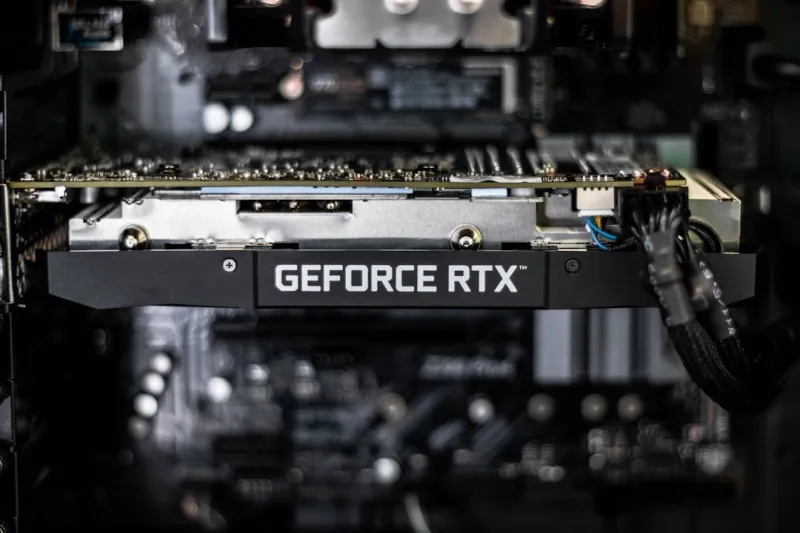
When it comes to visual horsepower, the market this year is dominated by GPUs built on the latest 5‑nm process, delivering unprecedented ray‑tracing and AI‑upscaling capabilities. However, raw specs only tell half the story. Many users report that new cards “act up” because of power spikes, firmware mismatches, or driver quirks that weren’t present in previous generations. If you’re seeing stutter, unexpected shutdowns, or artifacting, the first step is a quick diagnostic—often a simple driver clean‑install or a BIOS update will solve the issue. For more in‑depth troubleshooting, I recommend checking out Why Your GPU Is Acting Up and How to Fix It Fast, which walks you through the exact steps I use on my own builds. Once the GPU is stable, pair it with a CPU that can keep the pipeline full; otherwise you’ll end up with a “GPU‑only” upgrade that leaves you paying premium dollars for marginal gains.
Memory: DDR5, DDR6, and the New Latency Landscape
Memory technology has finally caught up to the demands of AI inference and high‑frame‑rate gaming. DDR5‑5600 modules are now mainstream, while early adopters are testing DDR6‑7200 kits that promise lower latency and higher bandwidth. The key to leveraging these speeds isn’t just about buying the fastest stick; it’s about matching the memory timing to your motherboard’s capabilities and ensuring the BIOS is tuned for XMP 3.0 profiles. In my experience, mis‑configured timings can cause system instability that masquerades as “random crashes.” A solid way to eliminate that guesswork is to run a memory stress test and watch for errors. If you run into trouble, my go‑to guide Diagnosing and Fixing RAM Issues in Modern PCs offers a step‑by‑step checklist to pinpoint whether the problem lies in the DIMM, the slot, or the firmware.
The Motherboard Revolution: Choosing the Right Foundation
Motherboards have transformed from passive back‑bones into active platforms that manage power, security, and even AI workloads. The 2026 generation introduces integrated AI accelerators, on‑board TPM 2.2 modules, and PCIe 5.0/6.0 lane management that can dynamically allocate bandwidth based on workload. This is why I always start a build by reading the latest board reviews; the right PCB can future‑proof your system for at least another two years. Features like dual‑channel DDR6 support, robust VRM cooling, and built‑in Wi‑Fi 7 are no longer optional—they’re essential for handling the data‑heavy pipelines of modern software. For a deeper dive into what makes a board truly future‑ready, see The Motherboard Revolution: What Every 2026 Builder Needs to Know. Trust me, spending a little extra on a premium board now saves you from a costly motherboard swap later.
Storage: Riding the PCIe 5.0 and 6.0 Wave
Fast storage is the silent hero behind snappy boot times and seamless asset streaming in games and creative apps. PCIe 5.0 NVMe SSDs now offer sequential reads past 14 GB/s, while early PCIe 6.0 drives are hitting the 30 GB/s mark in lab conditions. The practical takeaway? If your workflow involves large 4K video files or massive AI model checkpoints, a PCIe 5.0 drive will shave minutes off load times, but you’ll also want a motherboard that can fully support the drive’s lane count without throttling. In addition, consider a dual‑drive setup: a high‑speed NVMe for OS and applications, and a larger SATA or QLC NVMe for bulk storage. Pairing these with a modern file system like ReFS or APFS‑compatible alternatives can further reduce latency. Remember to enable the “Write‑Caching” and “Direct I/O” options in Windows to extract every ounce of performance from your new drive.
Power Delivery: Efficiency Meets Modularity
Upgrading high‑end components invariably raises power requirements, and the power supply unit (PSU) is often the unsung hero that determines stability. In 2026, 80 Plus Titanium units have become the baseline for enthusiasts seeking sub‑90 °C operation under full load. What’s more, modular designs now feature smart power distribution chips that can dynamically adjust voltage rails based on component demand, reducing waste heat and improving overall efficiency. When selecting a PSU, look for a unit that offers a minimum of 30 A on the +12 V rail for GPU‑heavy builds and ensure the connector count matches your GPU’s power profile—some of the newest RTX‑style cards require up to three 8‑pin connectors. A common mistake is undervaluing the importance of a quality PSU, leading to voltage drops that manifest as random reboots or, worse, hardware damage. Investing in a reliable, high‑efficiency PSU now is a safeguard that pays dividends in longevity and performance.
Cooling Innovations: From Passive Heatsinks to AI‑Controlled Loops
Thermal management has entered the AI era, with many high‑end coolers now featuring sensors that feed real‑time temperature data to a microcontroller, which then adjusts fan curves or pump speeds on the fly. This means you can achieve lower temps without sacrificing noise levels—a critical factor for creators who record in quiet environments. Liquid cooling kits have also become more plug‑and‑play, with pre‑filled loops and magnetic fittings that reduce the risk of leaks. When planning a new build, I recommend allocating at least 30 mm of clearance above the CPU socket for larger radiators, and opting for a case with good airflow paths to complement the cooler’s design. Additionally, applying a high‑quality thermal paste—such as a ceramic‑based compound—can shave off a degree or two of temperature, which adds up during prolonged rendering sessions or marathon gaming nights.
Software Tuning: Unlocking Windows 2026 for Maximum Performance
The operating system is the final piece of the performance puzzle, and Windows 2026 brings AI‑assisted resource scheduling that can automatically prioritize foreground applications, balance background services, and even predict when you’ll need more GPU power. To make the most of these features, enable “Performance Mode” in the Settings app and let the AI engine learn your usage patterns over a week. For power users, a custom Power Plan that raises the minimum processor state to 50 % while gaming can eliminate micro‑stutters caused by aggressive power throttling. If you want a deeper dive into the OS’s new capabilities, check out Unlocking Windows 2026: AI, Security, and Performance for the Modern PC, which outlines the specific tweaks I apply after every hardware upgrade.
Future‑Proofing with Security: Zero‑Trust Networking Meets the Modern PC
Performance upgrades are only half the story; security must evolve alongside your hardware. The rise of AI‑generated attacks means that a zero‑trust, AI‑first network architecture is now a non‑negotiable component of any serious build. By implementing a local zero‑trust gateway, you can ensure that every device on your home network—whether it’s a gaming console, a smart fridge, or a workstation—must authenticate before exchanging data. This approach dramatically reduces the attack surface, especially as more GPUs and CPUs expose telemetry endpoints that could be exploited. For a practical guide on how to integrate these concepts into a home lab, read AI‑Driven Zero‑Trust Networking: The 2026 Playbook. Pairing a secure network with a well‑balanced hardware upgrade ensures that your investment not only runs faster but also stays safe in the increasingly hostile digital landscape of 2026.