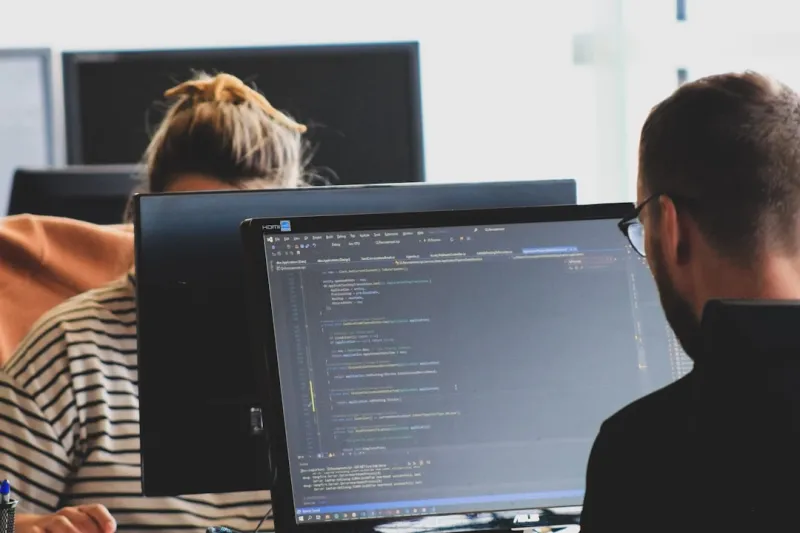
When I look back at the whirlwind of 2026, one thing is crystal clear: software development has become a high‑stakes sprint where AI, hardware, and security intersect like never before. As a longtime power‑user, I’ve learned that the tools you choose dictate not only the speed of your builds but also the resilience of your code against tomorrow’s threats. This year, the conversation isn’t just about writing cleaner code; it’s about architecting an ecosystem where an AI assistant can suggest a function, a GPU can compile it in a flash, and your operating system can quarantine any surprise exploit before it reaches production. The balance between speed and safety is delicate, but mastering it turns a good developer into a strategic engineer who can deliver value at the pace the market demands.
AI‑Assisted Coding: From Novelty to Necessity
AI code generators have graduated from experimental toys to indispensable co‑pilots. In 2026, the smartest IDEs can anticipate your intent, auto‑complete complex algorithms, and even flag potential security flaws as you type. The trick, however, lies in prompt engineering: you must speak the language these models understand, framing problems with clarity and context. I spend a good portion of my day refining prompts, iterating on suggestions, and validating output against unit tests. The payoff is huge—what used to take hours can now be done in minutes, freeing up mental bandwidth for architecture decisions. Yet, relying blindly on AI is a recipe for hidden bugs. I always pair AI suggestions with a disciplined review process, leveraging static analysis tools and peer code reviews. This hybrid approach ensures that the speed boost doesn’t sacrifice reliability, and it cultivates a culture where humans and machines collaborate rather than compete.
Hardware That Keeps Up With the Pace
Running AI‑enhanced workflows demands a rig that can chew through massive model inference without choking. That’s why I recently overhauled my workstation, focusing on a future‑proof development rig that balances raw horsepower with future expansion. I opted for a latest‑gen CPU with a high core count, paired with a dual‑GPU setup tuned for parallel training and rendering. Fast NVMe storage eliminates bottlenecks during dataset loading, while ample DDR5 RAM ensures that large context windows stay in memory. One subtle but critical upgrade was moving to a motherboard that supports PCIe 5.0 and offers robust power delivery—essential for sustained GPU workloads. The result? My compile times have dropped by nearly 40%, and I can spin up isolated container environments for each project without feeling the lag. In a world where every millisecond counts, investing in the right hardware isn’t a luxury; it’s a competitive advantage.
Choosing an OS That Plays Nice With AI
The operating system you run can either accelerate or impede your AI‑driven pipeline. Linux distributions continue to dominate for their flexibility, but Windows has closed the gap with native WSL2 integration and improved subsystem performance. I personally lean toward a Linux distro that offers long‑term support and a robust package manager, which simplifies the installation of AI frameworks like TensorFlow and PyTorch. However, security can’t be an afterthought. Recent zero‑day exploits have shown that even the most hardened systems can be compromised if you ignore a power‑user security mindset. Regular kernel patches, SELinux policies, and container isolation are non‑negotiable. I also enable encrypted filesystems by default, ensuring that any data—model weights, proprietary code, or user credentials—remains unreadable if the hardware falls into the wrong hands. The right OS, paired with vigilant security practices, creates a sandbox where innovative development can thrive without exposing critical assets.
Debugging at the Speed of Light: Blue Screens Revisited
When my GPU crashes mid‑training, the first thing I see isn’t a cryptic log file but a familiar blue screen. While many dismiss it as a relic of the past, the blue‑screen debugging ally still offers unparalleled insight into low‑level failures. Modern hardware reports detailed error codes that pinpoint driver mismatches, memory overruns, or power spikes. By enabling core dump analysis, I can trace a crash back to a specific kernel module or a faulty kernel parameter, saving hours of guesswork. This approach is especially valuable when training massive language models that push GPUs to their thermal limits. The key is to keep your system’s firmware up to date and to configure automatic crash dumps to a secure, encrypted partition. Treating the blue screen as a diagnostic tool rather than a nuisance turns a potential downtime event into a learning opportunity, reinforcing the stability of your development environment.
Encrypt Everything: Safeguarding Code and Data
Data security isn’t just about protecting user information; it’s also about shielding the intellectual property you pour months into. In 2026, encryption has become a default layer across the stack. I encrypt my home directory, use TLS for every internal API call, and mandate that all container images are signed before deployment. The power‑user guide to modern data security emphasizes the importance of hardware‑based key storage, like TPM 2.0, to keep encryption keys out of software memory where they can be harvested. When collaborating on open‑source projects, I employ Git‑crypt to protect sensitive configuration files, and I enforce branch protection rules that require signed commits. By treating encryption as a baseline rather than an optional feature, you eliminate a whole class of attack vectors and ensure that even if a machine is compromised, the valuable assets remain unintelligible to the attacker.
GPU Reliability: Mastering Crashes Before They Happen
GPUs are the workhorses of modern AI, but they’re also the most finicky components under sustained load. In my experience, the GPU crash playbook revolves around three pillars: power stability, thermal headroom, and driver hygiene. I start by calibrating my power supply to deliver consistent voltage across all rails, eliminating the subtle dips that trigger watchdog resets. Next, I configure a custom fan curve that keeps GPU temperatures below 70 °C even during peak tensor operations—this not only prolongs hardware life but also reduces error rates in floating‑point calculations. Finally, I subscribe to the GPU manufacturer’s release notes, applying driver updates only after validating them in a sandboxed test environment. By proactively managing these variables, I’ve reduced unexpected GPU resets from weekly occurrences to a once‑in‑a‑quarter anomaly, allowing my development cycles to stay on track.
Staying Ahead With Power‑User Updates
2026 has been a year of rapid change, and staying current is a survival skill for any serious developer. The critical power‑user updates this year include a shift toward modular compiler toolchains, new language extensions for Rust that improve memory safety, and the emergence of WebAssembly as a first‑class runtime for server‑less functions. I allocate a dedicated “update window” each Friday, during which I review changelogs, test new SDKs in isolated containers, and roll out stable releases to my primary workstations. This disciplined cadence ensures that I’m not caught off‑guard by breaking changes, and it gives my team a predictable rhythm for adopting new features. Moreover, I document each update’s impact in a shared knowledge base, turning individual experiments into collective intelligence. In an ecosystem where innovation moves at breakneck speed, a structured update strategy is the linchpin that transforms potential chaos into continuous improvement.
Looking Forward: The Power‑User’s Roadmap
As we barrel toward the next wave of AI breakthroughs, the power‑user’s role will only expand. The next frontier will likely blend quantum‑ready compilers, edge‑centric AI inference, and hyper‑secure enclaves that keep code execution invisible to even the most sophisticated adversaries. My personal roadmap includes experimenting with quantum‑simulated annealing for optimization problems, adopting zero‑trust networking models for all inter‑service communication, and building a modular development rig that can swap out compute nodes on the fly. The key takeaway? Success won’t belong to those who merely adopt new tools, but to those who integrate them into a cohesive, secure, and future‑proof workflow. By embracing AI assistance, investing in resilient hardware, and maintaining a relentless security posture, you’ll be positioned not just to survive the rapid changes of 2026, but to shape the software landscape for years to come.