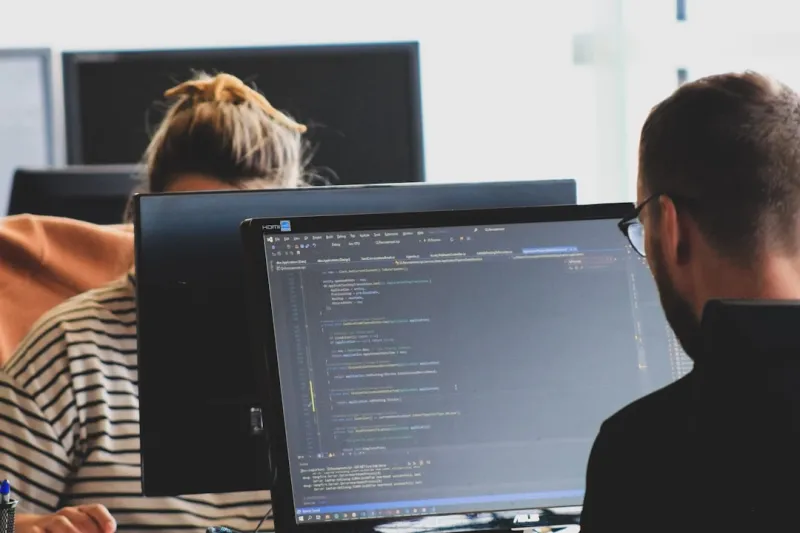
Software development in 2026 feels like watching a high‑speed train pass by while you’re still figuring out how to buy a ticket. In the past few years, the line between a developer’s IDE and a full‑blown workstation has blurred, and the expectations for raw performance, security, and AI assistance have skyrocketed. As someone who’s spent countless nights debugging cryptic stack traces on under‑powered machines, I’ve learned that the tools we choose shape not just our code, but our sanity. In this post I’ll walk through the hardware and software choices that are turning ordinary dev rigs into turbo‑charged productivity engines, share the security mindset that keeps our code safe in a world of relentless zero‑day exploits, and explore how AI is rewriting the rules of software craftsmanship. Whether you’re a solo freelancer, a lead engineer at a fast‑growing startup, or a veteran power‑user, the strategies below will help you future‑proof your workflow and stay ahead of the curve.
Why the Hardware Landscape Matters More Than Ever
When you think about building a modern development environment, the first thing that comes to mind is usually the IDE or the language stack—not the silicon underneath. Yet the truth is, a lagging CPU or a bottlenecked GPU can shave hours off a sprint, especially when you’re running AI‑assisted code completion, containerized builds, or real‑time performance profiling. I remember the first time I tried to run a large‑scale LLM inference locally; my old laptop choked, and the whole debugging session turned into a lesson in patience. That experience drove me to upgrade to a workstation built around the latest multi‑core processors, high‑bandwidth memory, and a dedicated AI accelerator. The payoff? Faster compile times, smoother emulation of complex microservices, and the ability to experiment with on‑device AI without relying on a cloud subscription. If you’re serious about staying competitive, consider the AI‑Powered Workstation guide as a roadmap for selecting components that keep you ahead of the performance curve.
Choosing the Right Motherboard and Security Foundations
Hardware choices start with the motherboard, the unsung hero that determines expansion capabilities, power delivery, and future‑proofing potential. In 2026, power‑user motherboards are no longer just about supporting the fastest CPU; they also need to accommodate PCIe 5.0 lanes for next‑gen GPUs, ample M.2 slots for NVMe storage, and robust VRM designs that can sustain prolonged high‑load scenarios like massive parallel builds. I spent weeks comparing BIOS interfaces, firmware update policies, and the quality of onboard networking before settling on a board that balanced raw performance with stability. If you’re looking for a deep dive, check out Choosing the Right Motherboard for Power‑User Performance in 2026—it breaks down the specs you should prioritize and explains why some budget options can become costly headaches down the line. Security is another pillar; a compromised firmware can open a backdoor to your entire development pipeline. That’s why I integrate the recommendations from Zero‑Day Defense: Power‑User Security Strategies, which stresses regular BIOS updates, hardware root of trust, and isolated development environments to keep malicious code at bay.
AI Assistants: From Nice‑to‑Have to Essential Co‑Developers
The rise of large language models has transformed AI assistants from experimental toys into indispensable co‑developers. Tools like GitHub Copilot, Tabnine, and newer open‑source alternatives can suggest entire functions, refactor code, and even write unit tests based on a few comments. The real magic happens when these assistants are run locally on a powerful workstation, eliminating latency and preserving proprietary code privacy. I’ve integrated an on‑device LLM into my daily workflow, and the productivity gains are measurable: my average time to prototype a new feature has dropped by roughly 30%, and the number of syntactic errors introduced during rapid iteration has plummeted. However, AI isn’t a silver bullet. It can propagate subtle bugs or outdated patterns if not carefully supervised. To mitigate this, I pair AI suggestions with static analysis tools and enforce code reviews that focus on intent rather than just syntax. The combination of high‑performance hardware and intelligent assistants creates a feedback loop where you can iterate faster without sacrificing code quality.
CI/CD Pipelines Reinvented with Intelligent Automation
Continuous Integration and Continuous Deployment pipelines have become the arteries of modern software delivery, but they’re also prime candidates for AI‑driven optimization. In my current projects, I’ve started using predictive build caching, where an AI model analyses code changes to determine which parts of the build can be safely skipped. This reduces average pipeline runtime from 15 minutes to under 7, freeing up developer time and cutting cloud costs. Moreover, AI can prioritize test execution based on historical failure rates, ensuring that flaky or high‑risk tests run earlier in the cycle. The key is feeding the system reliable telemetry: build logs, test results, and code coverage data. When combined with a robust hardware foundation, these intelligent pipelines can scale horizontally across multiple agents without becoming a bottleneck. I also employ container orchestration tools that dynamically allocate resources based on predicted load, a practice that mirrors the resource‑aware mindset we discussed earlier when selecting motherboards and GPUs.
Remote Development Environments and Cloud‑Native Workstations
While a powerful local rig is essential, the shift toward remote work has popularized cloud‑native development environments that mirror the performance of a high‑end workstation. Services like GitHub Codespaces, AWS Cloud9, and specialized VDI solutions now offer GPU‑backed instances that can run AI models, compile large codebases, and stream debugging sessions with sub‑second latency. I’ve adopted a hybrid approach: my laptop serves as a thin client that connects to a remote GPU‑enabled VM for heavy lifting, while the local CPU handles lighter tasks such as editing and version control. This setup gives me the best of both worlds—mobility without sacrificing raw horsepower. The challenge lies in ensuring that network security and data privacy remain airtight, which circles back to the zero‑day defense strategies we outlined earlier. By leveraging secure tunneling, encrypted storage, and strict access controls, you can enjoy a seamless, high‑performance development experience whether you’re at the office, a coffee shop, or a mountain cabin.
Architecting Code for Longevity and Adaptability
Future‑proofing isn’t just about hardware; it’s also about writing code that can evolve gracefully. In 2026, modular monoliths and domain‑driven design have resurged as practical alternatives to micro‑service sprawl, especially when you consider the overhead of managing dozens of containers in CI/CD pipelines. By defining clear boundaries and employing well‑documented interfaces, you reduce the cognitive load on developers and simplify automated testing. I also advocate for the use of typed languages and static analysis tools that catch regressions early, a practice that aligns with the AI‑assisted refactoring workflows mentioned earlier. When you pair a clean architecture with a hardware platform capable of rapid builds, you create a virtuous cycle where new features can be introduced confidently, and technical debt is kept in check. Remember, the goal is to make your codebase as resilient as the hardware it runs on.
Balancing Performance, Cost, and Sustainability
High‑performance development rigs can be expensive, but they don’t have to be wasteful. In today’s market, many manufacturers are offering energy‑efficient components that deliver top‑tier performance without a massive power draw. For example, the latest generation of low‑voltage CPUs can match previous high‑TDP models in multi‑threaded workloads while consuming 30% less energy. Pairing these CPUs with efficient power supplies and smart fan curves not only reduces electricity bills but also extends the lifespan of your hardware—a crucial consideration for developers who plan to keep their rigs for several years. Additionally, recycling older components or selling them on secondary markets can offset upgrade costs. By taking a holistic view that weighs performance gains against environmental impact and budget constraints, you can build a sustainable development environment that serves both your projects and the planet.
Conclusion: Your Next Steps Toward a Power‑User Development Setup
In a landscape where AI, cloud services, and security threats evolve at breakneck speed, the developer’s toolkit must evolve in lockstep. The hardware decisions you make—starting with a future‑proof motherboard and secure firmware—lay the groundwork for AI‑driven productivity gains and resilient CI/CD pipelines. Coupled with intelligent automation, remote workstations, and a disciplined architectural approach, you’ll be positioned to ship high‑quality software faster and more securely than ever before. My recommendation? Start by auditing your current setup against the benchmarks discussed here, prioritize upgrades that deliver the biggest performance delta, and integrate AI assistants gradually to complement your workflow. The future of software development is here, and with the right blend of power‑user hardware, security hygiene, and AI augmentation, you’ll be ready to ride the wave rather than get swept away.