When I first started building rigs back in the early 2010s, I could afford to upgrade every couple of years without thinking too much about tomorrow. Fast forward to 2026, and the landscape has transformed dramatically: AI acceleration, PCIe 5.0, and unprecedented core counts demand a more strategic approach. Power users—whether they’re crunching data, streaming 8K video, or developing the next generative‑AI model—can’t just chase the flashiest specs; they need a balanced, future‑proof architecture that will stay relevant for the next five to seven years. In this playbook, I’ll walk you through the critical hardware decisions that define a resilient workstation, from CPUs that scale with AI workloads to storage solutions that keep pace with data‑intensive pipelines. By the end, you’ll have a clear roadmap to build—or upgrade—a machine that not only meets today’s performance cravings but also anticipates the demands of the next wave of tech innovation.
Choosing the Right Processor: More Than Just Clock Speed
In 2026, the headline metric for CPUs has shifted from raw GHz to core efficiency and AI‑specific instruction sets. The latest desktop processors boast upwards of 32 cores, each optimized for parallel workloads, while integrating dedicated AI accelerators that handle tensor operations without taxing the main cores. For power users, the sweet spot is a processor that can juggle heavy multithreaded tasks—like video rendering or simulation—while still delivering low‑latency inference for machine‑learning models. When evaluating options, look for AMD’s Threadripper 9000 series or Intel’s Core i9‑14900K, both of which provide a mix of high core counts and specialized AI instructions. Pairing the right CPU with a capable motherboard that supports DDR6 and PCIe 5.0 ensures you’re not bottlenecked by legacy lanes. Remember, a powerful CPU is only as good as the ecosystem it lives in, so plan for future‑proof RAM and expansion slots from the start.
Graphics Cards: The Backbone of Creative and AI Workloads
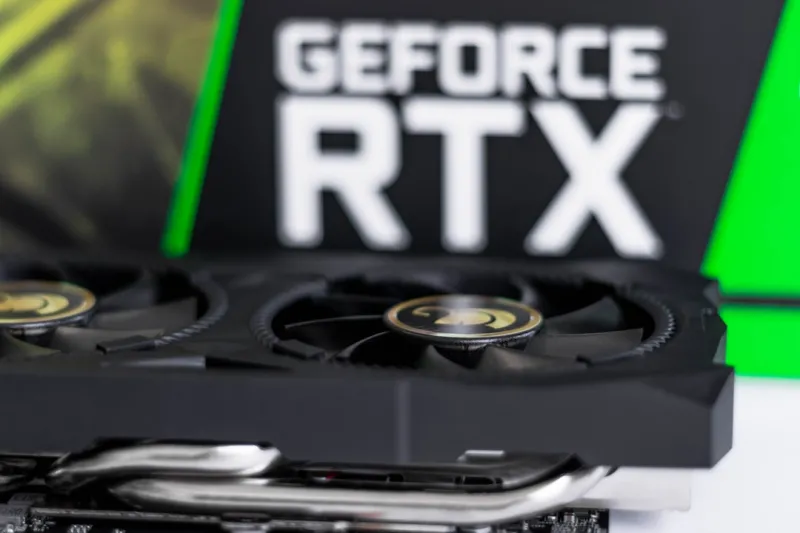
The GPU market in 2026 is a blend of raw rasterization power and AI‑centric compute cores. Modern graphics cards now come equipped with hundreds of Tensor cores, making them indispensable not just for gaming, but for deep‑learning, real‑time ray tracing, and large‑scale video encoding. When selecting a GPU, consider both the VRAM capacity—crucial for handling 8K textures and massive datasets—and the driver ecosystem’s stability. NVIDIA’s RTX 6000 Ada Generation and AMD’s Radeon RX 9000 series dominate the professional segment, offering up to 48 GB of HBM2e memory. If you’re a developer, the AI‑accelerated pipelines can shave hours off training cycles. And for those worried about future upgrades, many of today’s GPUs support Upgrade Your PC in 2026 strategies that emphasize modularity, allowing you to swap out the graphics card without overhauling the entire chassis.
Memory Matters: DDR6 and Beyond
Memory technology has finally caught up with the demands of modern workloads. DDR6, now mainstream in 2026, delivers bandwidths exceeding 100 GB/s, dramatically reducing latency for data‑intensive tasks such as large‑scale simulations and AI model training. For power users, the rule of thumb is to allocate at least 64 GB of RAM for a versatile workstation, but 128 GB becomes essential when you’re running multiple virtual machines or large language models locally. Beyond capacity, latency and clock speed play pivotal roles; modules with tighter timings (CL‑30 or lower) provide smoother multitasking. When expanding, ensure your motherboard supports dual‑channel or quad‑channel configurations to maximize throughput. Additionally, consider ECC (Error‑Correcting Code) memory if data integrity is mission‑critical—especially in scientific research or financial modeling environments where a single bit flip can have cascading effects.
Storage Solutions: Speed, Capacity, and Longevity
The storage hierarchy in 2026 revolves around PCIe 5.0 NVMe SSDs, offering sequential read/write speeds that eclipse 14 GB/s. This level of performance is a game‑changer for developers compiling massive codebases or editors loading multi‑gigabyte video assets. For most power users, a tiered approach works best: a 2‑TB PCIe 5.0 NVMe drive for OS, applications, and active projects, complemented by a larger 8‑TB or 10‑TB SATA‑based SSD for archival data. The newer NVM Express drives also feature built-in power‑loss protection, reducing the risk of data corruption during unexpected shutdowns. When budgeting, look for drives that support the latest NVMe 2.0 specifications, as they include features like namespace management and improved endurance metrics—crucial for write‑heavy AI training workloads.
Power Delivery and Cooling: Keeping the Beast Stable
As CPUs and GPUs consume more power, the importance of a robust power supply and efficient cooling cannot be overstated. In 2026, 80 Plus Platinum and Titanium rated PSUs are the norm for high‑performance rigs, delivering up to 95% efficiency at typical loads. A 1000 W modular PSU offers headroom for future GPU upgrades without risking voltage sag. On the cooling front, hybrid liquid‑air solutions are gaining traction, combining the quiet operation of passive radiators with the thermal efficiency of liquid loops. For those who prefer simplicity, high‑static‑pressure fans paired with large heatsinks can keep temperatures in check while maintaining low noise levels. Remember, consistent thermal performance not only prolongs component lifespan but also sustains boost clocks during prolonged workloads—a key factor for content creators and AI researchers alike.
AI‑Powered Workstations: The New Standard for Developers
Integrating AI capabilities directly into the workstation has moved from a niche to a necessity. The AI‑Powered Workstation paradigm blends traditional compute with on‑board neural accelerators, enabling developers to run inference and even train smaller models locally. This reduces dependence on cloud resources, slashing both latency and operational costs. Look for motherboards that feature dedicated AI co‑processors or support GPU‑based Tensor cores through PCIe 5.0. Additionally, software ecosystems like NVIDIA’s Omniverse and AMD’s ROCm are evolving to provide seamless integration with development tools, allowing you to prototype AI‑driven features in real time. By embedding AI into your hardware stack today, you future‑proof your workflow against the inevitable rise of intelligent applications.
Networking: Wiring the Future‑Proof Rig
A workstation is only as effective as the network it lives on. In 2026, 10 GbE Ethernet has become the baseline for power users, with many adopting 25 GbE or even 40 GbE for data‑center‑grade connectivity. This bandwidth is essential when moving multi‑terabyte datasets across NAS arrays or collaborating on real‑time 3D rendering farms. When designing your network, prioritize a switch that supports both high throughput and low latency, and consider PoE+ ports for powering accessories like external drives or AI edge devices. For wireless needs, Wi‑6E continues to dominate, but the emerging Wi‑7 standard promises sub‑millisecond latency—ideal for AR/VR development. A well‑engineered network ensures that your hardware’s performance isn’t throttled by a sluggish connection.
Putting It All Together: A Step‑by‑Step Upgrade Plan
Now that we’ve dissected each component, let’s translate the insights into an actionable roadmap. Start by auditing your current workload: identify whether CPU, GPU, or storage is the primary bottleneck. Next, prioritize upgrades that deliver the greatest performance delta—often a move to a DDR6‑compatible motherboard paired with a high‑core‑count processor. Follow up with a PCIe 5.0 SSD for the OS and a next‑gen GPU to unlock AI acceleration. Don’t forget to upgrade your PSU and cooling to match the new power envelope. Finally, re‑evaluate your network topology to ensure data flows unhindered. By approaching upgrades methodically, you’ll avoid the common pitfall of “feature creep” and end up with a cohesive, future‑proof workstation that serves you reliably for years to come.