When I first dug into the world of networking back in the early 2010s, the biggest challenge was simply getting a reliable connection between two machines. Fast‑forward to 2026, and the landscape has exploded: gigabit‑plus speeds, AI‑driven traffic shaping, and zero‑trust architectures are now baseline expectations for any serious power‑user. In this post I’ll walk you through the mindset and the practical steps I use to design a network that feels as future‑proof as a high‑end workstation, while still being affordable enough for a home office or a small boutique studio. Think of this as a roadmap that blends the raw performance cravings of a gamer with the reliability demands of a developer pushing code to the cloud daily. By the end, you’ll have a clear blueprint, from cable selection to software‑defined networking, that you can start implementing this week.
Why Networking Is the Backbone of Every Power‑User Setup
Most power‑users focus on CPU, GPU, and RAM upgrades, but the network is the silent conduit that either amplifies or bottlenecks those investments. In 2026, a single 10 GbE link can move terabytes of data in minutes, making tasks like rendering video frames, syncing massive codebases, or streaming high‑resolution game captures practically instantaneous. However, if your router or switch is still stuck at 1 GbE, you’ll feel that lag in every workflow. The key is to treat the network as a core component, not an afterthought. Latency, jitter, and packet loss become the invisible enemies that can corrupt a build or cause a lag spike during a live stream. By adopting a holistic approach—matching your NICs, cabling, and firmware—you ensure that every piece of your rig talks at the same high‑frequency language. This mindset is why I always reference the guide on Designing a Future‑Proof Network for Power Users before making any hardware decisions.
The 2026 Landscape: Speed, Security, and AI Integration
Speed alone isn’t enough; security and intelligent traffic management have become equally critical. Modern routers now embed AI engines that can dynamically prioritize gaming packets, allocate bandwidth for large file transfers, and even detect anomalous traffic that might indicate a breach. In my own lab, I’ve configured the AI‑driven QoS to give my development VM a guaranteed 2 Gbps slice while my gaming rig enjoys a burst of 5 Gbps during raids. At the same time, zero‑trust networking models enforce device authentication, so a compromised laptop can’t silently hijack the LAN. This layered approach mirrors the principles I discuss in Essential 2026 Power‑User Updates You Can’t Miss, where I outline why AI isn’t just a buzzword but a practical tool for everyday bandwidth management and threat mitigation.
Building a Future‑Proof Home Lab: The Hardware Core
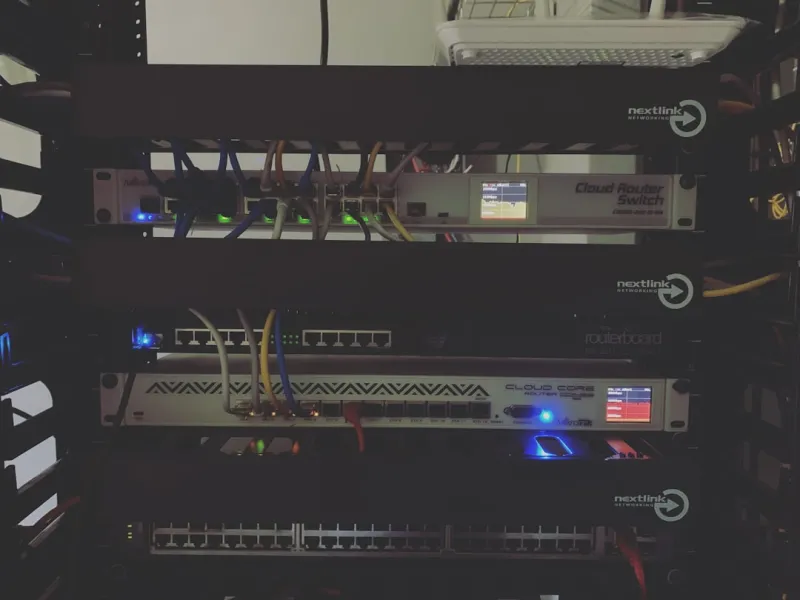
Start with a modular, stackable switch that supports 2.5 GbE, 5 GbE, and 10 GbE uplinks—this ensures you can upgrade without replacing the entire chassis. I favor a 24‑port managed switch with SFP+ ports, giving you the flexibility to run fiber for long runs or stay with copper for shorter distances. Pair this with a dedicated firewall appliance that runs open‑source firmware like pfSense, allowing you to script custom rules and integrate with your home automation platform. Don’t forget about the power budget; a reliable UPS with sine‑wave output protects both your devices and your data during outages. As you scale, consider a small rack to house these components, which also improves airflow and makes cable management far more straightforward. The goal is a tidy, expandable hub that can accommodate future standards like 25 GbE without a massive overhaul.
Choosing the Right Switches and Routers for Maximum Flexibility
When selecting a switch, look beyond port count. Features such as VLAN support, port mirroring, and PoE (Power over Ethernet) can dramatically simplify network topology. For a power‑user, VLANs allow you to segregate IoT devices, development servers, and entertainment systems, reducing broadcast noise and improving security. PoE can power a Wi‑Fi 6E access point or a small edge AI box without an extra power brick. On the router side, a device that supports dual‑WAN can give you automatic failover, keeping you online even if one ISP goes down. I also recommend enabling DNS‑over‑HTTPS (DoH) directly on the router to encrypt all local DNS queries—a simple step that adds a layer of privacy often overlooked in home networks.
Cabling Standards: From Cat6a to Fiber Optics
The adage “the network is only as good as its cables” holds true today more than ever. For most home setups, Cat6a is a solid baseline, supporting 10 GbE up to 100 meters with robust shielding against crosstalk. If you’re planning a longer run—say, from a basement server room to a second‑floor office—consider single‑mode fiber with SFP+ modules. Fiber not only eliminates electromagnetic interference but also future‑proofs your backbone for 40 GbE or 100 GbE when those speeds become mainstream. When terminating cables, use keystone jacks and a proper punch‑down tool to maintain the integrity of the transmission. Label each cable at both ends; this tiny habit saves hours of troubleshooting later when you need to isolate a faulty link.
Software‑Defined Networking (SDN) for the Solo Engineer
SDN isn’t just for data centers. With open‑source controllers like OpenDaylight or commercial options like Cisco Meraki, a solo engineer can centralize network policies, automate VLAN provisioning, and even script bandwidth allocations based on time of day. In my setup, I’ve deployed an SDN controller on a lightweight VM that talks to my managed switch via OpenFlow. This allows me to roll out a “work‑hour” profile that boosts upload speeds for my cloud backup service while throttling gaming traffic to keep latency low during evenings. The beauty of SDN is its API‑first approach—if you’re comfortable with Python or PowerShell, you can write scripts that react to alerts from your monitoring suite and adjust network parameters on the fly.
Security Strategies in a Hyper‑Connected World
With every device you add to the network, you increase the attack surface. Implement a multi‑layered defense: start with strong WPA3 encryption on Wi‑Fi, enforce MAC address filtering on critical switches, and deploy an intrusion detection system (IDS) like Snort on the firewall. Regularly audit firmware versions; vendors push security patches that address zero‑day vulnerabilities. I also run a periodic “network sweep” using Nmap to discover any rogue devices or unexpected open ports. For remote access, a VPN with multi‑factor authentication (MFA) is non‑negotiable—never expose RDP or SSH directly to the internet. By combining these tactics, you create a resilient perimeter that protects both your data and your peace of mind.
Monitoring and Automation: Keeping the Network Healthy
Proactive monitoring beats reactive troubleshooting every time. Tools like Grafana paired with Prometheus can visualize bandwidth usage, packet loss, and latency across each port in real time. Set thresholds that trigger alerts via Slack or email when a link exceeds a certain error rate. Automation scripts can then isolate the problematic segment by disabling the offending port, all without human intervention. I also use a lightweight log aggregator to capture syslog messages from all network devices, making it easy to spot firmware warnings before they cause a cascade failure. By turning raw data into actionable insights, you maintain a network that feels as reliable as a well‑tuned SSD.
Future Trends: Mesh, 6G, and Edge Computing
Looking ahead, mesh networking is gaining traction for its ability to provide seamless coverage across large homes or multi‑story offices without the need for extensive cabling. While Wi‑Fi 6E already offers gigabit speeds, the upcoming 6G standards promise terabit wireless links—though they’re still on the horizon. Edge computing devices, often small form‑factor AI accelerators, will sit at the network edge to offload tasks like video transcoding or real‑time analytics, reducing latency dramatically. Preparing for these trends means keeping spare SFP+ slots open in your switch, ensuring your router firmware can support emerging protocols, and staying flexible with your DHCP scope to accommodate a growing number of IoT and edge nodes.
Putting It All Together: A Practical Checklist
To wrap up, here’s a quick, actionable checklist you can copy into your notes:
- Audit current network hardware: note port speeds, firmware versions, and cable types.
- Upgrade to at least a 2.5 GbE‑capable switch; add 10 GbE uplinks if budget allows.
- Implement VLANs to segment traffic: work, gaming, IoT.
- Deploy a firewall with pfSense or similar, enable DoH and VPN with MFA.
- Run a network sweep monthly; log all findings.
- Set up Grafana/Prometheus dashboards for real‑time monitoring.
- Plan for future upgrades: spare SFP+ slots, fiber runs, and edge devices.
By following these steps, you’ll transform a patchwork of cables and consumer‑grade gear into a cohesive, high‑performance network that matches the ambition of your power‑user rig. Ready to build? Dive deeper into each topic by exploring the linked resources and start upgrading your connectivity today.