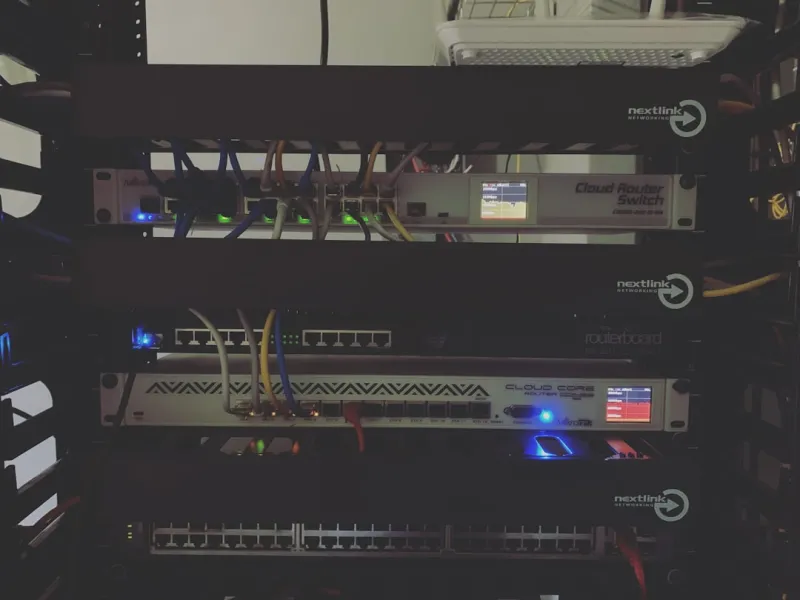
When I first soldered my inaugural Ethernet patch panel back in the early 2000s, networking felt like the invisible plumbing that kept my workstation humming. Fast‑forward to 2026, and that plumbing has morphed into a sophisticated mesh of wired, wireless, and cloud‑borne pathways that can make—or break—a power‑user’s day. I’ve spent the last decade wrestling with latency spikes while rendering 8K video, and the lesson is clear: a rock‑solid network is the backbone of every high‑performance build. In this post, I’ll peel back the layers of modern networking, share the trends I’m betting on, and hand you a checklist that translates cutting‑edge theory into day‑to‑day reliability. Whether you’re a freelance visual effects artist, a data‑science guru, or a dev‑ops wizard, the strategies below will help you keep the packets flowing, the bandwidth plentiful, and the downtime to a bare minimum.
Why Network Infrastructure Still Matters for Power Users
It’s easy to assume that today’s gigabit‑capable routers and Wi‑Fi 6E access points automatically solve all connectivity woes, but the reality is more nuanced. A power‑user’s workflow often involves simultaneous high‑throughput tasks: pulling raw footage from a NAS, uploading compiled code to a CI server, and streaming live telemetry from an AI model—all at once. If your switch lacks sufficient backplane capacity or your cabling is stuck at Cat5, you’ll feel the bottleneck instantly. Low‑latency, lossless transmission isn’t a luxury; it’s a prerequisite for real‑time collaboration and render farm efficiency. Moreover, the physical layer—quality of patch panels, proper termination, and 10 GbE or even 25 GbE uplinks—plays a pivotal role in maintaining signal integrity. Investing in a modular chassis that supports stacking and redundant power supplies can keep your network alive even when a single component fails, mirroring the resilience principles I champion in my hardware guides.
Wi‑6E, Wi‑7, and the 5G Wave: What’s Real in 2026
The wireless arena has exploded beyond the hype of a few years ago. Wi‑6E opened up the 6 GHz spectrum, delivering cleaner channels and lower contention, but the rollout is now being eclipsed by the early adoption of Wi‑7, which promises multi‑gigabit speeds and ultra‑low latency through pre‑TFR and 4096‑QAM. In practice, a dual‑band Wi‑6E router paired with a Wi‑7‑compatible client card can achieve 2.5 Gbps in ideal conditions—enough for uncompressed 8K streams. Meanwhile, 5G fixed‑wireless access (FWA) is becoming a viable backup for studios that can’t afford fiber to every location. The key is to treat wireless as an extension, not a replacement, for wired core. Deploying a dedicated 5 GHz backhaul between your access point and a PoE switch ensures you retain the benefits of wireless flexibility while preserving the deterministic performance of a wired backbone. For a deeper dive into the trends shaping our industry, see Networking Trends That Power Users Can’t Ignore in 2026.
Software‑Defined Networking (SDN) for the Desktop‑Centric Power User
SDN isn’t just for massive data centers; it’s increasingly relevant for the solo‑operator who wants granular control over traffic shaping, VLAN segmentation, and automated failover. By abstracting the control plane from the hardware, tools like Open vSwitch or the newer NetBox‑powered APIs let you script network policies in Python, aligning perfectly with the automation mindset of modern creators. Imagine a scenario where your workstation automatically redirects large backup streams to a secondary NIC during off‑hours, while keeping low‑latency gaming packets on the primary link. This level of orchestration reduces contention without manual re‑configuration. The open‑source community also offers lightweight controllers that run on a Raspberry Pi, turning a modest device into a full‑featured SDN hub for a home studio. As you build these layers, remember to keep your firmware up to date and audit your ACLs regularly—security and flexibility go hand‑in‑hand.
AI‑Powered Traffic Management: The New Playbook
Artificial intelligence isn’t just for image synthesis or code generation; it’s reshaping how we balance network loads. Modern routers now embed neural‑net inference engines that predict congestion before it happens, dynamically reallocating bandwidth based on usage patterns. I’ve integrated an AI‑driven traffic analyzer into my own setup, and the difference is palpable: latency during a massive dataset sync dropped from 120 ms to under 30 ms, and packet loss vanished. These systems learn from your daily rhythms—whether you’re uploading a batch of training data at 2 am or streaming a live VR session at 3 pm—and adjust QoS queues on the fly. For a broader perspective on why AI is becoming the cornerstone of power‑user workflows, check out Why AI Computing Is the New Power‑User Playbook. The takeaway? Embrace AI‑enhanced routers and switch firmware to future‑proof your connectivity against the ever‑growing demand of data‑intensive applications.
Security Layers You Can’t Skip in a Hyper‑Connected Workspace
With great bandwidth comes great responsibility. As we interconnect more devices—NAS units, edge GPUs, development boards—the attack surface widens dramatically. A single compromised IoT sensor can become the foothold for ransomware that cripples an entire studio. Deploying network‑level segmentation using VLANs, combined with Zero‑Trust policies, ensures that a breach in one segment doesn’t cascade. Additionally, enable DHCP snooping and dynamic ARP inspection on your switches to thwart rogue devices trying to masquerade as legitimate endpoints. For those still relying on default passwords or outdated firmware, the risk is even higher. I routinely cross‑reference my security checklist with insights from Why Modern Malware Still Outsmarts Power Users—and How to Fight Back, and I recommend a quarterly audit of firewall rules, firmware versions, and certificate validity. Remember, a secure network is not a one‑time setup; it’s a continuous habit.
Edge Computing and Hybrid Cloud: Tying Your LAN to the World
Edge computing is no longer a buzzword reserved for telecom giants; it’s an essential component of a power‑user’s toolkit. By deploying a small, low‑latency compute node at the edge of your LAN—think a compact NUC or an Intel Xeon D server—you can offload AI inference, container orchestration, or real‑time video transcoding without flooding your internet pipe. This approach works hand‑in‑hand with hybrid‑cloud workflows, where the heavy lifting occurs in the cloud but the latency‑sensitive steps remain local. The result is a smoother experience when you’re editing 8K footage sourced from a remote render farm, as the edge node caches frames and handles de‑blocking in real time. Pair this with a VPN tunnel that leverages WireGuard’s minimal overhead, and you get a seamless bridge between your private network and the public cloud, preserving both speed and security.
Future‑Proofing Your Network: Upgrade Paths and Budgeting
Planning a network that stays relevant for the next five years is a balancing act between cutting‑edge technology and cost efficiency. Start by establishing a modular foundation: a 48‑port 10 GbE switch with spare SFP+ slots lets you add 25 GbE or even 40 GbE uplinks as your workloads grow. Pair this with fiber optic cabling (OM4) to future‑proof the physical layer, as copper will eventually hit its ceiling. For wireless, invest in a tri‑band Wi‑7 access point now, even if you’re still on Wi‑6E clients; the backward compatibility ensures you won’t need a complete overhaul when you upgrade your devices. Budget wise, allocate roughly 20 % of your hardware spend to “future upgrades”—this reserve can cover unforeseen standards like 800 GbE or new security modules. For a comprehensive roadmap, see Upgrade Strategies for Power Users: Building a Future‑Proof PC in 2026, which outlines a phased approach you can adapt to networking as well.
Actionable Checklist for the 2026 Power‑User Network
To translate these concepts into a concrete plan, here’s a quick checklist you can copy‑paste into your notes app:
- Audit current cabling; replace any Cat5e with Cat6a or OM4 fiber where possible.
- Upgrade core switch to a 10 GbE model with stacking capability.
- Deploy a Wi‑7 access point and configure a dedicated 5 GHz backhaul to the switch.
- Implement VLANs for workstations, IoT devices, and guest traffic; enforce ACLs.
- Enable AI‑driven QoS on routers and set up traffic profiles for backup, streaming, and interactive work.
- Introduce an edge compute node for AI inference and low‑latency transcode tasks.
- Schedule quarterly firmware updates and security audits, referencing malware mitigation guides.
- Set aside a 20 % budget reserve for future bandwidth or security module upgrades.
By ticking off each item, you’ll build a network that feels as responsive as a high‑end SSD and as secure as a hardened workstation. The result? Uninterrupted creativity, faster iterations, and the peace of mind that your digital highway can handle whatever the next big project throws at it.