When I first started tearing apart PCs in the early 2010s, the idea of a “power‑user” build was something reserved for hobbyists with deep pockets and even deeper patience. Fast‑forward to 2026, and the landscape has shifted dramatically: the line between enthusiast and professional hardware is now blurred by AI‑driven workloads, real‑time ray tracing, and ever‑more demanding content‑creation pipelines. As someone who lives at the intersection of hardware tinkering and workflow optimization, I’ve learned that a successful build isn’t just about stacking the most expensive parts; it’s about orchestrating each component to serve a cohesive purpose. In this article, we’ll walk through the hardware trends that matter most to today’s power users, dissect why certain components have become non‑negotiable, and explore how you can future‑proof your rig without falling into the endless upgrade loop that haunts many of us.
GPU Evolution: From Raster to Real‑Time Ray Tracing
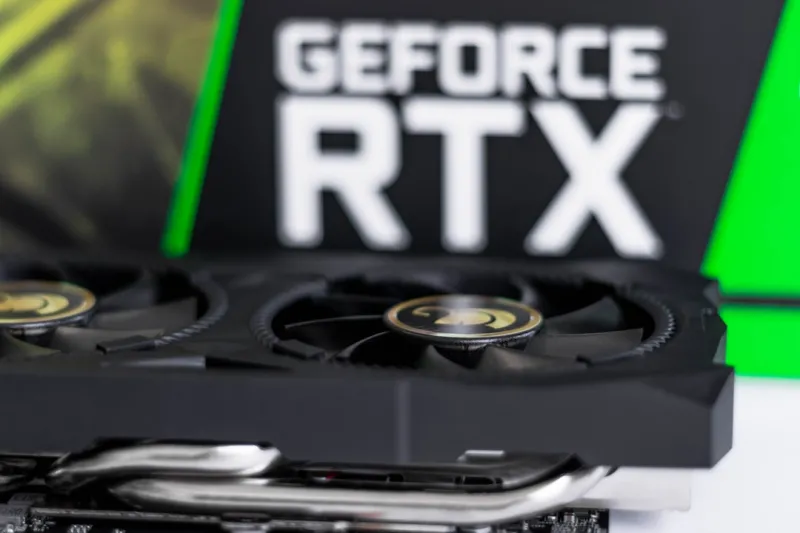
The graphics processing unit has arguably seen the most dramatic transformation over the past few years. In 2026, the flagship GPUs from both NVIDIA and AMD not only dominate traditional rasterization but also push the envelope with hardware‑accelerated ray tracing and AI‑infused denoising pipelines. What used to require a dedicated RTX core is now handled by unified shader clusters that intelligently allocate resources based on scene complexity. For power users who juggle 8K video editing, 3D rendering, and high‑frame‑rate gaming, the ability to toggle between performance and quality on the fly is a game‑changer. Moreover, the rise of VRAM‑centric designs—128 GB of GDDR7 on the top tier—means that large texture atlases and AI models can reside entirely on the GPU, dramatically reducing CPU‑GPU bottlenecks. If you’re still on a previous‑generation card, you’ll notice a palpable lag in workloads that rely on AI‑upscaled content, making the upgrade a priority for maintaining a competitive edge.
CPU & Hybrid Architectures: The Rise of the Big‑Little Design
Intel’s 13th‑gen hybrids and AMD’s Zen 4+ cores have solidified the “big‑little” architecture as the standard for high‑performance desktops. By pairing performance‑focused cores with efficiency cores, modern CPUs deliver blistering single‑threaded speeds while simultaneously handling background tasks like AI inference and real‑time compression without sacrificing power efficiency. In 2026, we’re seeing base clock speeds cresting the 5 GHz barrier on the performance cores, while the efficiency cores operate at a modest 3 GHz, conserving energy during idle or low‑intensity workloads. This design not only improves battery life for workstation laptops but also reduces overall system heat, allowing for more aggressive overclocking on the performance cores. For power users who run multiple virtual machines, containerized environments, or heavy multitasking setups, the ability to allocate workloads to the appropriate core type can shave minutes off render times—a tangible productivity boost.
Motherboard Innovation: More Than Just a PCB
Motherboards have graduated from being mere connectors to becoming the central nervous system of a modern rig. The latest X670E and Z890 chipsets in 2026 feature integrated PCIe 5.0 lanes, dual‑socket support for high‑bandwidth GPUs, and advanced power delivery modules that can sustain 250 W per VRM. This is why Why Modern Motherboards Are the Real Game‑Changer for Power Users is a must‑read for anyone planning a build this year. Additional perks include on‑board Wi‑Fi 7, which offers sub‑millisecond latency for cloud‑based workloads, and robust BIOS options that let you fine‑tune voltage curves for each CPU core. The shift toward 48‑pin power connectors and high‑current power phases ensures that even the most power‑hungry CPUs and GPUs can operate at their peak without thermal throttling. When choosing a board, prioritize those with extensive M.2 slots, ample USB‑4 ports, and a solid VRM cooling solution—these features are the backbone of a stable, future‑ready workstation.
Memory Landscape: DDR5 Maturity and the Dawn of DDR6
DDR5 has finally reached maturity in 2026, offering up to 6400 MT/s speeds with tighter latency windows that make a noticeable difference in memory‑intensive applications like large‑scale simulations and AI model training. Yet the industry is already flirting with DDR6, promising speeds exceeding 8000 MT/s and on‑die ECC for enhanced data integrity. For power users, the sweet spot remains a 32 GB kit of high‑frequency DDR5—ideally with a 1:1 ratio of channels to CPU cores to maximize bandwidth. The emerging trend of “dual‑rank” modules also means you can achieve higher capacity per DIMM without sacrificing speed. Pairing these memory modules with a motherboard that supports XMP 3.0 profiles ensures you can push the RAM to its advertised frequencies with minimal manual tweaking. Remember, memory stability directly impacts rendering and compilation times, so investing in quality RAM and proper cooling (including heat spreaders) is non‑negotiable for a reliable workflow.
Storage Solutions: NVMe Dominance and the Rise of PCIe 5.0 SSDs
Storage in 2026 is synonymous with PCIe 5.0 NVMe SSDs, delivering sequential read speeds north of 14 GB/s and write speeds that rival traditional DRAM in burst scenarios. These drives have become essential for power users who handle massive datasets—think 8K video footage, raw photography archives, and AI training sets. The key advantage of PCIe 5.0 over its predecessor is the reduced latency and higher IOPS, which translates to faster project load times and smoother real‑time editing. When selecting a drive, look for models that support Host Memory Buffer (HMB) to offload caching responsibilities to the system RAM, thereby extending the SSD’s lifespan. Additionally, many modern motherboards now feature dedicated M.2 slots with built‑in heatsinks, mitigating the thermal throttling that plagued earlier generations. Pairing a high‑capacity PCIe 5.0 SSD with a secondary SATA‑based backup solution strikes a balance between speed and data redundancy—crucial for safeguarding mission‑critical work.
Cooling Technologies: From Traditional Air to Hybrid Liquid Solutions
Heat management has never been more critical, especially as component TDPs climb beyond 300 W for GPUs and 250 W for CPUs. While high‑end air coolers still offer respectable performance, the new wave of hybrid liquid coolers—combining a closed‑loop liquid core with an integrated vapor chamber on the heatsink—delivers superior thermal dissipation without the maintenance overhead of custom loops. In 2026, many manufacturers have introduced AI‑controlled pump curves that adjust flow rates based on real‑time temperature readings, ensuring optimal cooling efficiency under varying workloads. For those building a quiet workstation, opting for a 360 mm radiator with low‑rpm fans can keep noise below 30 dB while maintaining sub‑70 °C temperatures on heavy rendering tasks. Don’t overlook the importance of case airflow; strategically placed intake and exhaust fans, combined with dust filters, prolong component lifespan and preserve performance consistency over years of heavy use.
Power Delivery: Efficiency Meets Modularity
The power supply unit (PSU) has evolved from a simple voltage source to an intelligent, modular hub that communicates with the motherboard via the Power Management Bus (PMBus). In 2026, 80 PLUS Titanium‑rated PSUs offering up to 98 % efficiency at typical loads are commonplace, reducing waste heat and lowering electricity costs—an important consideration for power users who run their rigs for extended periods. Modular cables not only improve cable management but also reduce electromagnetic interference, which can subtly affect signal integrity on high‑speed buses like PCIe 5.0. When selecting a PSU, prioritize models with a high amp rating on the +12 V rail, as this rail powers both the CPU and GPU. Additionally, look for units that feature an integrated OLED display or software integration, allowing you to monitor voltage, current, and temperature in real time, ensuring your system remains within safe operating margins.
Future‑Proofing: The Strategic Upgrade Playbook
Even with the best components, the tech landscape shifts rapidly, making a forward‑thinking upgrade strategy essential. One effective approach is to adopt a “modular upgrade path” that anticipates the next generation of standards—think PCIe 6.0, DDR6, and USB‑5.0. By choosing a motherboard that already includes extra PCIe lanes and additional M.2 slots, you create headroom for future GPU or storage expansions without needing a full system overhaul. This philosophy aligns with the insights from Strategic PC Upgrades for Power Users in 2026, which emphasizes incremental upgrades that deliver the most performance per dollar. For instance, upgrading to a newer GPU while keeping the CPU and motherboard stable can yield a 30 % boost in rendering speed, whereas a full platform swap may only provide a marginal gain relative to cost. Pair this with a robust backup and disaster‑recovery plan, and you’ll maintain productivity even when unforeseen hardware failures occur.
Networking & Connectivity: The Backbone of a Modern Workspace
In today’s hybrid work environments, network performance can be the silent bottleneck that derails otherwise flawless hardware. With Wi‑Fi 7 now standard on most high‑end motherboards, you can expect multi‑gigabit wireless speeds, low latency, and improved MU‑MIMO capabilities—ideal for streaming large files to cloud storage or collaborating in real‑time with remote teams. However, for absolute reliability, a 2.5 GbE or even 10 GbE Ethernet connection remains the gold standard, especially when dealing with large dataset transfers or remote rendering farms. Investing in a quality network interface card (NIC) that supports both Ethernet and Wi‑Fi 7 ensures you have the flexibility to switch between wired and wireless networks without sacrificing throughput. For power users looking to expand beyond a single device, consider a managed switch that offers PoE+ ports, enabling you to power accessories like IP cameras or external storage enclosures directly from the network, streamlining your setup.
Conclusion: Crafting the Ultimate Power‑User Machine
Building a high‑performance PC in 2026 is less about chasing the highest spec on paper and more about assembling a balanced ecosystem where each component amplifies the others. From GPU ray‑tracing prowess and hybrid CPU architectures to motherboards that act as intelligent hubs, every decision impacts your workflow’s efficiency and longevity. Remember to prioritize future‑proofing—choose a motherboard with extra slots, a PSU with modular cables, and cooling solutions that can adapt to rising TDPs. Leverage the insights from related guides like Why Modern Motherboards Are the Real Game‑Changer for Power Users and Strategic PC Upgrades for Power Users in 2026 to make informed, incremental upgrades that maximize ROI. By approaching your build with a holistic mindset, you’ll not only crush today’s demanding workloads but also stay ahead of the curve as technology continues to evolve.